Endromidae — ‘Glory Moths’

LIST OF CARESHEETS/SPECIES INFO: (Click on the names)

The ‘Glory Moths’ are a small family of about 72 species today (the number keeps changing). Though once thought to contain only one European species, the ‘Kentish Glory’ (Endromis versicolora), modern genetic research has revealed that several Asian genera belong here too, with the inclusion of what were formerly the moth families Miridinae and Prismostictidae, and even the inclusion of the genus Andraca formerly assigned to Bombycidae. Nowadays said Asian species vastly outnumber the ónly European species (Endromis versicolora) once thought to be the only member of this family (yet still remains the only Endromidae species found in Europe).

Faunistically, the family is somewhat overlooked. The life histories of many tropical species of Endromidae are undocumented and unpublished. Generally speaking, it seems that Endromidae are generally well camouflaged – a large number of species seem to resemble a dead leaf. The larvae of many species also have an anal horn, similar to the one seen in hawkmoth (Sphingidae) larvae. Morphologically the larvae can have remarkable forms, including a number of species that have a large, bloated, fleshy ‘hood’ on the thorarical segments (such as in the genera Mustilia and Oberthueria) or even large spines as seen in species such as Mirina christophi.

In many ways the Endromidae remain an enigma; faunistically, evolutionarily, and ecologically, as is often the fate of obscure and smaller moth families. They are rarely reared in captivity, but captive breeding experiments have shown a lot of species are in fact breedable. Online there does exist a small community of insect enthusiasts that like to breed moths in captivity and several hobbyists have managed to breed certain tropical species such as Mustilia sphingiformis, proving that there are possibilities for the future.

Endromis versicolora male (Endromidae)

Endromidae — “Glory Moths”

LIST OF CARESHEETS/SPECIES INFO: (Click on the names)

The ‘Glory Moths’ are a small family of about 72 species today (the number keeps changing). Though once thought to contain only one European species, the ‘Kentish Glory’ (Endromis versicolora), modern genetic research has revealed that several Asian genera belong here too, with the inclusion of what were formerly the moth families Miridinae and Prismostictidae, and even the inclusion of the genus Andraca formerly assigned to Bombycidae. Nowadays said Asian species vastly outnumber the ónly European species (Endromis versicolora) once thought to be the only member of this family (yet still remains the only Endromidae species found in Europe).

Faunistically, the family is somewhat overlooked. The life histories of many tropical species of Endromidae are undocumented and unpublished. Generally speaking, it seems that Endromidae are generally well camouflaged – a large number of species seem to resemble a dead leaf. The larvae of many species also have an anal horn, similar to the one seen in hawkmoth (Sphingidae) larvae. Morphologically the larvae can have remarkable forms, including a number of species that have a large, bloated, fleshy ‘hood’ on the thorarical segments (such as in the genera Mustilia and Oberthueria) or even large spines as seen in species such as Mirina christophi.

In many ways the Endromidae remain an enigma; faunistically, evolutionarily, and ecologically, as is often the fate of obscure and smaller moth families. They are rarely reared in captivity, but captive breeding experiments have shown a lot of species are in fact breedable. Online there does exist a small community of insect enthusiasts that like to breed moths in captivity and several hobbyists have managed to breed certain tropical species such as Mustilia sphingiformis, proving that there are possibilities for the future.

Endromis versicolora male (Endromidae)

Was this information helpful to you? Then please consider contributing here (more information) to keep this information free and support the future of this website. This website is completely free to use, and crowdfunded. Contributions can be made via paypal, patreon, and several other ways.

All the funds I raise online will be invested in the website; in the form of new caresheets, but also rewriting and updating the old caresheets (some are scheduled to be rewritten), my educational websites, Youtube, breeding projects, the study of moths andconservation programs.

Donate button (Liberapay; credit card and VISA accepted)
 Donate using Liberapay
Donate button (PayPal)
Donate with PayPal

Become a member of my Patreon (Patreon)

Find me on YouTube

Find me on Instagram

Join the Discord server: Click here
Join the Whatsapp server: Click here
Facebook:  Click here

Endromis versicolora — “Kentish Glory”

The Kentish Glory moth – Endromis versicolora – is in many ways the ‘odd one out’ when it comes to larger moth species one can find in Europe. It defies expectations in several ways. First of all, it is the only representative of its own family (the Endromidae, that is) in Europe. The Endromidae, also known as ‘Glory Moths’ are a family of moths that contains about 72 species, and the majority of them are found exclusively in Asia (from the Himalayas up to Papua, into to the Far East region in northern China/Russia). Other remarkable traits include being a rather cold resistant species that can be seen as early as late February in some parts of Europe, and the males being day-flying.

On paper, the species appears to be quite widespread in Europe. Yet the moths appear to be elusive, having a rather cryptic lifestyle, and often maintaining low-density populations. One has to be quite lucky to stumble across one in the field. Moths are generally seem from February to June (flight time geographically varies based on altitude, latitude and season). In most places the peak flight time is late March; but emergence can be delayed or accelerated based on spring tempetures (cold prolongs their hibernation, warmth speeds them up in spring).

Mixed signals: In terms of conservation, the species warrants some special attention. There are mixed signals, and some of them are concerning. If we zoom out and look at the ‘big picture’ the species seems to be extremely widespread, from Central Europe, stretching into Russia into the Far East. This is certainly positive, and shows that atleast on a species-level, Endromis versicolora is probably not being threatened at an existential level any time soon. However, if we ‘zoom in’ on a smaller scale (country level), we can also tell that the species is locally struggling and even at risk of becoming locally extinct in some countries. For example, in Belgium, the United Kingdom, Switzerland and parts of Scandinavia the moth has steadily been pushed back the past few decades, forcing its dwindling populations to become increasingly fragmented, isolated and vulnerable.

Achilles heel: The reason that Endromis versicolora appears to be so vulnerable to changes in the landscape is because it is generally dependent on a very specific type of habitat. Indeed, it is often classified as a ‘woodland’ species. However, they cannot just inhabitat any type of woodland. The species is heavily reliant on light birch woodland. The birch is a pioneer plant that often grows near forest edges or clearings, especially during the early stages of succession as open landscapes transition into forest. Some species are more adapted to dry, sandy, acidic soils, while other birch species are better adapted to wet, poorly drained marshy or bog-like areas. Birch woodland often forms in forest edges (succession) and clearings (sometimes after logging), swamp- bog and moorland forest, montane regions and riparian forests.

The conservation of Endromis versicolora goes hand-in-hand with the restoration of these light birch woodlands, for it is precisely this type of forest that often gets the short end of the stick when it comes to conservation. For example, historically speaking, forest management practices often failed to take natural forest edges into account; healthy forests should have rich fringes with younger trees, in Europe typically young trees such as Betula (Birch), Populus (Poplar), hazel (Corylus) and Rhamnus (buckthorns). Too many forests end abruptly at the treeline and instantly and immediately transition into grassland, for example. Forest edges and fringes are also extra vulnerable to (over)grazing; an overabundance of herbivores such as deer, but more commonly managed species such as sheep, cows, horses or goats, can quickly destroy this type of habitat. And species like Endromis versicolora suffer for it (that and many other Lepidoptera species that have declined for the same reason – another example is Limenithis populi or the poplar admiral, another species that relied on forest fringes and suffered larged declines).

After reading all of this information it is probably not a suprise to find out that the primary host plant of this species is birch tree (Betula sp.). Birch is the primary, and most important food plant for this species. However, more rarely, Endromis versicolora also uses secondary host plants. These include Alnus (alder), Corylus (hazel), and Carpinus (hornbeam).

  • Difficulty rating: 
  • Rearing difficulty: 4.5/10
  • Pairing difficulty: 3/10
  • Host plants: The primary host plant is birch tree (Betula). Secondary host plants include Alnus (alder), Corylus (hazel), and Carpinus (hornbeam).
  • Natural range: 
  • Polyphagous: yes (but only coniferous trees)
  • Generations:
  • Family:
  • Pupation: Cocoon (silk encasing)
  • Prefered climate: A cold-adapted species that can fly early in spring.
  • Special notes: Honestly not difficult to breed, the biggest obstacle is the fact that larvae can be sensitive to infections sometimes. The rest should be smooth sailing. It is also an early spring species, don’t hibernate the pupae too long(!).
  • Estimated wingspan:
  • Binomial name:

Epiphora cf. vacuna [intermedia] — “Dark Moon Emperor”

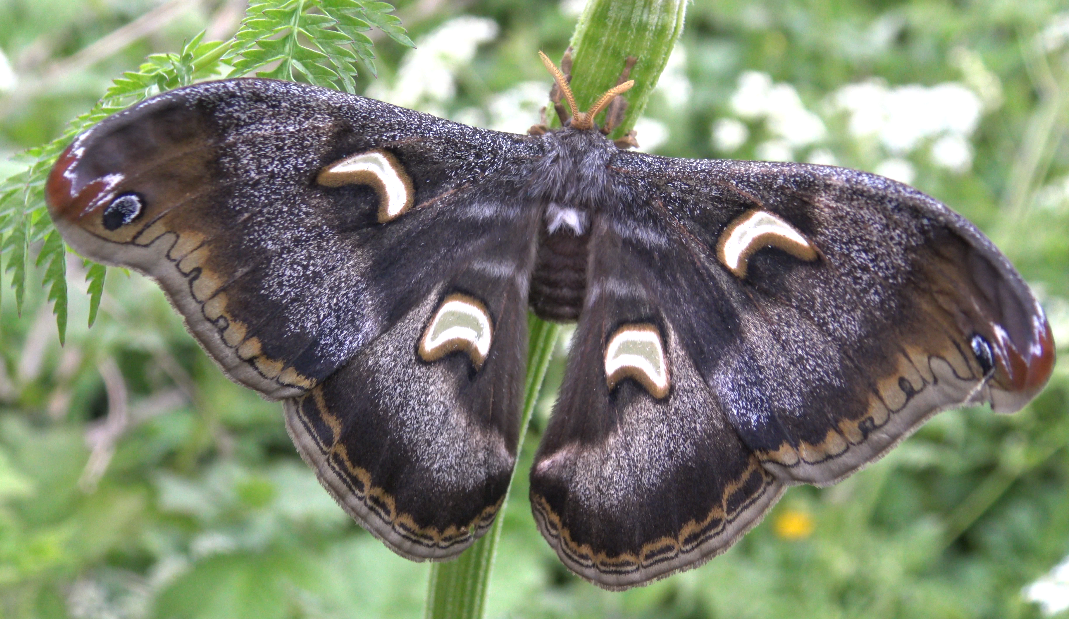
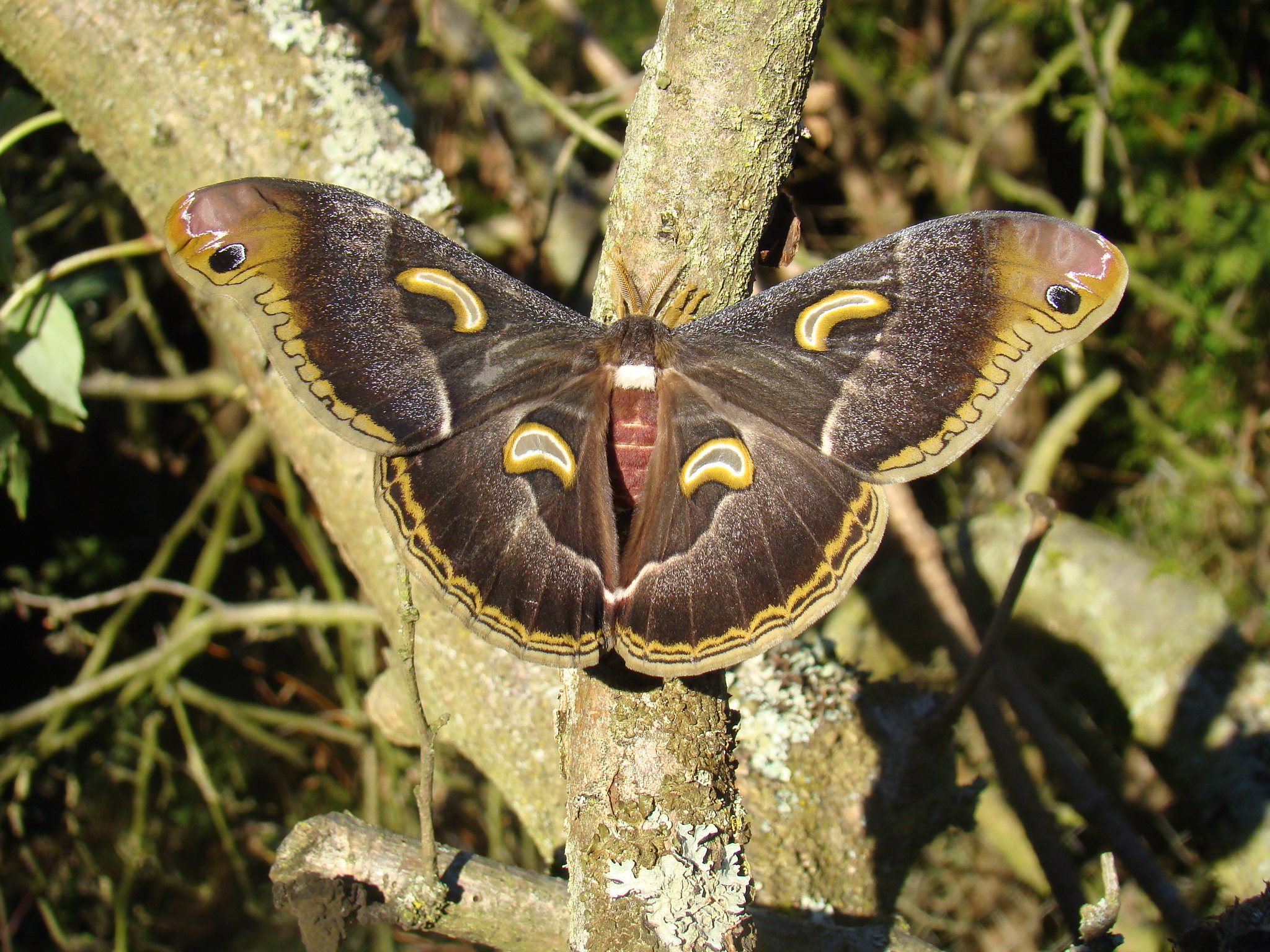
These Epiphora moths from Africa are among the most beautiful in the world; with dark wings and yellow crescents they have such a celestial appearance!

Epiphora cf. vacuna female

In Africa, there are numerous species of Epiphora moths; large and conspicuous species of silkmoths ! You’d be wrong to assume they are easy to identify however. In some instances there are many similar to nearly identical looking species, and identifying them can be a headache.

Today we are looking at what I presume to be Epiphora vacuna. Presume, because it is still quite difficult to tell apart from other species such as Epiphora ploetzi and Epiphora intermedia (are they seperate species or synonyms?).

I have consulted an expert about the matter and the response made things even more complicated: “All or most of the names from West Africa are likely just synonyms of vacuna (incl. ploetzi), and whether the Central African forms are really a (or several) different species remains to be conclusively demonstrated. If they are, the name congolana Bouvier is probably the one to use for these (with intermedia Rougeot – from Shaba – as a synonym). I have a few specimens from Uganda too and treat them as E. vacuna as I can see no persuasive differences from the West African specimens. Naumann (in Kühne’s Moths of Kakamega Forest) illustrated two very similar specimens from Kakamega as E. intermedia and E. congolana, but heaven knows how he got to those identifications. They look the same to me (the length of the white basal fw bar is variable in my Congo specimens from the same locality).  I haven’t yet looked at the genitalia of this group, however, but don’t expect there to be differences that would support the plethora of “species” that have been proposed in this group.” – Rolf Oberprieler, 2017 (pers. comm.)

Epiphora cf. vacuna

These captive animals were obtained from Kenya AND Cameroon – this mixed origin complicates things even further, because it’s possible that Kenya and Cameroon contain different species. If that’s true, it means the pictures on this page are not one, but potentially two(!) different species. That being said, larvae and imagoes looked the same and I am confident enough to file them under the same species page.

Epiphora cf. vacuna L5

If we believe that Epiphora vacuna (Sierra Leone, Ivory Coast, Ghana, Liberia) is a synonym of Epiphora ploetzi (Cameroon, Gabon, Congo, Democratic Republic of the Congo, Kenya) and Epiphora intermedia (Angola, Cameroon, Central African Republic, Congo, DRCongo, Equatorial Guinea, Gabon, Guinea, Nigeria, Rwanda, Sudan) then it has a rather large distribution. But is it true? Honestly, I’m not sure if I have the answer. It’s a bit of a mess to me. More research is needed (please email me if you know more about these Epiphora!).

Let’s say that in the countries of Angola, Benin, Cameroon, Central African Republic, Congo, DRCongo, Gabon, Ghana, Guinea, Ivory Coast, Sierra Leone, Sudan, Uganda, Equiatorial Guinea, Nigeria, Rwanda, Sudan, and Liberia there exists a population- complex of black Epiphora moths with yellow crescents that may or may not be the same species. (vacuna, intermedia, ploetzi – and more?). DNA evidence alone will not be sufficient; morphology should also be included.

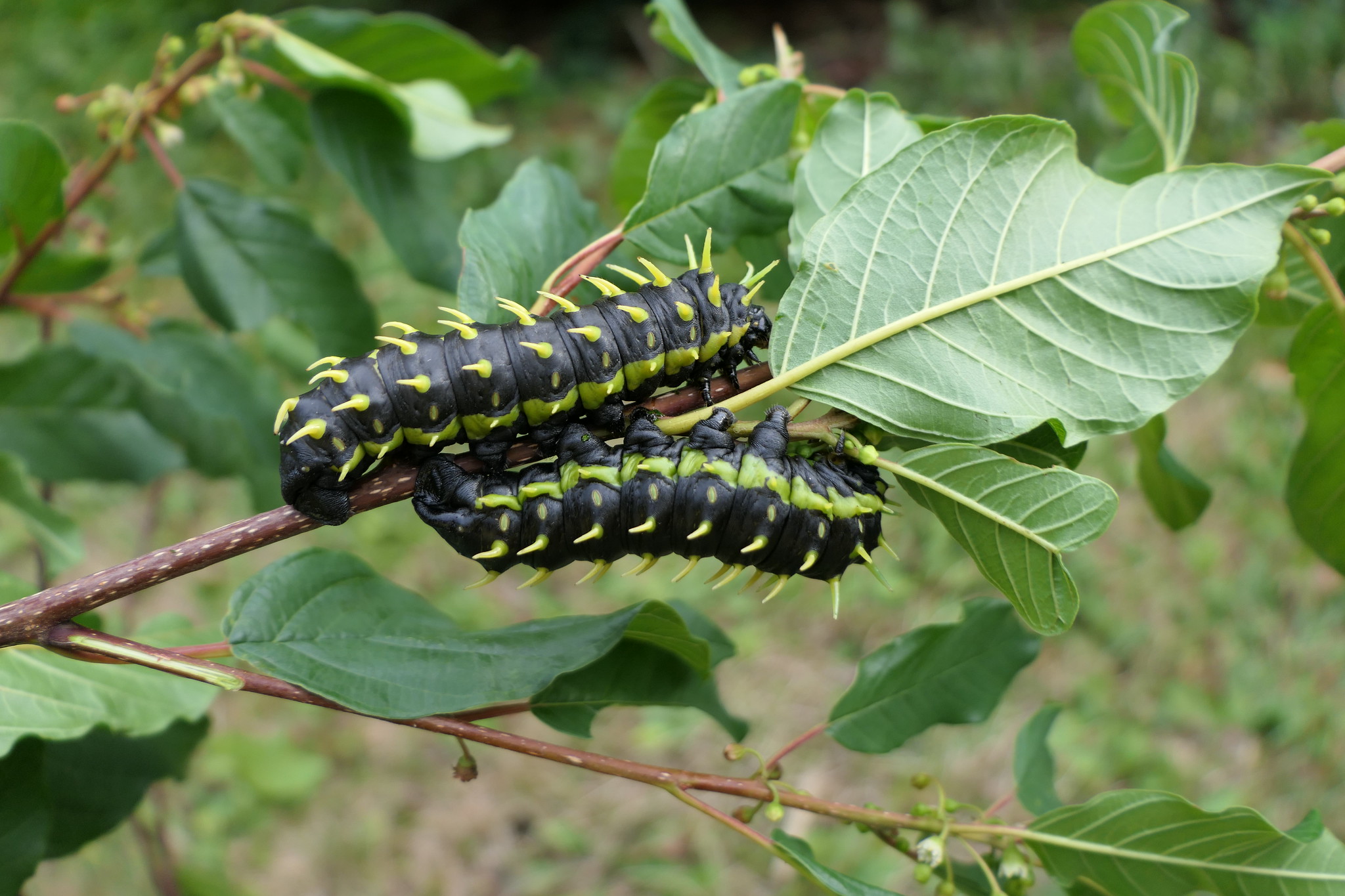
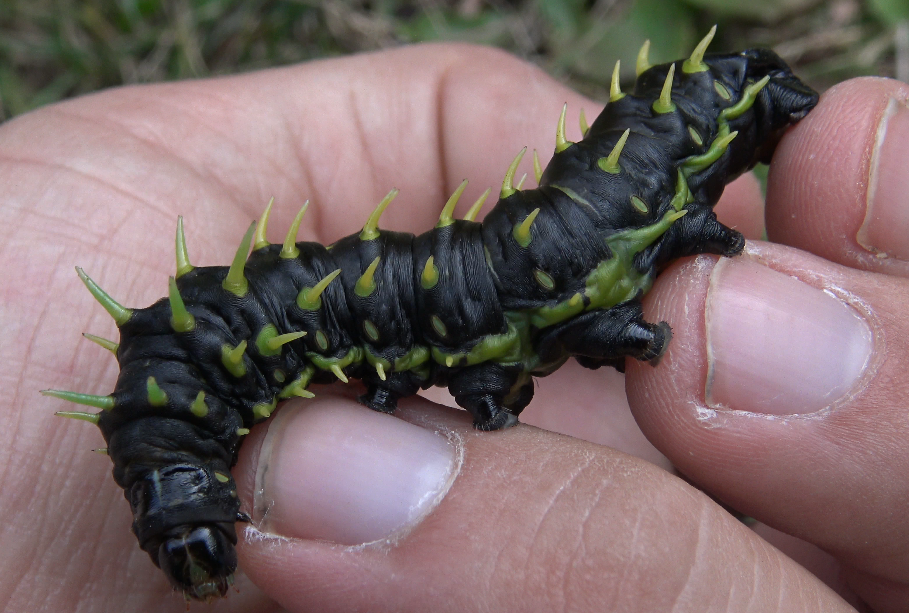
What we do know is that their larvae are either black, with green/yellow flourescent spines, and a yellow stripe on their flank. There is also a yellow/orange form with black spines. Larvae of Epiphora cf. vacuna seem to mainly feed on plants and shrubs from the Rhamnaceae (such as Maesopsis and Ziziphus), Rutaceae (such as Zanthoxylum, and Fagara) and Euphorbiaceae (such as Croton) plant families in the wild.

  • Difficulty rating: Challenging – while the moths are very easy to pair, larvae often struggle to survive in captivity, due to suboptimal host plants and suboptimal rearing conditions in captivity.
  • Rearing difficulty:  7.5/10
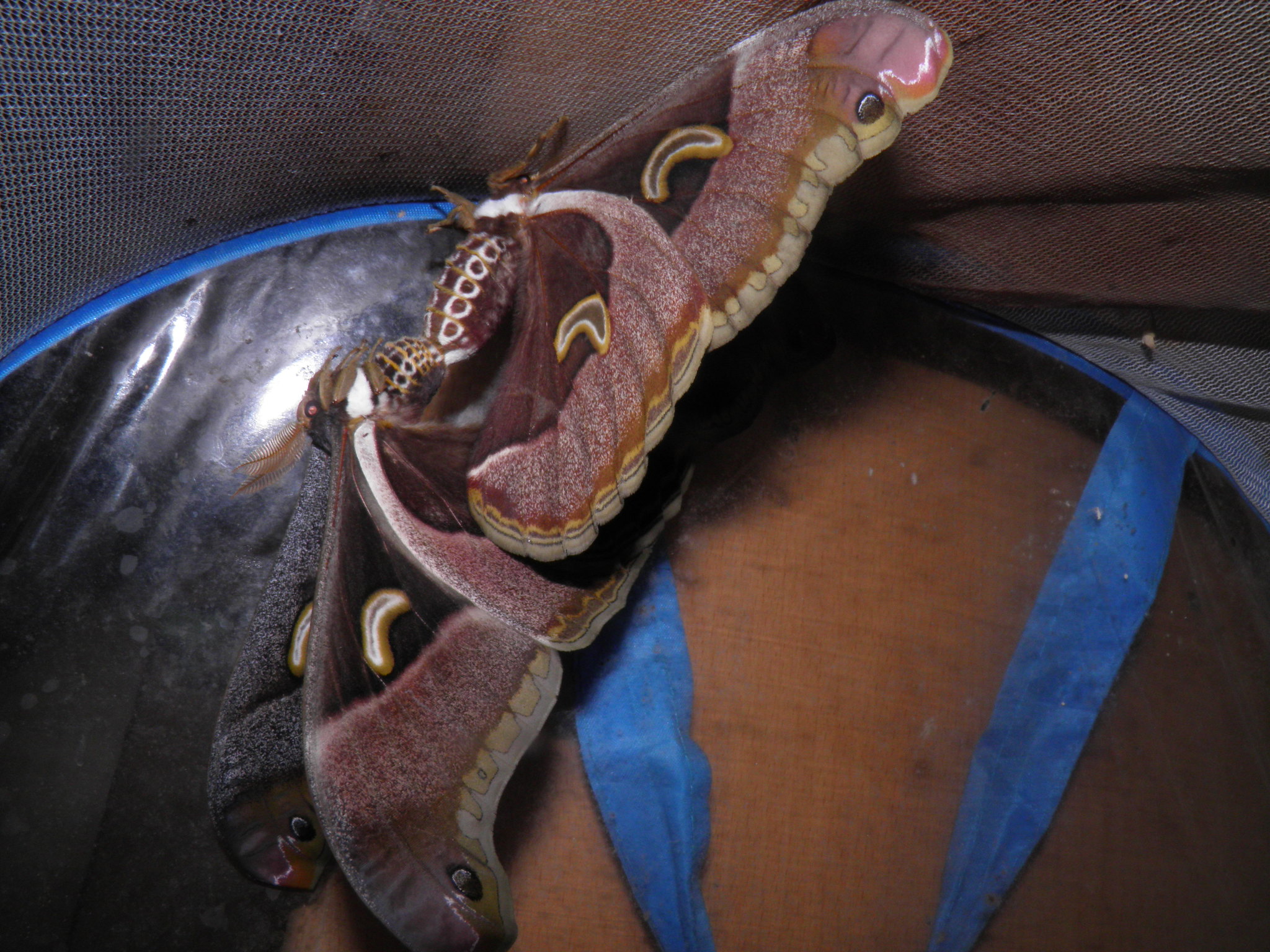
  • Pairing difficulty: 3/10 (Archieving copulations)
  • Host plants: Maesopsis eminii (Rhamnaceae), Ziziphus sp. (Rhamnaceae), Croton oligandrus (Euphorbiaceae), Neoboutonia melleri (Euphorbiaceae), Fagara macrophylla (Rutaceae), Zanthoxylum claa-herculis (Rutaceae), Zanthoxylum macrophyllum (Rutaceae) and more. In captivity, the larvae can develop themselves on non-native Rhamnaceae such as Rhamnus sp. (Rhamnaceae), Ceonothus sp (Rhamnaceae) and sometimes even on Salix (Salicaceae).
  • Natural range: There seems to be a lot of ambiguity around the status of these species and their distributions. It was difficult to gather information. Let’s say that in the countries of Angola, Benin, Cameroon, Central African Republic, Congo, DRCongo, Gabon, Ghana, Guinea, Ivory Coast, Sierra Leone, Sudan, Uganda, Equiatorial Guinea, Nigeria, Rwanda, Sudan, and Liberia there exists a population- complex of black Epiphora moths with yellow crescents that may or may not be the same species (vacuna, intermedia, ploetzi – and more?). DNA evidence alone will not be sufficient; morphology should also be included.
  • Polyphagous: yes  
  • Generations:  Multivoltine (usually one but up to two generations a year)
  • Family: Saturniidae (silkmoths)
  • Pupation: Cocoon – silk encasing
  • Prefered climate: Hot and very humid
  • Special notes:  Rearing is tricky, due to the fact larvae don’t always cope well with non native food plants. Maybe there are better host plant options in Europe/USA for captive rearing, but they haven’t been discovered.
  • Estimated wingspan:
  • Binomial name: Epiphora vacuna (Westwood, 1849) [syn. intermedia / ploetzi? who knows! not me for sure. ]

Breeding these species in captivity is certainly possible! The best results are obtained by rearing the larvae on Ceonothus or Rhamnus. Some people report mixed succes with Salix sp. and in one instance, Prunus persica(!).

The issue is that not all the caterpillars take non-native host plants very well. Obtaining a good survival ratio from egg to cocoon in captivity is tricky (but possible in some circumstances). Some breeders report a survival ratio of 10% to 40% on Ceonothus (not optimal, but it works).

For a really good result, I suspect one would have to grow their native host plants (Rearing with Maesopsis, Zanthoxylum or Ziziphus would probably have good results!) but these can be tricky to obtain and grow beyond their native range.

The eggs of Epiphora cf. vacuna can easily be incubated on room temperature (20-21C). The eggs will hatch in 2-3 weeks time. Babies can be raised in plastic boxes.

Epiphora cf. vacuna L1

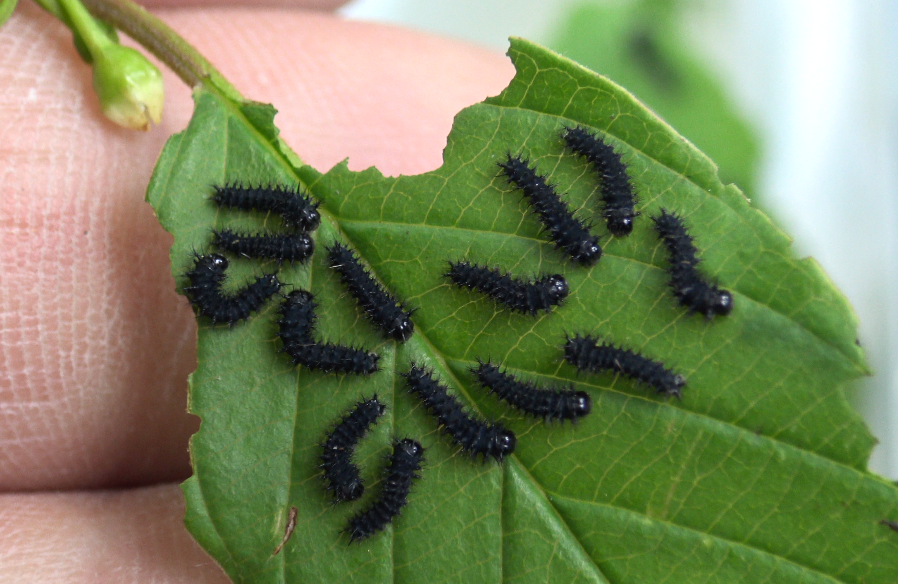
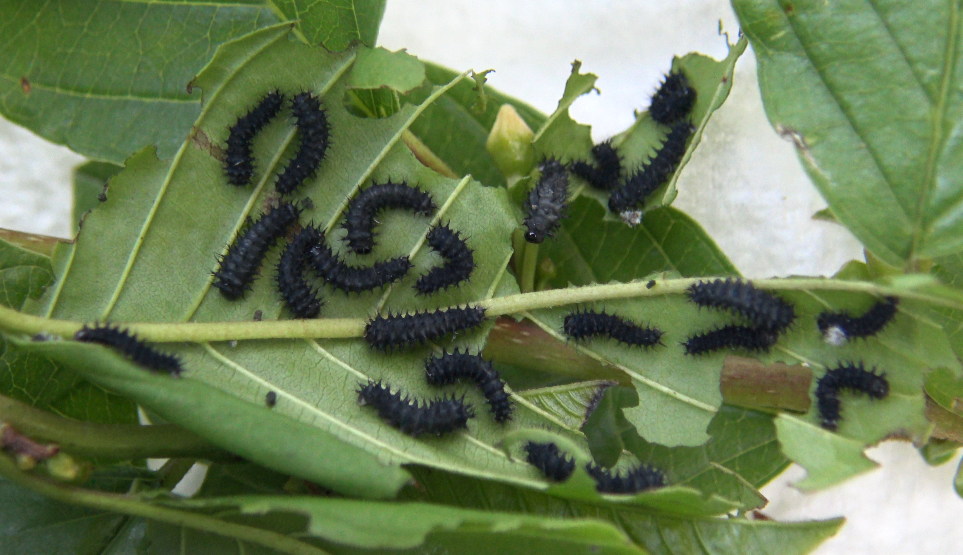
The eggs are oval, greyish to creamy white – and first instar larvae are plain black. They appear to be mostly solitary, although young larvae have the proclivity to feed closer to eachother while maintaining some personal space.

Epiphora cf. vacuna L1 on Rhamnus frangula
Epiphora cf. vacuna L2 on Rhamnus frangula
Simple rearing setup for the youngest larvae

While I’m one of the few people who has actually managed to raise this species (not to brag, but very few people succeed in raising them!) – I can’t say it was a huge succes. At best, I can rear a handful of cocoons from 30-60 eggs. The mortality rate seems high (usually around 70%+) That means I too, have a lot to learn! And the result I obtained was far from perfect. If you have raised Epiphora cf. vacuna with better results than I had, then do leave a comment, or email me.

The first instars can be raised in simple plastic boxes. They prefer warm and humid conditions.

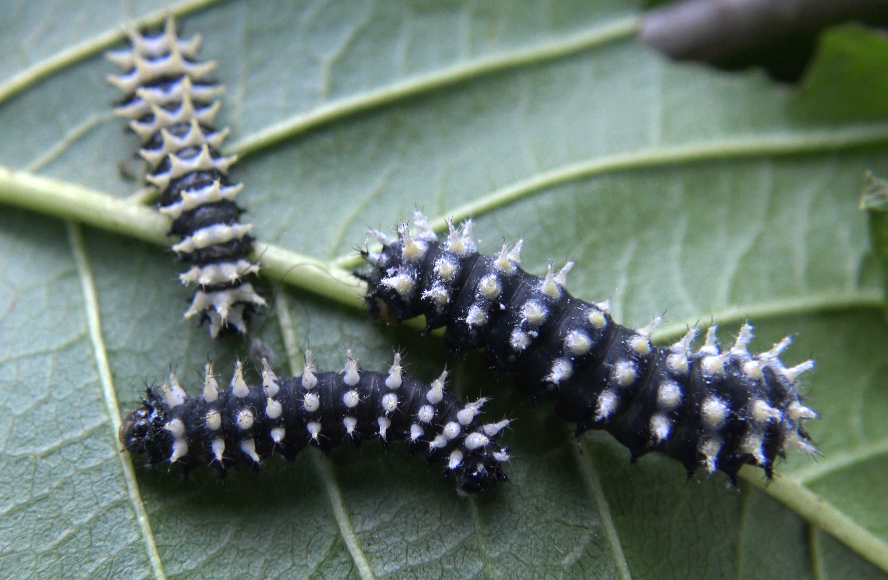
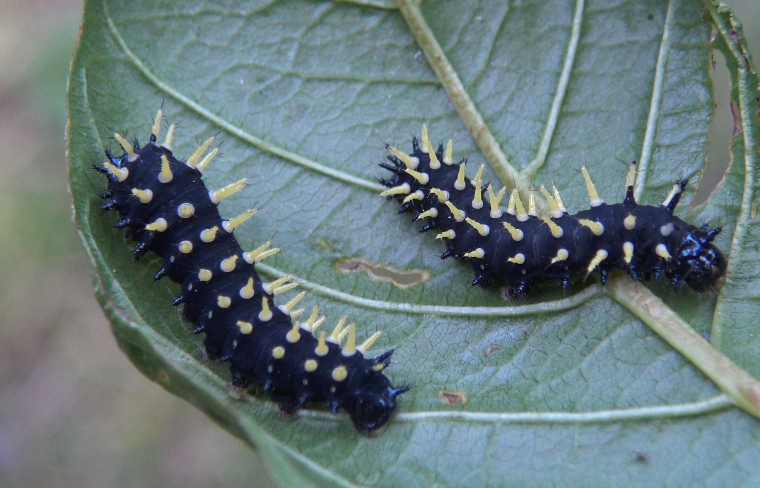
The first instars are black; the second instars are black but with white spines (that secrete a waxy substance over time).

Epiphora cf vacuna L3

The third instar is black, with yellow spines. At this point, I usually move them to a larger enclosure; this can be a large plastic box with ventilation holes, or, a large pop up cage (make sure the room is humid if you use a pop-up cage!).

Epiphora cf. vacina (intermedia?) L4
Epiphora cf vacuna L4

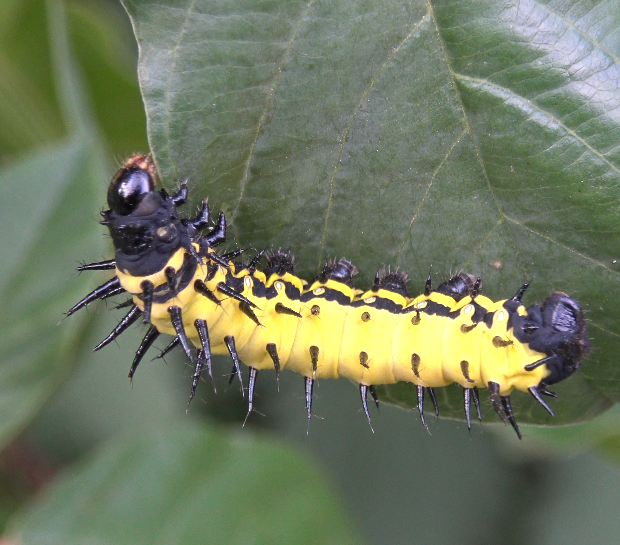
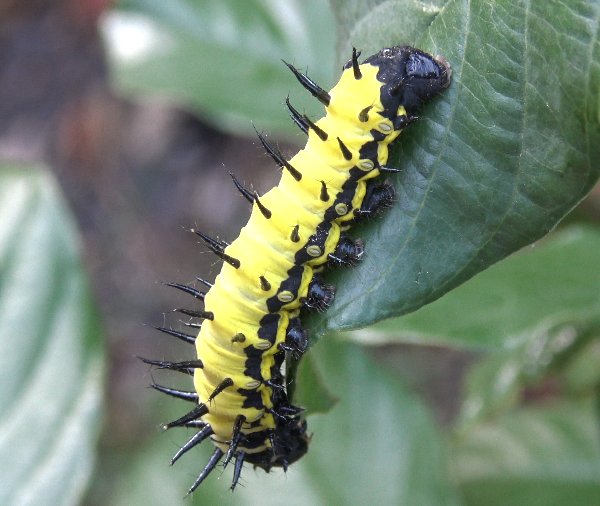
Interestingly, the fourth instar was bright yellow and black.

Epiphora cf vacuna L5
Epiphora cf. vacuna L5

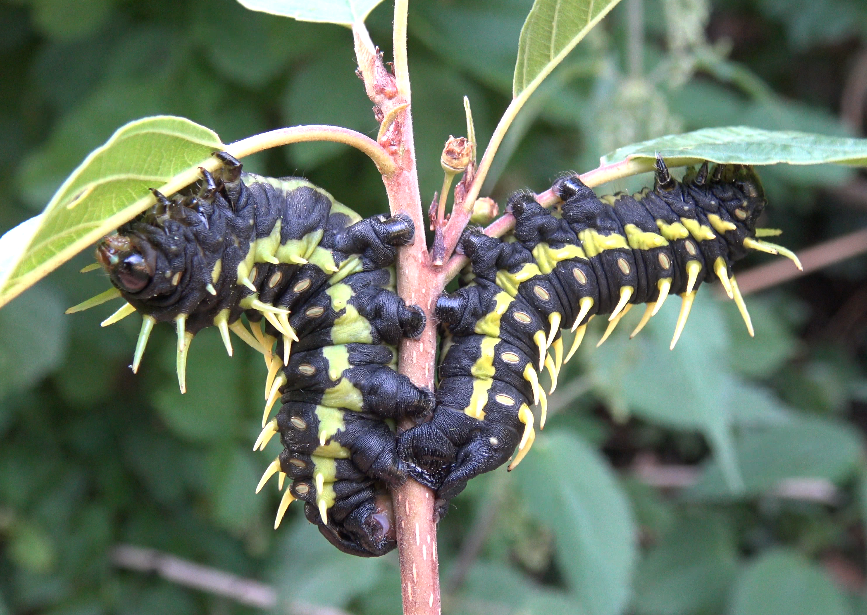
In the fifth instar the larvae became quite large and black with yellow/green spikes!

Epiphora cf vacuna

Thank you for reading! Please keep in mind that sadly; the scientific value of this article is reduced, because the livestock is of mixed origin (Kenya and Cameroon) – and it would have been wiser for me to keep them separate. That being said, I did not hybridize both bloodlines, they were just physically mixed (they are both reared from wild eggs!). However all the larvae and moths pictures in this article are either 100% Cameroonian and 100% Kenyan. This article is more confusing than other articles on my website, due to the ambiguous taxonomic status of Epiphora vacuna/epiphora/ploetzi, the fact it is visually difficult to distinguish between them.

That being said, the early life stages of these Epiphora moths are rarely documented or photographed – and that’s where the value of this article lies. Please do not hesitate to email me (bart.coppens@hotmail.com) if you have additional scientific information about these insects!

If this article was helpful or informative to you consider sponsoring us; or take a look at the many other articles on this website!


Thank you for reading my article. This is the end of this page. Below you will find some useful links to help you navigate my website better or help you find more information that you need about moths and butterflies. 

Dear reader – thank you very much for visiting! Your readership is much appreciated.  Are you perhaps…. (see below)

Citations: Coppens, B. (2022); Written by Bart Coppens; based on a real life breeding experience [for citations in literature and publications] 

Was this information helpful to you? Then please consider contributing here (more information) to keep this information free and support the future of this website. This website is completely free to use, and crowdfunded. Contributions can be made via paypal, patreon, and several other ways.

All the funds I raise online will be invested in the website; in the form of new caresheets, but also rewriting and updating the old caresheets (some are scheduled to be rewritten), my educational websites, Youtube, breeding projects, the study of moths andconservation programs.

Donate button (Liberapay; credit card and VISA accepted)
 Donate using Liberapay
Donate button (PayPal)
Donate with PayPal

Become a member of my Patreon (Patreon)

Find me on YouTube

Find me on Instagram

Join the Discord server: Click here
Join the Whatsapp server: Click here
Facebook:  Click here


Grellada imitans

Grellada imitans by Robin Allen

Robin is a very talented moth breeder from the United Kingdom; I’m always very pleased to see his experience on social media. He has bred various species that I always struggled with for years. Today, Robin shared with me the breeding of an African Lappet moth: “Grellada imitans”. Thank you Robin! 

Grellada imitans is a large Lasiocampid moth from Africa. I obtained eggs of this species from the inimitable Andrew Spicer in the UK through his contact with Lucien Mballa in Obout Village, Cameroon and their work on the Cameroon Ark project. One female was captured, and laid eggs.

When the eggs arrived, we were still unsure of the species. Perhaps it was going to be Pachyna subfascia. Perhaps Pallastica mesoleuca. Or perhaps some other relative of these species. Not much is known about many African species, so it would be intriguing to find out what these were.

The eggs were large, round, pale brown mottled with darker brown. They were kept like many other eggs: in a closed sealed container, with occasional humidity from breath on the inside of the lid. These eggs had already travelled from Cameroon to the UK, and travelled again within the UK, so it was not long before these eggs hatched on the 22nd April.

Like many Lasiocampids, the young larvae had a line of long hairs along each side. These were longer around the front segments. The mid section of the body was striped white, yellow and black.

At first, the larvae did not seem keen to feed on any foodplant. Many plants were offered, with no sign of interest. Perhaps the larvae were confused or just needed to spend some time exploring, but eventually they settled for Paulownia leaves. I expect they would have happily settled on many other plants, but Paulownia was a good choice as I have an infinite supply available.

After a few days, the larvae were into the second instar. At this stage, the larvae developed two red stripes on the back of the thoracic segments behind the head, as well as a more intricate patterning along the back.

By 5th May, some of the L2 larvae were reaching L3 instar. At this stage, the larvae became more hairy, starting to develop a more cryptic camouflage.

At 22 days old, the L4 instar brought with it much greater camouflage, with the long side hairs now able to blend into any surface.

The larvae would often rest on tissue which was used to improve cleanliness. I presume that they detected the woody fibres and texture of the tissue as resembling tree bark. For this reason, it is advisable to place a network of sticks across the bottom of the cage. This provides places for the larvae to take up their natural resting positions, without spending time in amongst their frass. Tissue should be avoided, as it encourages the larvae to return to the floor, where health is at risk.

At the L5 instar, the larvae started to develop small black spines criss-crossing along their back amongst the finer hairs.

The red stripes behind the head, up until now being not very concerning, also became much more advanced; each contained two ‘christmas trees’ of red spines. When threatened, the larvae would evert these spine organs outward, providing a striking visual display. Any predator would instantly reconsider an attack.

Sometimes, when disturbed, the larvae would whip their frontal segments side-to-side at high speed. This created a fast drumming vibration as well as a visual display drawing attention to their red spines.

By 7th June (46 days), the larvae gave a reminder of how slow growing Lasiocampids can be. L5 was not the end. These were moulting to L6, and setting in for the long haul.

At this time, some larvae exhibited an even more advanced defensive behaviour. If threatened, they would raise up the front half of their body off the ground, in a shape like a Cobra. They would strike backwards or sideways with their red spines everted, whipping their body around to make contact wherever they felt the touch of an attacker.

These larvae were incredibly variable in their colour forms. Although the basic pattern always remained the same, many different colours were seen; from almost pure white, through to shades of green, brown, and even some hints of purple or maroon.

In the latter instars, the larvae enjoyed hiding on bark / stems during daylight hours, only feeding during the night. I expect if one were to extend the night-time hours and shorten the day length, these larvae would grow faster. Half of their time is spent resting motionless during the day; this must have great value against predators in the wild, but perhaps serves no purpose in captivity.

The camouflage of these larvae is helped by the structure of the ‘hairs’. These modified structures have flattenned areas which lay flat and break up the lines of hairs, creating a perfect match for lichens and tree barks.

Despite their spines and their behaviours, these larvae were easy to raise and welcomed handling. They were keen to explore new objects, be they sticks, leaves, or human fingers. Their spines were not a worry. They grew to an impressive size, as much as 12cm when relaxed, and perhaps up to 15cm when reaching out at full stretch.

Thankfully, L6 was the last instar. 60 days after the eggs hatched, the first cocoons were being formed in late June. The first to pupate were the males, with some females taking many days longer to reach full size. Handling the cocoons was the first time that the spines became a real problem. I would recommend just leaving the cocoons alone! But, while these spines would readily piece the skin, the reaction was not intense. Handling a dozen cocoons would fill fingers with spines, but a wash under cold water would easily break away the loose ends of the spines and wash them away. They did not cause any allergic reaction, but those who do know they are allergic to other species should exercise caution.

Pupae were an interesting shape, and just like the larvae they had a good head of hair!

Below: Male left, female right (because females are always right!)

Of course, the first to emerge were some of the quite small males. These had excellent camouflage as a chip of wood, and would easily disappear on the right colour of bark. The claspers were peculiarly adapted to form part of this camouflage.

When disturbed, the males immediate reaction was often to drop to the ground, closing their wings and legs as tightly as possible. This gave the impression of a piece of wood / bark / dead leaf, and would be impossible to detect in leaf litter. Some would even rotate their head 90 degrees around to the side, which made normally symmetrical features of eyes and antennae difficult to recognise.

If disturbed further, the moth would invert its wings behind its back and feign death. This would also combine with a purple and green iridescence on the underside of the forewings and hindwings, perhaps giving an impression of a rotting deceased corpse. The male would also open his claspers wide.

The female of the species was much heavier and larger than the male. Another thing to notice with this species, was the incredible strength of the tarsal claws, especially of the female.

When upset, the female would display wasp-like markings on her hairy abdomen. She would also push her ovipositor at the attacker, perhaps mimicking a stinging insect. Of course, this was accompanied by the usual release of fluids, but in nowhere near the quantity of the infamous Argema mittrei.

The sexual dimorphism is striking when the male and female are seen side by side. An early naturalist could easily be excused for believing these were two completely unrelated species, with such drastic differences in body size, shape, weight and wing pattern.

By the time the females were emerging, many of the males had damaged their wings. The males are short-lived, so a good recommendation would be to cool the male pupae with an aim to delay them by a few days to better coincide with emergence of the females.

Pairing was achieved on the first night in a small 30x30x30cm cage containing two females and several males, on a cool summer’s night at 16 deg C, even despite rainy weather. Pairing seemed quite easy to achieve.

Egg laying commenced the next night, with around 200 eggs being oviposited in a single night. The eggs were laid in circular clusters approximately 1 inch across, on cage netting.

The next generation of eggs took only 12 days to hatch (at indoor room temperature). I found common Ivy (Hedera helix) to be loved by the young caterpillars.
Rearing this moth was thoroughly enjoyable, in part because the larvae were very predictable and easy to raise. Their day-time sleep and night-time feed pattern meant that it was easy to predict how much fuel they would need for the night ahead.

Environmental conditions in my rearing were far from the perfect ideal needed by some less resilient species. Plastic boxes with relatively low ventilation caused no ill effects. Even when condensation built up enough to cause matting of their hair, the larvae thrived in damp conditions just as well as in the dry. With a matrix of sticks across the bottom of the cage, the larvae were not hampered by frass on the bottom of their container, allowing a great degree of laziness in cleaning their enclosure. Apart from a very small number of losses in the earliest instars, the larvae seemed virtually indestructible once they were half grown.

Other than the spiny cocoons, they were easy to handle at all stages. Larvae were explorative and ‘friendly’, rather than those which drop to the floor at the slightest disturbance or spit out the contents of their guts or refuse to move. Adult males that pretend to be dead are far easier to move from cage to cage than the flighty insanity of Actias isis or the flappy nonsense of Antheraea species. Females would dislike being moved, but once their claws were de-tangled from netting they were relaxed and calm to handle. I would certainly recommend!

Dear reader – thank you very much for visiting! Your readership is appreciated. Are you perhaps….. 

Was this information helpful to you? Then please consider contributing here (click!) to keep this information free and support the future of this website. This website is completely free to use, and crowdfunded. Contributions can be made via paypal, patreon, and several other ways. 

Papilio epiphorbas — “Teardrop swallowtail”

Papilio epiphorpbas, the “teardrop swallowtail”, is a swallowtail endemic to the island of  Madagascar (Africa). While little is known about this species and obtaining livestock may be hard,  raising them is possible, though the lack of concrete information may make it  challenging.

Adult female Papilio epiphorbas

  • Difficulty rating: 7/10  (Harder to breed due to lack of information)
  • Host plants: Rutaceae – There are hardly any referenced to the natural host plant, which is speculated to be Vepris sp. – in captivity they feed on  Choisya, and Citrus but with a low succes rate
  •  Natural range:  Madagascar only (endemic)
  • Polyphagous:   Yes but probably only Rutaceae
  • Generations: Seems to be multivoltine in captivity (continuous breeding). May or may not avoid the dry season in the wild
  • Family: Papilionidae (swallowtails)
  • Pupation:  Chrysalis 
  • Prefered climate: Afrotropical (prefers warm and humid)
  • Special notes: This species is probably not hard to breed if you have the right host plant and conditions, but the lack of information makes this more difficult
  • Estimated wingspan: 80 – 100mm (on the smaller side)

Papilio epiphorbas, the teardrop swallowtail, is a swallowtail butterfly that is endemic to the island of Madagascar. Because of their obscure and endemic  nature, they are not commonly bred or reared. While literature is lacking, they are rumoured to feed on Vepris (Rutaceae – unconfirmed). In captivity they will accept Citrus or Choisya, though one may experience significant losses when rearing them on these host plants – some individuals will still survive. Perhaps, by selecting these individuals, one may produce a F2 generation that has adapted better to Choisya or Citrus, making them easier to breed.

The beautiful final instar larva of Papilio epiphorbas

The larvae are best raised freely on the host plant, or as alternative, in bottled cuttings of host plant. Interestingly however this species seems to do well in plastic boxes too – something that is Papilionidae larvae do not commonly tolerate, as they are prone to getting infected and sick when reared in plastic boxes. Papilio epiphorbas seems to be an exception to this rule. The larvae are beautiful and in the final instar their thorax is decorated by bright pink dots and yellow ocelli; and in the skin fold between their thorax and abdominal segments they have a bright blue skin flap that is revealed when the larvae assume their threat pose.

Female Papilio epiphorbas

The butterflies are reported to pair and oviposit easily, if one has a greenhouse-like setup for butterflies. Experimenting with host plants should be worthwhile, since not a lot is known about the host plants of Papilio epiphorbas.

OLYMPUS DIGITAL CAMERAFinal instar larva of Papilio epiphorbas
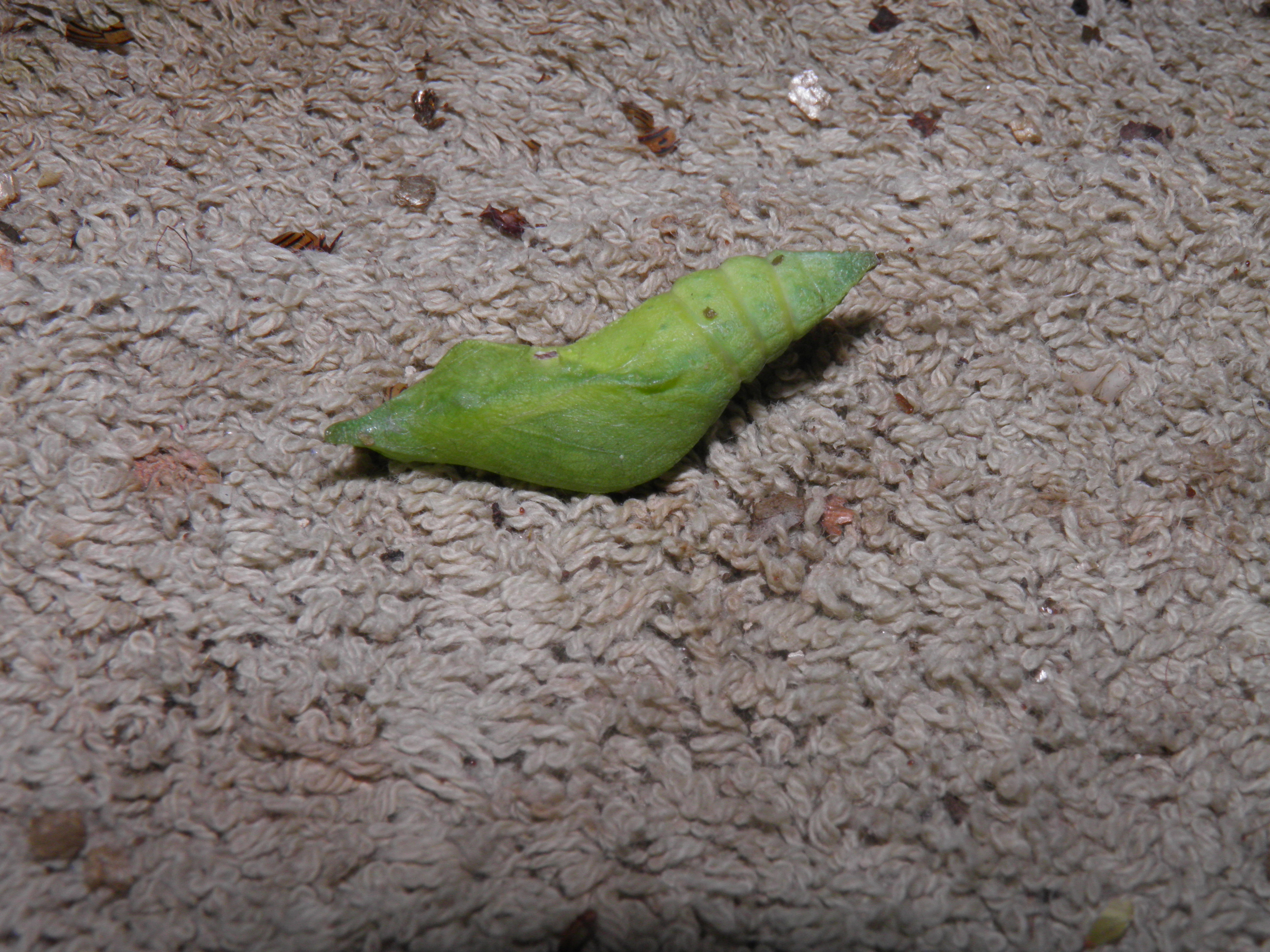
After feeding for about 1.5 month (depending on temperature) on the host plant, the larvae will spin a girdle and pupate against a surface (like many Papilionidae do). The pupae will hatch in about 3 to 4 weeks time (once again depending on temperature).

The pupa of Papilio epiphorbas

All in all, Papilio epiphorbas is a pretty fun and obscure species from Madagascar, and an excellent opportunity to breed something unique.

Female of Papilio epiphorbas


Thank you for visiting my website! Are you perhaps..

Was this information helpful to you? Then consider contributing here (click!) to keep this information free and support the future of this website.


RATING SYSTEM

NOTE: The difficulty meter is EXTREMELY SUBJECTIVE, and based on the experience of one person only (me, Bart Coppens). There is no such thing as objective difficulty; and how hard it is to breed a certain species also depends on how familiar you are with the species in question, your breeding experience, and your geographical location!

If you are in a hot and dry place, say  a desert like Arizona or New Mexico – then it will be very easy to breed species from there, since you live in the perfect climate and can provide them with the conditions they require. But it will be harder for you to breed species that are from humid areas like the neotropics, since the dry air can easily dessicate your livestock if exposed to it without climate control! If you are from Japan, breeding Japanese butterflies and moths will be much easier than for everybody else – people in America and Europe will struggle to find host plants and give them substitutes that may not be ideal for them. The author of this website lives in the Netherlands. The measurement scale is here to encourage you or discourage you from breeding certain species if you are not sure – but  it cannot be used as objective measurement.

SCALE:

1/10 – This rating means that breeding this species could not have been easier in any other way – even people with no experience with keeping Lepidoptera at all can do it with great succes and little effort, and that it would be harder to fail than to succeed at breeding this species.  

2/10 – This rating means that this species is one of the easiest to breed species available in the hobby, and that succes almost always can be guaranteed if one follows the basic instructions and requirements needed for breeding it, even if you have no experience with Lepidoptera at all in your life.  

3/10 – This means that this species is extremely easy to breed  – even for beginners with minimal experience. If you follow the instructions of  caresheets, succes is nearly guaranteed and it is easy to provide for the basic needs of this species.

4/10 – This rating means that this species is easy to breed – but you will need a little experience and basic knowledge of moths to be succesful, but not much else. It is easy to be succesful if you put in the effort of meeting the basic requirements for this species.

5/10 – This rating means that this species is not hard to breed, but you will need some experience with Lepidoptera or just common sense when it comes to insects to be succesful. While it is not hard to be succesful, you will still need to put in a little effort to be able to  make it, although it is not hard to provide the basic needs of this species.

6/10 – This rating means that this species is more difficult than average to breed, and you will need to understand the biology of this species and immerse yourself in their life cycle in order to be succesful. You will need all the basic knowledge and experience.  While it is not hard to be succesful, you will need to do a little research in order archieve succes.

7/10 – This rating means that this species is challening to breed, and that you will need some advanced experience in order to be succesful.  This species can be picky or sensitive, and livestock may quickly die or struggle if the conditions are not met. It also means that succes is never guaranteed with this species, even for experienced breeders, since they can be prone to death.

8/10 – This means that this species is hard to breed, and that you will probably need to have a lot of experience in order to be succesful. This species will be hard to keep alive, even for the most experienced breeders and that it is hard to be succesful with them.

9/10 – This means that this species is extremely hard to breed, and that you will need extensive experience just to keep them alive. Even the most experienced and knowledgeable people will struggle to breed this species, although it is possible to do so if you have studied them well.

10/10 – This rating means that it is possible to breed the species in theory, although it is nearly impossible in practice, and (almost) nobody has done so before with succes. This could be because it is a species with extraordinary needs that can hardly be met in captivity, or because they are very sensitive to certain conditions  and very hard to keep alive. Even experts fail at breeding it. In order to breed it, you will have to push past the limits all currently available knowledge, and come up with a solution nobody has thought of or tried before.

???/10 – This rating means that I have no clue what to rate them, because either I have A) not completed the lifecycle myself, so I have not experienced the “complete” picture and cannot rate it, or because B) This species has such a weird and unique biology that is different from all other Lepidoptera, that it is impossible to compare it with all other species I have bred.

Rothschildia cincta

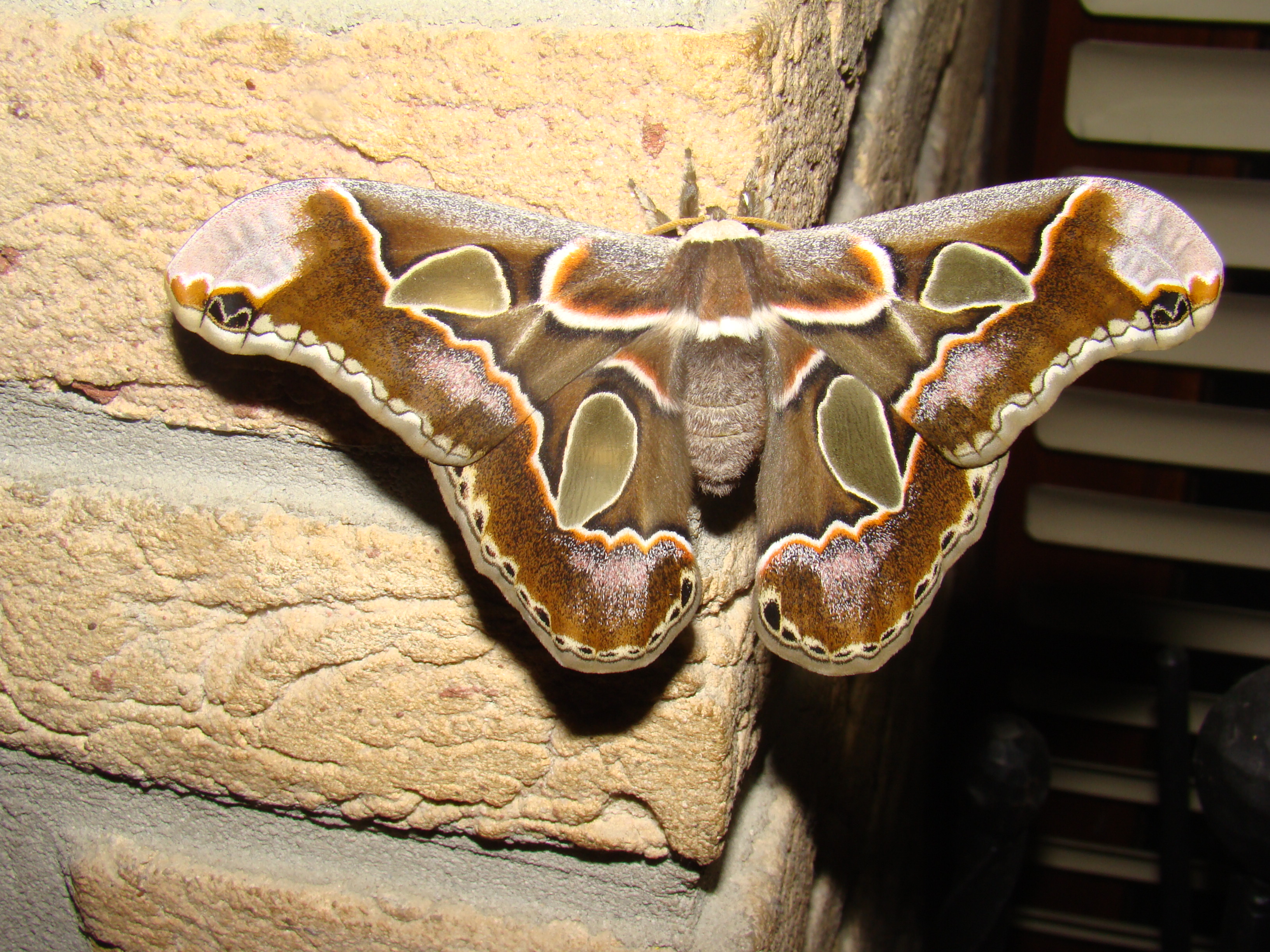
Rothschildia cincta is a predominantly Mexican species of Rothschildia moth. However, a part of its range extends across the border of Mexico into a small part of North America (Arizona), making it one the few Rothschildia recorded in the United States.

26005174981_8410a08666_o.jpg

  • Difficulty rating: 4/10 (Easy to breed)
  • Host plants: Ligustrum, Salix, Syringa, Prunus, Quercus, Mimosa, Schinus, Sapium and many more
  • Natural range:  Brazil, Argentina, Bolivia, Uruguay, and other places in South America. 
  • Polyphagous: yes  
  • Generations: Bivoltine (Has two to three generations per year in the wild, overwinters as coocoon)
  • Family: Saturniidae (silkmoths)
  • Pupation: Cocoon (silk encasing)
  • Prefered climate: Dry, hot and arid environments with mild to cold winters (Mexico, Arizona)
  • Special notes: The caterpillars can have a very rare yellow colour form. 

Citheronia laocoon

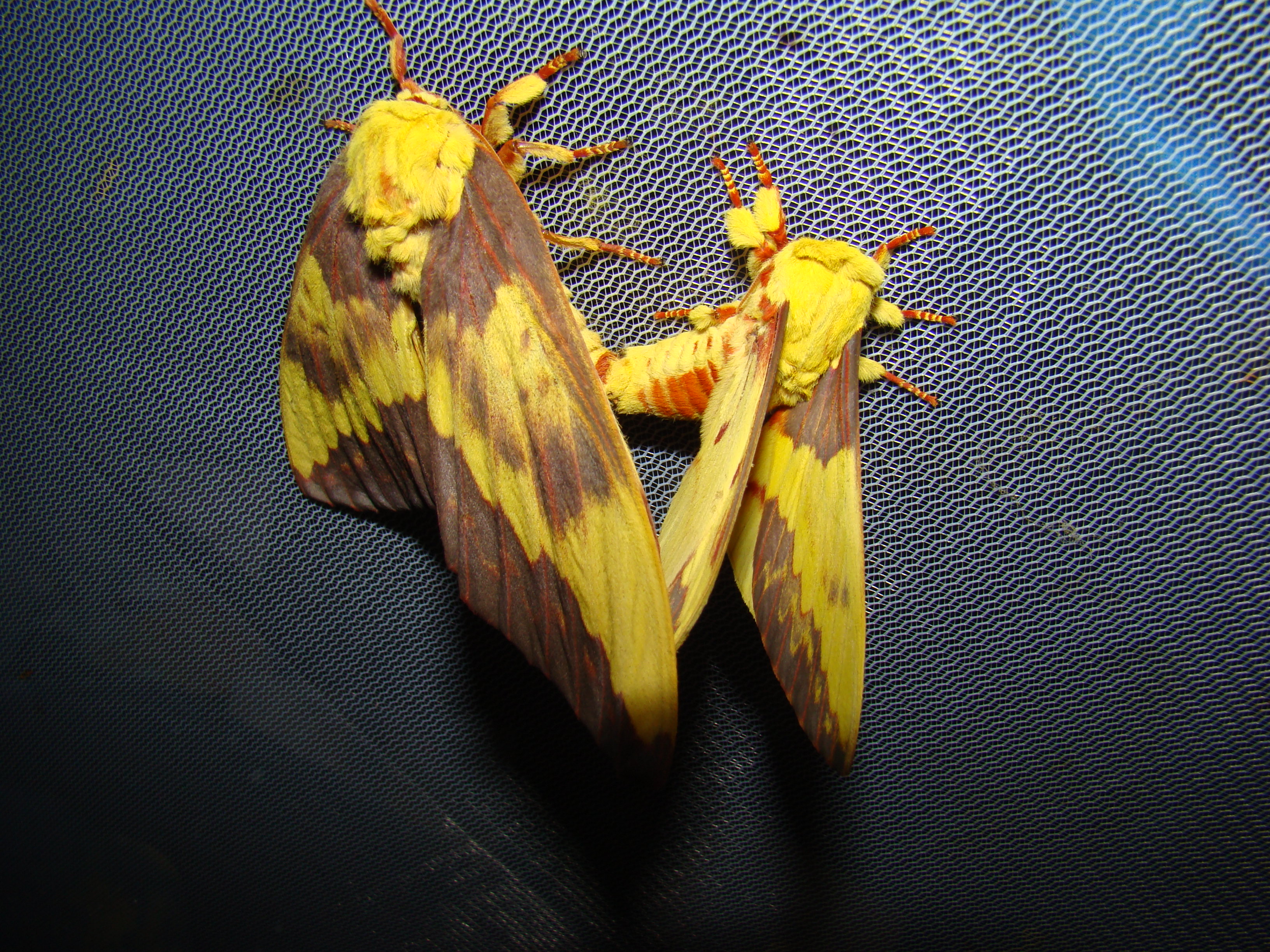
Citheronia laocoon is a beautiful Citheronia species from South America. Remarkable are its colours, but also the sexual dimorphism – while males of Saturniidae are generally smaller than the females, Citheronia laocoon takes it to the next level with males that are half the size of females. They seem to be very easy to breed.

25468774193_2b0b2d46d1_o (2)Adult female of Citheronia laocoon

Citheronia laocoon occurs in South America, mainly in Brazil, French Guiana, Bolivia, Argentina, Paraguay. They seem to be very polyphagous – in the wild they are commonly found feeding on Ricinus communis (castor bean). They will take a wide variety of plants and feed on Rosaceae too; I myself have raised them on Prunus padus and Liquidambar. Ligustrum has also been reported.

A fully grown caterpillar of Citheronia laocoon on Prunus padus
The most important thing is to keep this species well ventilated. While they tolerate high humidity extremely well, Citheronia dislikes stale air and lack of ventilation. It is best to cage or sleeve them. The small caterpillars should be reared in closed boxes until the third instar – the last two instars should be sleeved or caged. Compared to other Citheronia species, the moths and caterpillars are on the smaller side.

26121656896_aa3cd8d4e8_o Two females and one small female of Citheronia laocoon

Citheronia laocoon seems to pair very easily at different times of the day – I’ve seen them couple up at dusk, in the middle of the night and even the early morning.

25542681824_5e2e52f971_o.jpgCopula of Citheronia laocoon


The awesome and impressive female of Pallastica mesoleuca – a giant among Lasiocampidae.

The credit for this rearing goes to my friend Marcel van Bijnen, who kindly provided me these images. When he was traveling through Uganda, he encountered an impressive caterpillar, one that turned out to be of the Lasiocampidae moth Pallastica mesoleuca.

The caterpillar of Pallastica mesoleuca, an impressive beast covered with spines.

Not much at all is known about the biology of this moth. My friend Marcel from the Netherlands has encountered and reared this moth in the wild. This small article illustrates the larva, cocoon and adult female that hatched from it.

 The pupa and cocoon of Pallastica mesaleuca, including a leaf  of the natural host plant that remains unidentified.

The live female of Pallastica mesoleuca
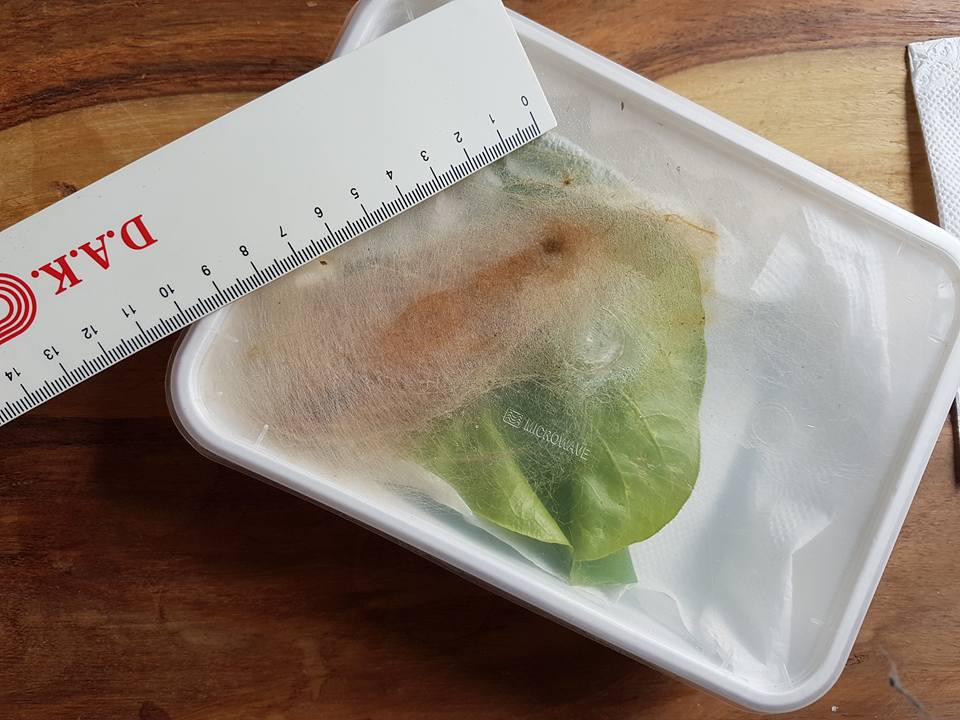
The larva spinning a thick cocoon inside the container
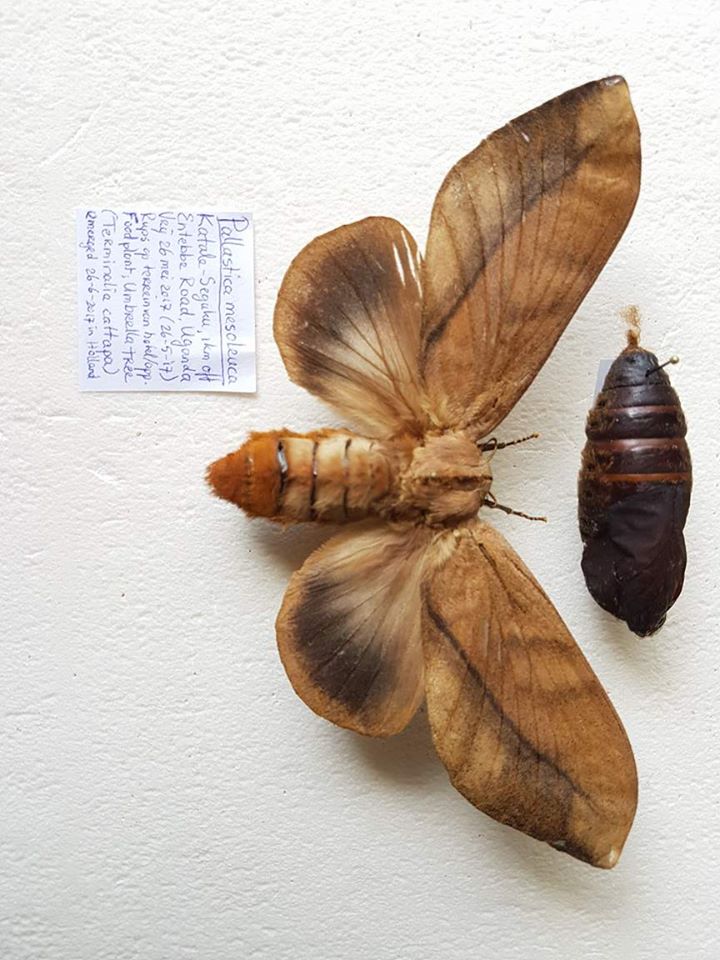
The adult moth of Pallastica mesoleuca prepared for collection 


The aim of this website is to provide information about many species of moths and butterflies around the world, with a slight focus on rearing them in captivity.