
The Kentish Glory moth – Endromis versicolora – is in many ways the ‘odd one out’ when it comes to larger moth species one can find in Europe. It defies expectations in several ways. First of all, it is the only representative of its own family (the Endromidae, that is) in Europe. The Endromidae, also known as ‘Glory Moths’ are a family of moths that contains about 72 species, and the majority of them are found exclusively in Asia (from the Himalayas up to Papua, into to the Far East region in northern China/Russia). Other remarkable traits include being a rather cold resistant species that can be seen as early as late February in some parts of Europe, and the males being day-flying.
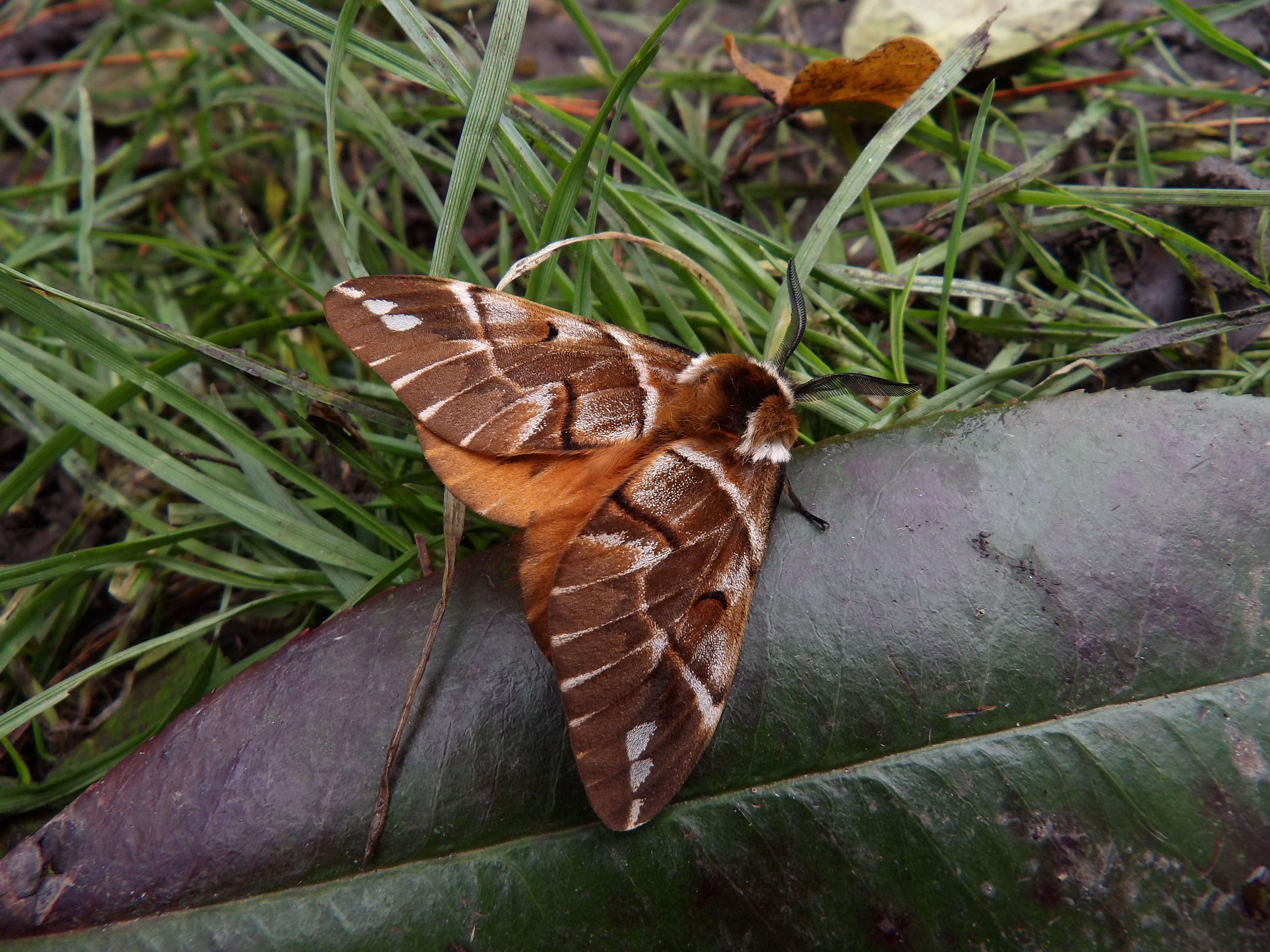
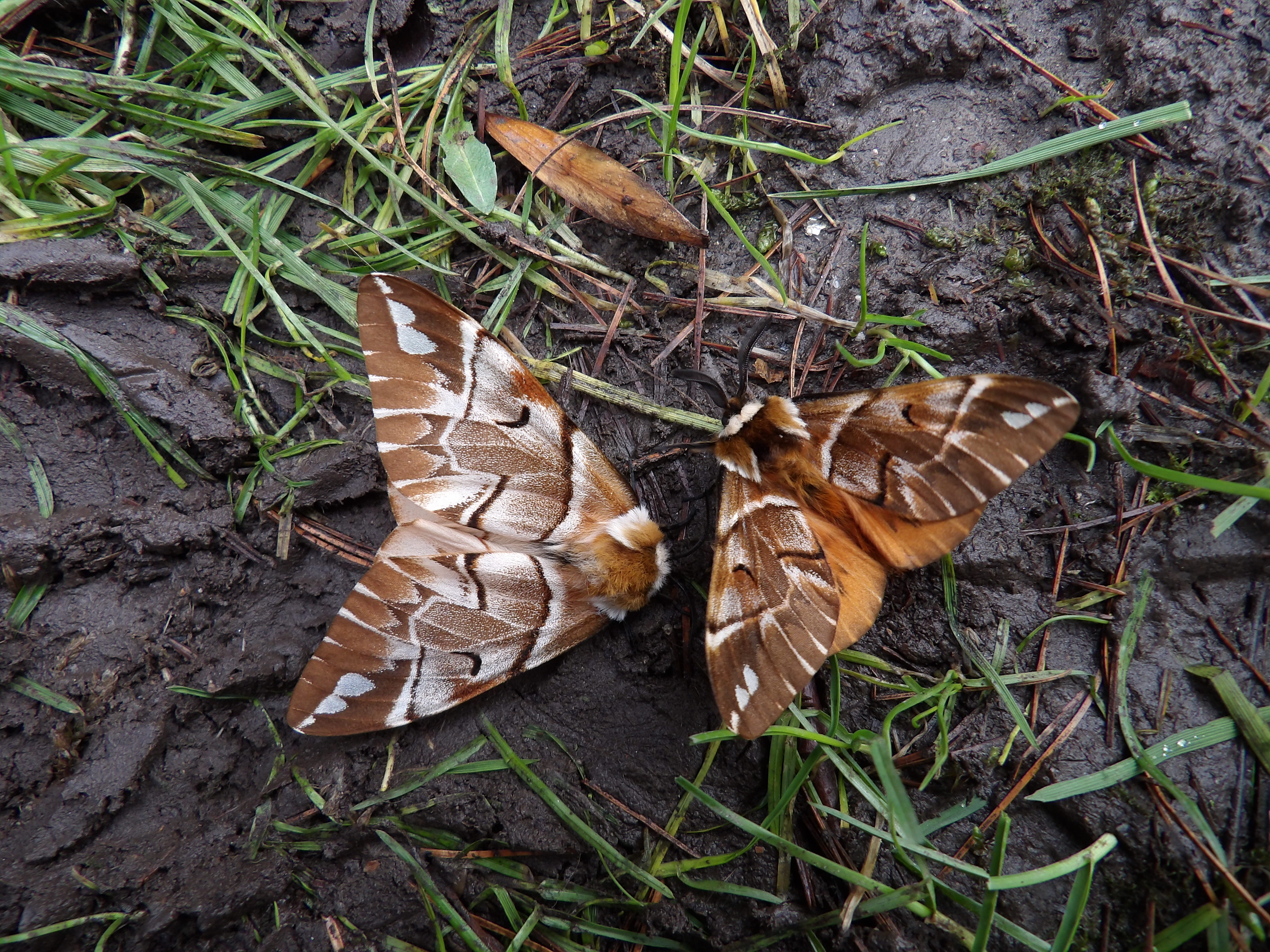
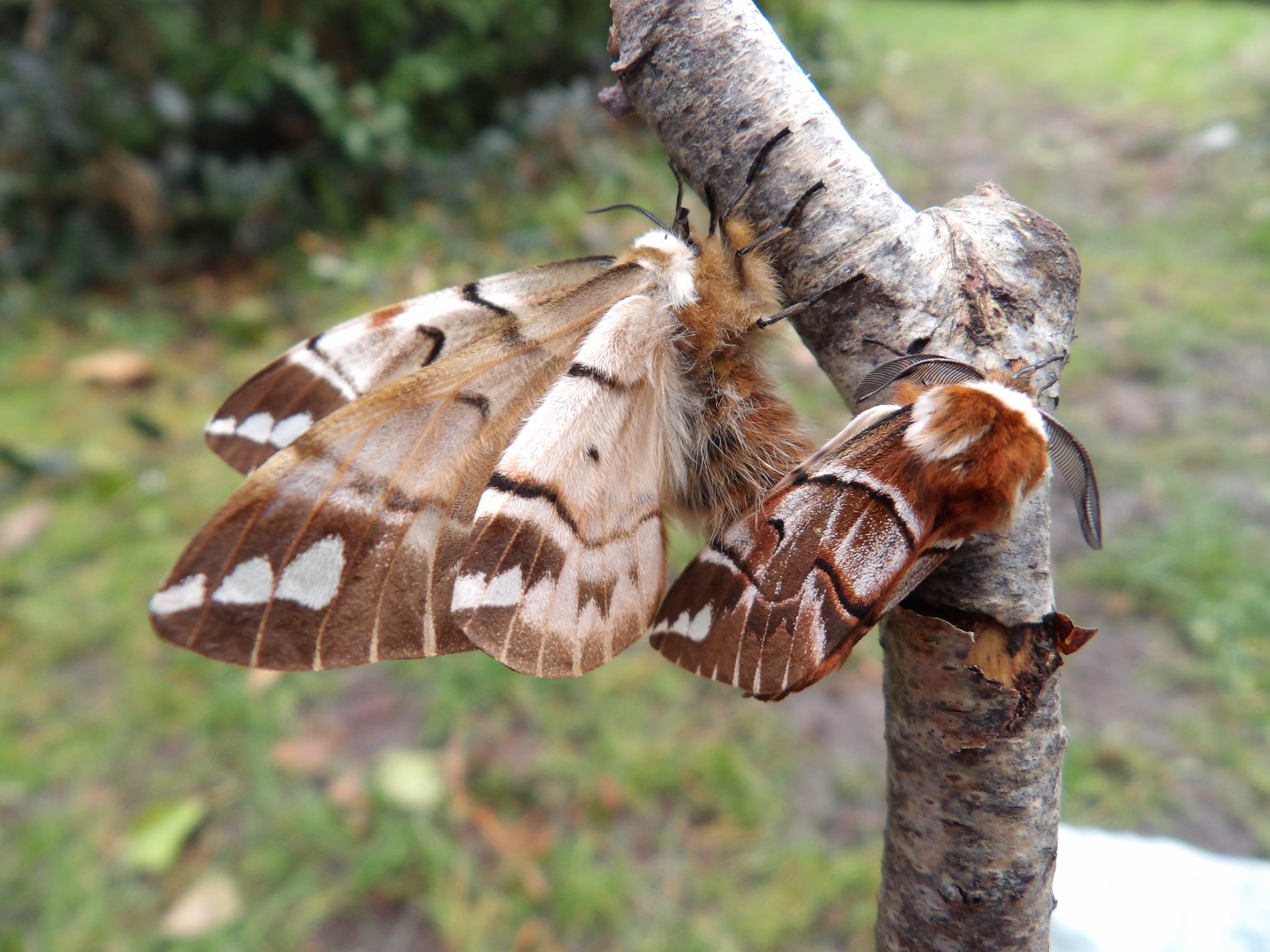
On paper, the species appears to be quite widespread in Europe. Yet the moths appear to be elusive, having a rather cryptic lifestyle, and often maintaining low-density populations. One has to be quite lucky to stumble across one in the field. Moths are generally seem from February to June (flight time geographically varies based on altitude, latitude and season). In most places the peak flight time is late March; but emergence can be delayed or accelerated based on spring tempetures (cold prolongs their hibernation, warmth speeds them up in spring).
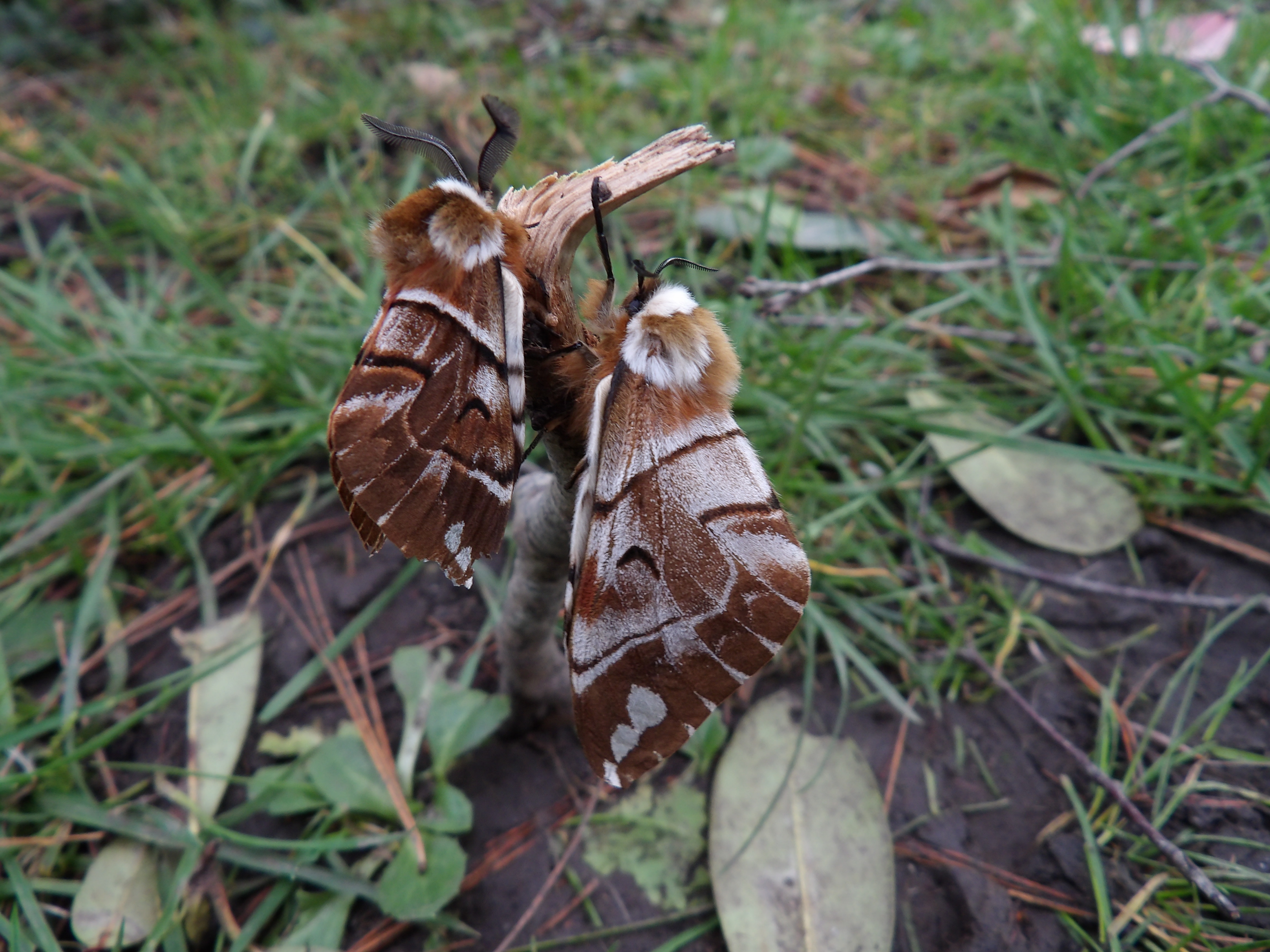
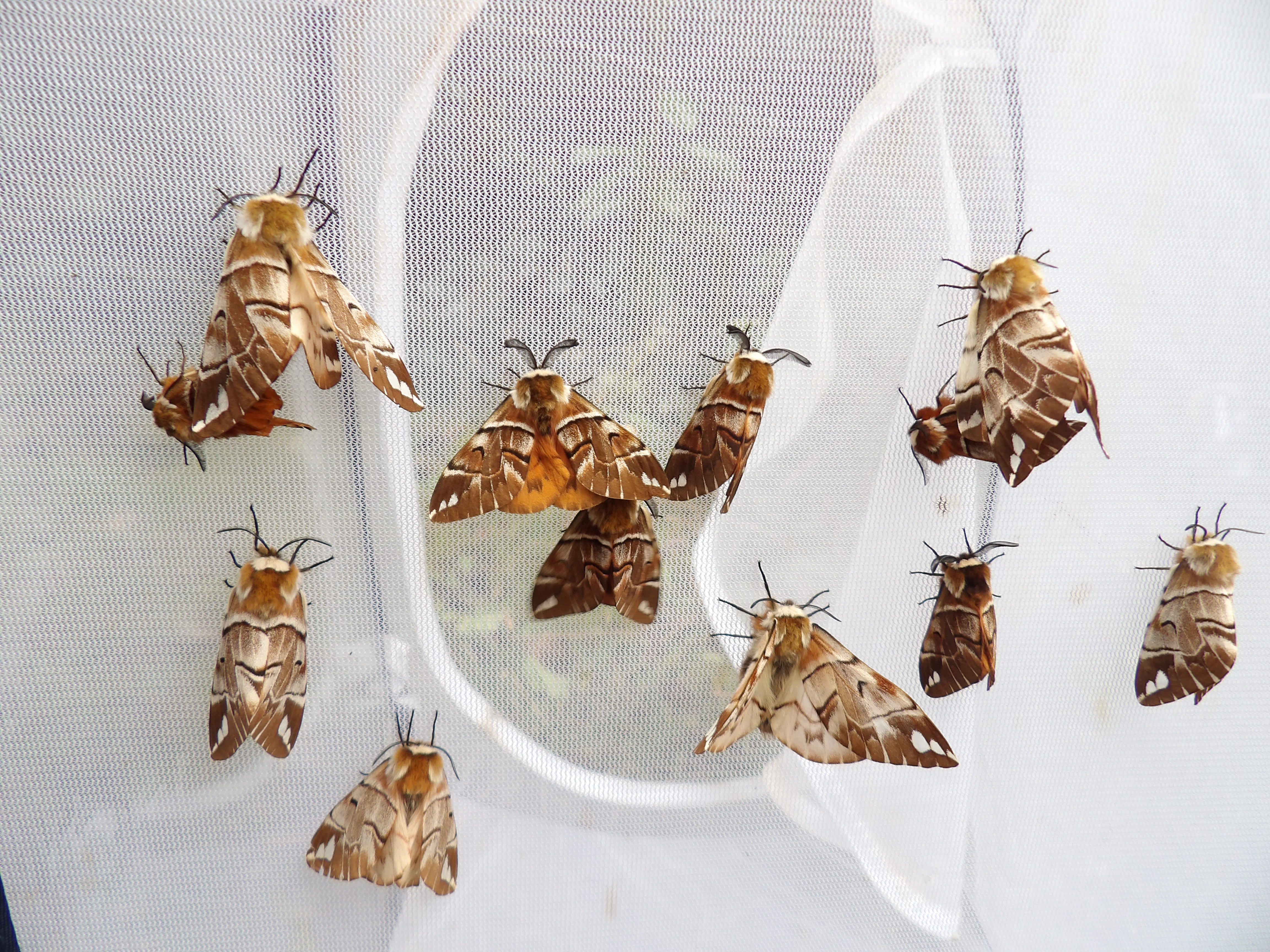
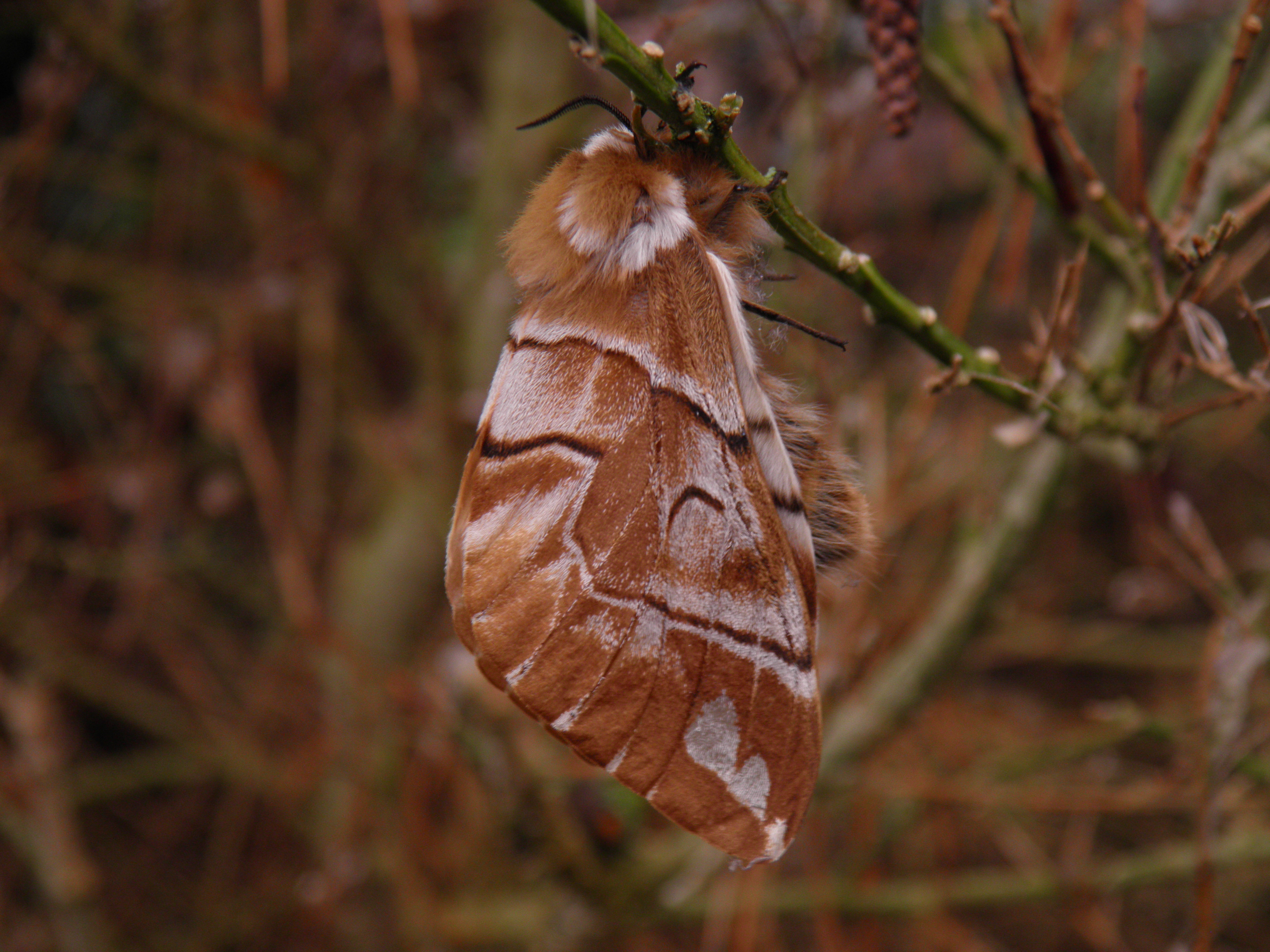
The moths are rather large (by European moth- standards that is) and really beautiful in their own way. The rich brown, white and orange markings make them look like artisan, flying, and rather artistically designed cinnamon buns. Males tend to be darker orange while females are often much more pale and have more creamy white frosting. There is a strong sexual dimorphism, with females often being atleast twice the size of males. The males are diurnal, and they often fly in the afternoon or dusk, looking for females. Females appear to be more passive at first, mainly sitting still and waiting for a male to locate her. However, after mating has taken place, females do make short flights (at night, they are nocturnal unlike the males!) to find a suitable spot to deposit her eggs, typically on the branches of birch trees. The eggs can hatch in as little as 2 weeks (14 days) but their development is significantly prolonged by cold temperatures, as much as over a month (33 days+) in some cases. This allows the moths to be active very early in spring, even before the host plants have grown leaf buds in some cases, and ensures that the hatching of the eggs coincides with the trees growing leaves. Some suggest the eggs can also use chemical cues to detect leaves of the host plant budding.
Mixed signals: In terms of conservation, the species warrants some special attention. There are mixed signals, and some of them are concerning. If we zoom out and look at the ‘big picture’ the species seems to be extremely widespread, from Central Europe, stretching into Russia into the Far East. This is certainly positive, and shows that atleast on a species-level, Endromis versicolora is probably not being threatened at an existential level any time soon. However, if we ‘zoom in’ on a smaller scale (country level), we can also tell that the species is locally struggling and even at risk of becoming locally extinct in some countries. For example, in Belgium, the United Kingdom, Switzerland and parts of Scandinavia the moth has steadily been pushed back the past few decades, forcing its dwindling populations to become increasingly fragmented, isolated and vulnerable.
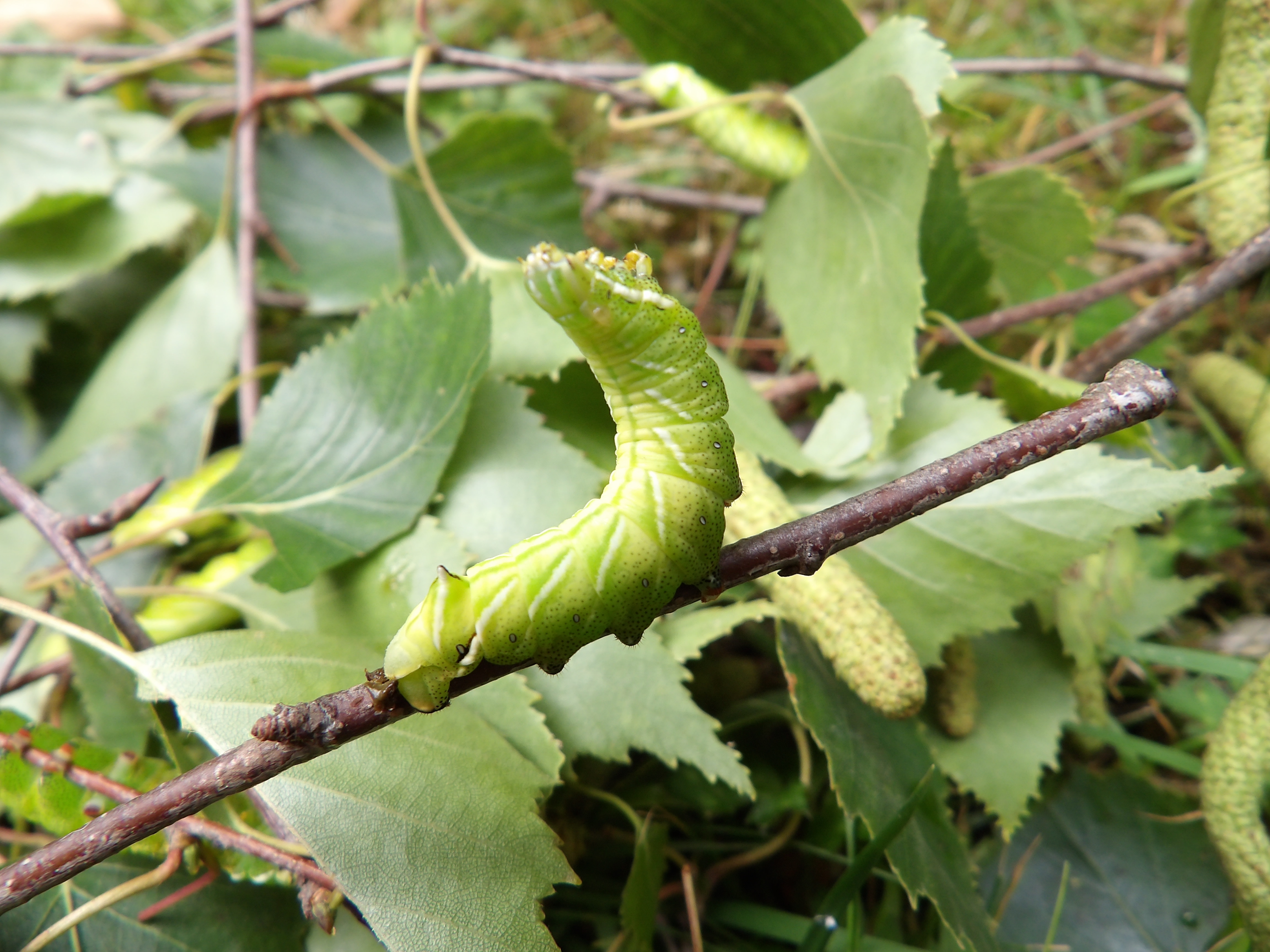
The larvae are green, with subtle white stripes, and are generally excellently camouflaged as catkins – it is no suprise all their major host plants (birch, alder, hazel, hornbeam) seem to have them! To make the illusion even stronger, larvae often assume their unusual resting position, which can only be described as them bending backwards. Larvae have a small bump on their rear which could resemble the anal horn that Sphingidae typically have, causing some people to incorrectly assume it is a hawkmoth larva.
Achilles heel: The reason that Endromis versicolora appears to be so vulnerable to changes in the landscape is because it is generally dependent on a very specific type of habitat. Indeed, it is often classified as a ‘woodland’ species. However, they cannot just inhabitat any type of woodland. The species is heavily reliant on light birch woodland. The birch is a pioneer plant that often grows near forest edges or clearings, especially during the early stages of succession as open landscapes transition into forest. Some species are more adapted to dry, sandy, acidic soils, while other birch species are better adapted to wet, poorly drained marshy or bog-like areas. Birch woodland often forms in forest edges (succession) and clearings (sometimes after logging), swamp- bog and moorland forest, montane regions and riparian forests.
The conservation of Endromis versicolora goes hand-in-hand with the restoration of these light birch woodlands, for it is precisely this type of forest that often gets the short end of the stick when it comes to conservation. For example, historically speaking, forest management practices often failed to take natural forest edges into account; healthy forests should have rich fringes with younger trees, in Europe typically young trees such as Betula (Birch), Populus (Poplar), hazel (Corylus) and Rhamnus (buckthorns). Too many forests end abruptly at the treeline and instantly and immediately transition into grassland, for example. Forest edges and fringes are also extra vulnerable to (over)grazing; an overabundance of herbivores such as deer, but more commonly managed species such as sheep, cows, horses or goats, can quickly destroy this type of habitat. And species like Endromis versicolora suffer for it (that and many other Lepidoptera species that have declined for the same reason – another example is Limenithis populi or the poplar admiral, another species that relied on forest fringes and suffered larged declines).
After reading all of this information it is probably not a suprise to find out that the primary host plant of this species is birch tree (Betula sp.). Birch is the primary, and most important food plant for this species. However, more rarely, Endromis versicolora also uses secondary host plants. These include Alnus (alder), Corylus (hazel), and Carpinus (hornbeam).
- Difficulty rating: Average – not difficult to breed, but some basic experience with moths is recommended.
- Rearing difficulty: 4.5/10
- Pairing difficulty: 2/10
- Host plants: The primary host plant is birch tree (Betula). Secondary host plants include Alnus (alder), Corylus (hazel), and Carpinus (hornbeam).
- Natural range: Very widespread; found in pretty much all of central Europe (France, Germany, Belgium, Netherlands, Poland, Lithuania, Ukraine, Czechia, Slovakia, Italy, Austria, Croatia, Slovenia, Luxembourg, Latvia, Estonia, northern Ukraine, Belarus), southern Scandinavia (Sweden, Finland, Norway, Denmark). Present in only in the northern parts of Portugal and Spain. Same applies to the United Kingdom where only a few isolated populations remain in Scotland. There seem to be populations in the Balkans too, with more rare observations from parts of Bulgaria, Romania, Bosnia, Croatia. Also seems to be present in the Caucasus mountains (Georgia/Turkey). – Then, it is found from European Russia into the Far East, possibly even into the most northern parts of China and Mongolia.
- Polyphagous: yes, feeds on multiple hosts
- Generations: Univoltine / single brooded
- Family: Endromidae (Glory moths)
- Pupation: Cocoon (silk encasing)
- Prefered climate: A cold-adapted species that can fly early in spring.
- Special notes: Honestly not difficult to breed, the biggest obstacle is the fact that larvae can be sensitive to infections sometimes. The rest should be smooth sailing. It is also an early spring species, don’t hibernate the pupae too long(!).
- Estimated wingspan: 48mm-80mm; females are much larger than males.
- Binomial name: Endromis versicolora (Linnaeus, 1758)
How to breed Endromis versicolora, a caresheet:
Wait what? A caresheet? If the moth is so rare or endangered why breed it in captivity? – Ah. The winds have changed. Once upon a time, entomology (and biology as a whole) was more like the wild west. It was a time of unregulated trade and collecting; explorers, often funded by millionaires, would do collecting trips around the world and would indiscriminately kill anything that moves – from birds of paradise to rare butterflies. Species were being described for the first time at a rapid pace. Museums competed aggressively to build the largest collections. Scientific prestige was tied to how many new species you could bring back. Species were being described for the first time at a rapid pace. Figures like Alfred Russel Wallace funded their travels largely by collecting specimens and selling them to wealthy buyers and institutions. Today we live in a very different world – and maybe it’s for the better, since these practices were far from sustainable.
Nonetheless, when it comes to entomology, there has always been one fundamental truth since the dawn of time, that relates back to afforementioned history: the vast majority of faunistic information comes from amateur enthusiasts. Whether or not it was the collectors of old that built massive butterfly and moth collections, or the more modern practice of breeding butterflies and moths in captivity. In a world where collecting is becoming more taboo and more regulated, a lot of people have switched to photographing or rearing moths instead.
Rearing moths is actually a very educational practice, for it allows us to document the early life stages of species, and their development, something that is poorly documented for a suprising amount of species. And for once, I’d like to point out one fundamental truth: institutional entomology cannot compete with a handful of people with too much free time on their hands. Instead of wagging our fingers at people for involving themselves with wildlife, we should very much cheer them on. Insects, when it comes to conservation, are still severely misunderstood, ignored – and the fact that they are less charismatic to the general public is an existential threat to them, since charismatic species tend to get more funding when it comes to research and conservation. Not only does rearing moths allow for a close experience with animals we would otherwise rarely encounter or experience up close, it can create awareness and generates a lot of faunistic information. This website is a good example; it is owned and written by one single person (it’s me! Bart Coppens!) that has reared up to a thousand moth species in his lifetime and has documented all their life cycles. And I intend to keep going. Did I mention that this website has been the first to publish the life history of a moth species several times? Yes, species with previously undocumented life cycles!
I’m not saying this to brag or toot my own horn, but rather, to illustrate to my readers how, if one person is motivated enough, they can potentially make an incredible difference, especially with poorly appreciated and understood groups of animals like moths. And ideally people should have the facilities to do so if they wish. I have no doubt that scientists that aim to breed this moth in captivity for conservation purposes will turn to this website for advice, for example. Much of the foundation of this type of science relies on complete amateurs and moth enthusiasts. Give us the space to our thing! On top of that, moths often sustain breeding populations with large amounts of individuals (even for rare moth species), and if done within reason, taking the eggs of a wild female in order to rear the moths in captivity should not harm a healthy population (consider how high predation rates are!).
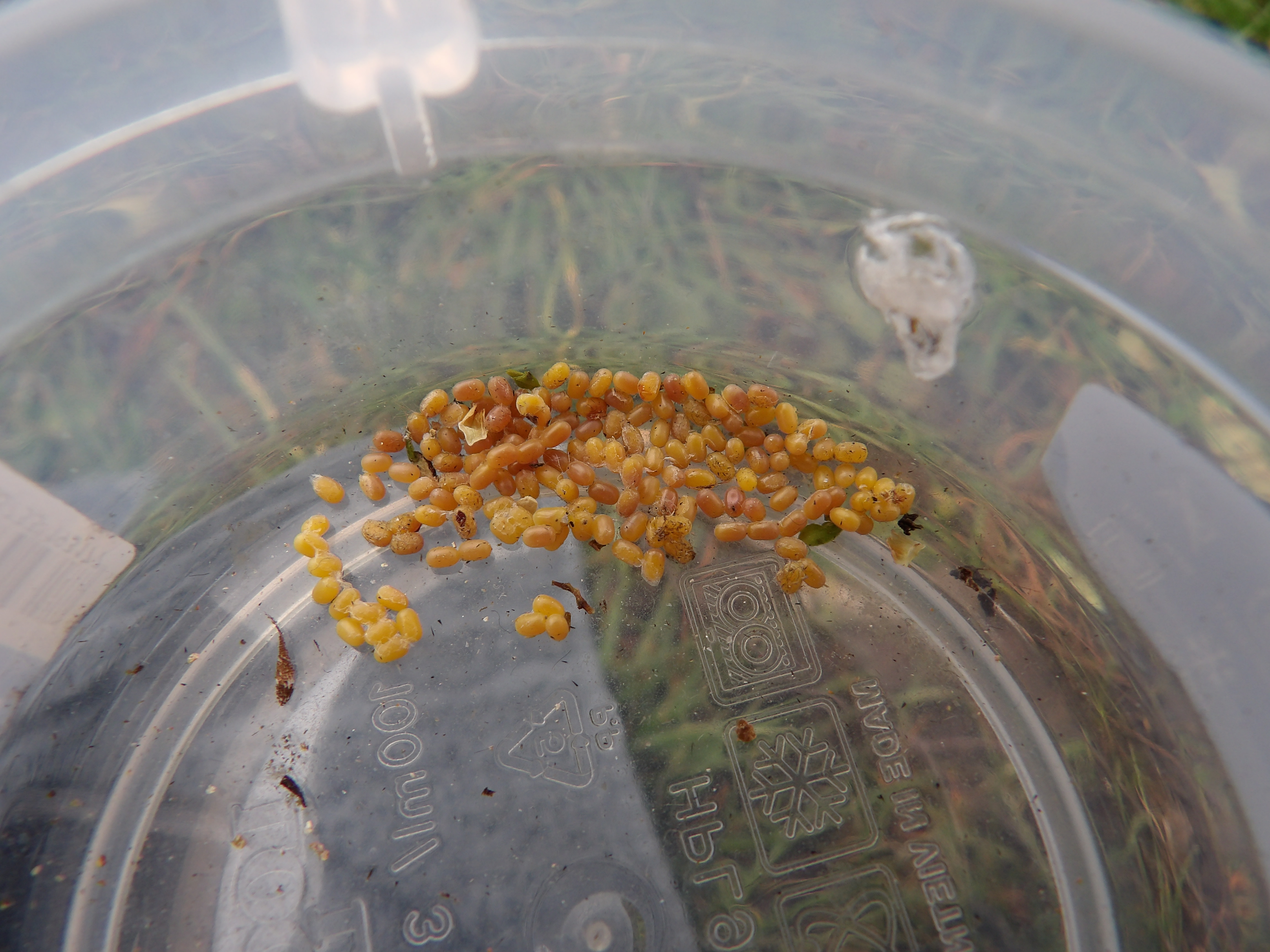
The eggs of Endromis versicolora are oval, and if freshly laid, yellow in colour. As the larvae develop inside the egg, they gradually turn from yellow to chocolate-brown. The development time of the eggs is something interesting. It seems if kept warm, the eggs can hatch as quickly as 14 days (2 weeks) in some occasions. However, it seems that if laid on a living host plant, eggs can possibly use chemical cues to delay their hatching and align it with the moment the host plant starts to bud/grow leaves. Temperature also plays a role in this – cold temperatures also significantly delay the development time of the eggs, but rearing experiments on live host plant also show evidence for the eggs being capable of using different cues. If refridgerated, the eggs can even stay dormant for over a month (33+ days!) before any larvae hatch. In captivity, one can use this to their advantage. Store eggs cold to postpone development early in the season until adequate host plant is available.
Eggs can be kept in petri-dishes. Once the larvae finally hatch, use a paintbrush or stick to transfer them to a rearing container.
There are several ways to rear larvae. They can be reared in plastic boxes, if given adequate food and ventilation. However, being reared in a rearing-sleeve or on a live host plant also gives adequate results. Important for them is to have a semblance of humidity. Larvae prefer humid (but not wet) conditions, with a bit of airflow.
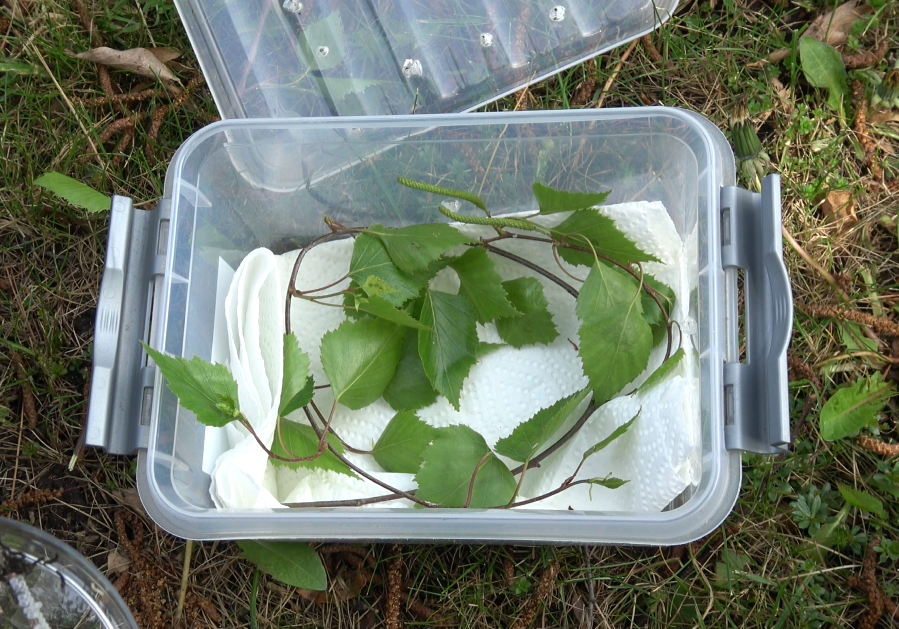
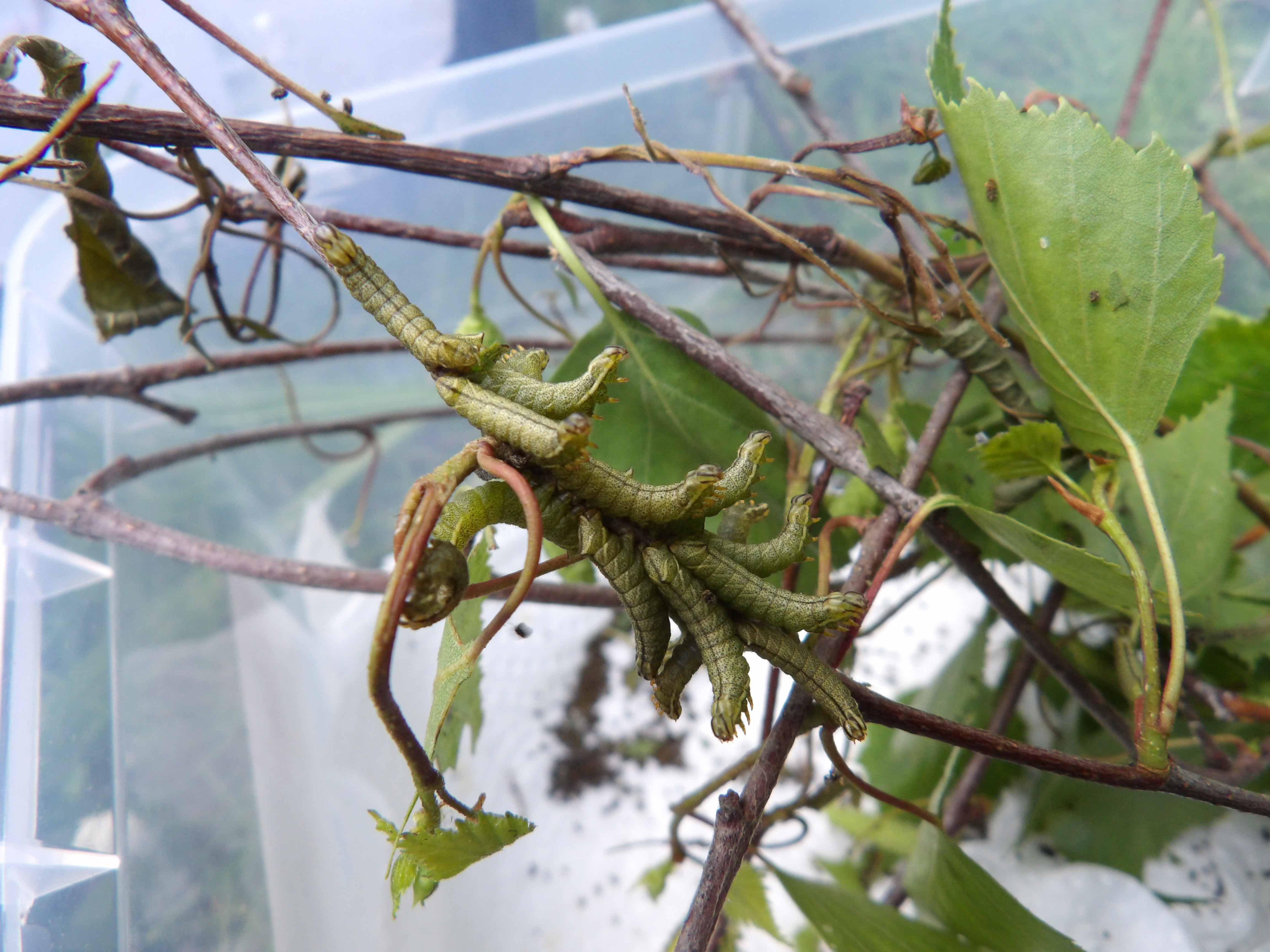
If you choose to rear them in plastic boxes; cover the bottom of the container with a thick layer of paper towels, and create small ventilation holes in the container so that excessive moisture can escape. Then, give them fresh birch (Betula) branches. Replace the branches every 2-3 days (birch tree can dry out fast). The L1 and L2 can be reared in relatively small plastic storage containers (20cm x 10cm x 10cm will do). – Then, after the 3rd instar (L3), transfer them to much larger boxes (I often pick a specific brand of 58cm x 44cn x 31 cm boxes that I buy online). After L3, a little bit of airflow and/or ventilation becomes important. While the first instars tolerate higher humidity, the L3 and L4 don’t like overly ‘stuffy’ conditions. Cut one or several large holes in the rearing container (a few 10cmx10cm holes will do) and cover the hole with mosquito netting or mesh. The plastic box and moisture the host plant releases over time will create a naturally humid environment, but some airflow/ventilation prevents condensation, and inhibits bacterial growth (wet conditions can make larvae sick).
If you choose to sleeve the larvae, choose a healthy birch tree (Betula). For convenience, a younger tree is easier (but mature trees are acceptable too) and add the larvae to a rearing sleeve. Some sunlight is acceptable, but make sure the larvae are not fully exposed to the sun all day long (that’s a good way to cook them alive!). Hang them in the shaded or semi-shaded side of the tree.
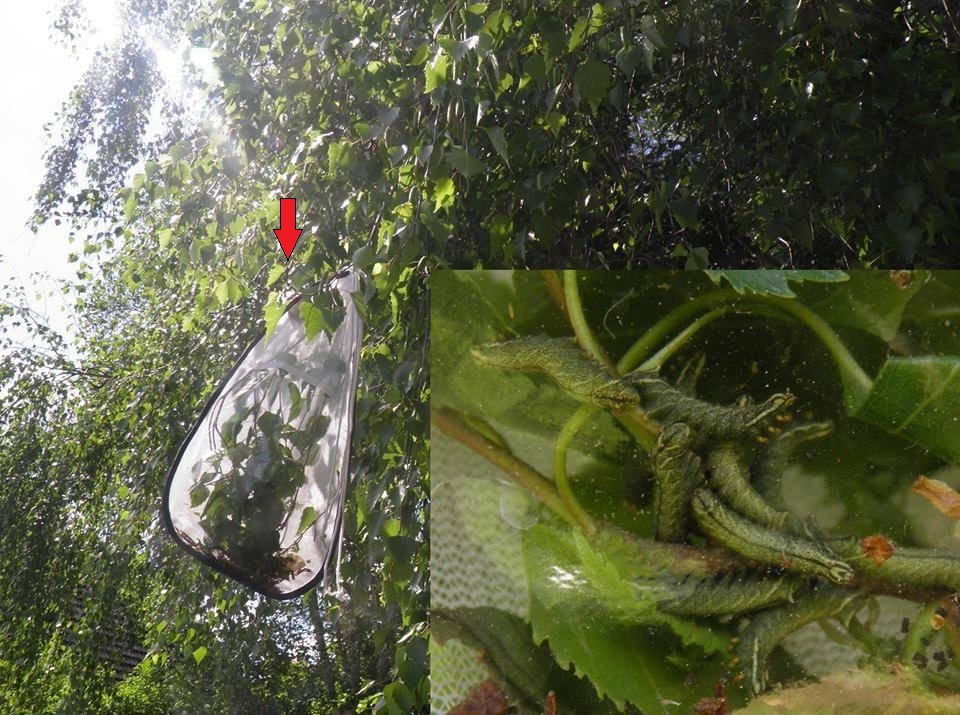
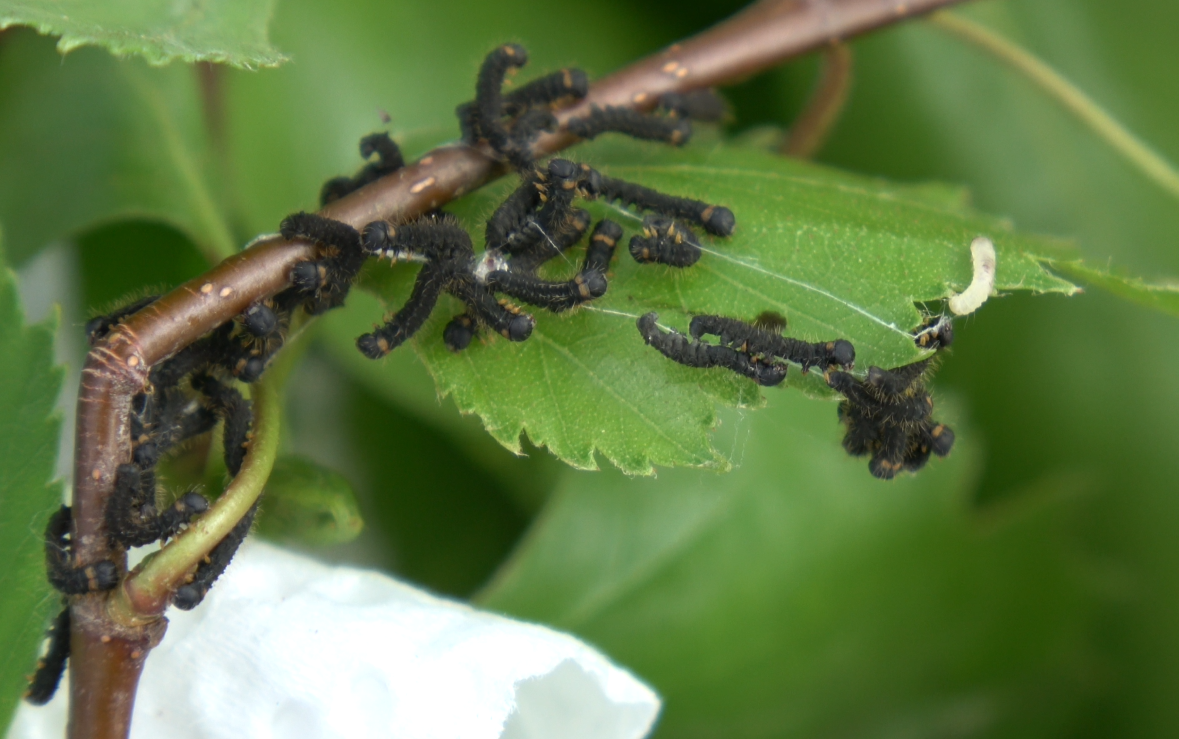
The first instar of Endromis versicolora appears to be plain black. As they begin to feed, they become more grey-ish and round; the second instar is a dark grey-ish green shade. Make sure the rearing sleeve is free of certain pests – such as aphids that produce mildew, or ants –
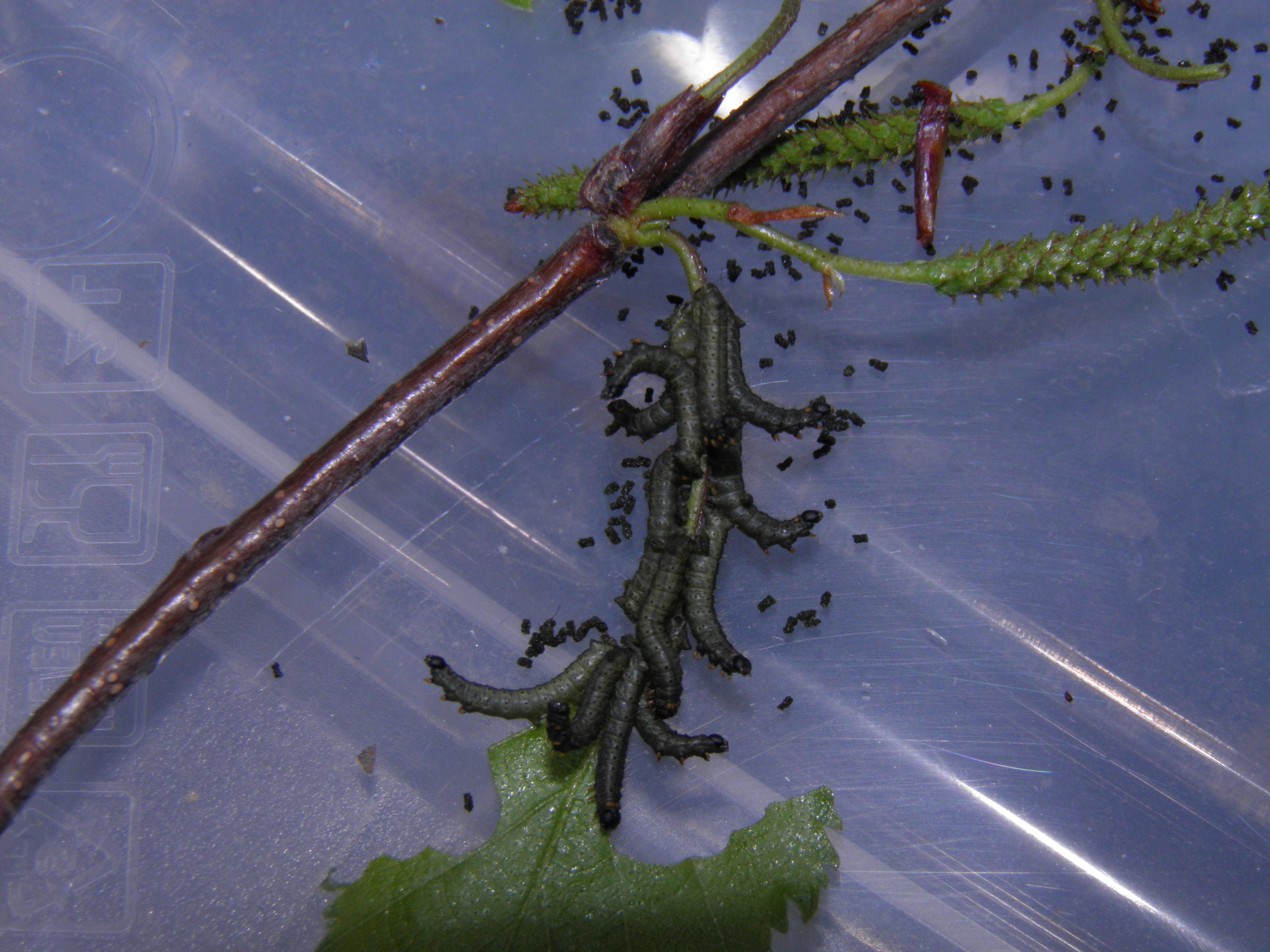
The third instar and fourth instars (=final instar) are is light greenish. Perhaps L3 and L4 look very similar and can be hard to tell apart from a photo alone, but there is a significant size difference on top of a behavioural difference.
Instar 3 (L3) is still gregarious and the larvae often form groups around the branches of the host plant. The final instar (L4) becomes more or less completely solitary.
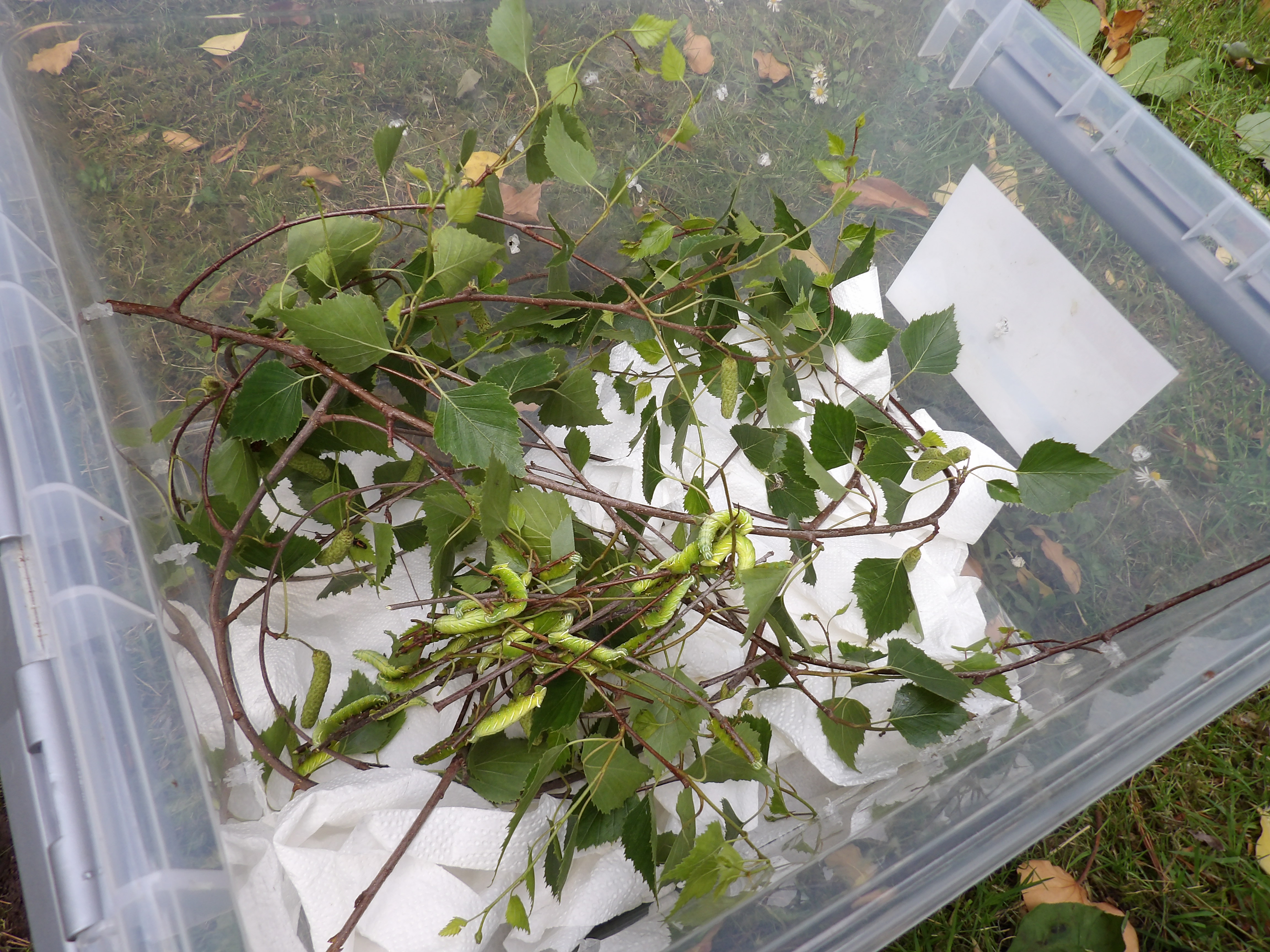
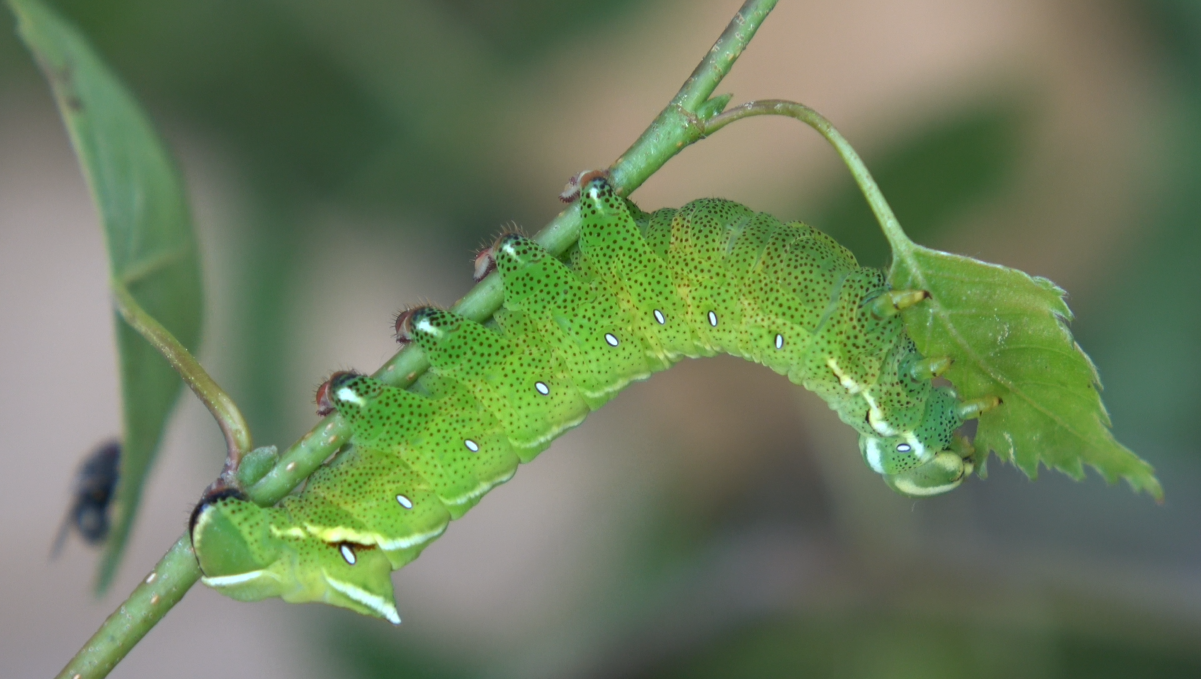
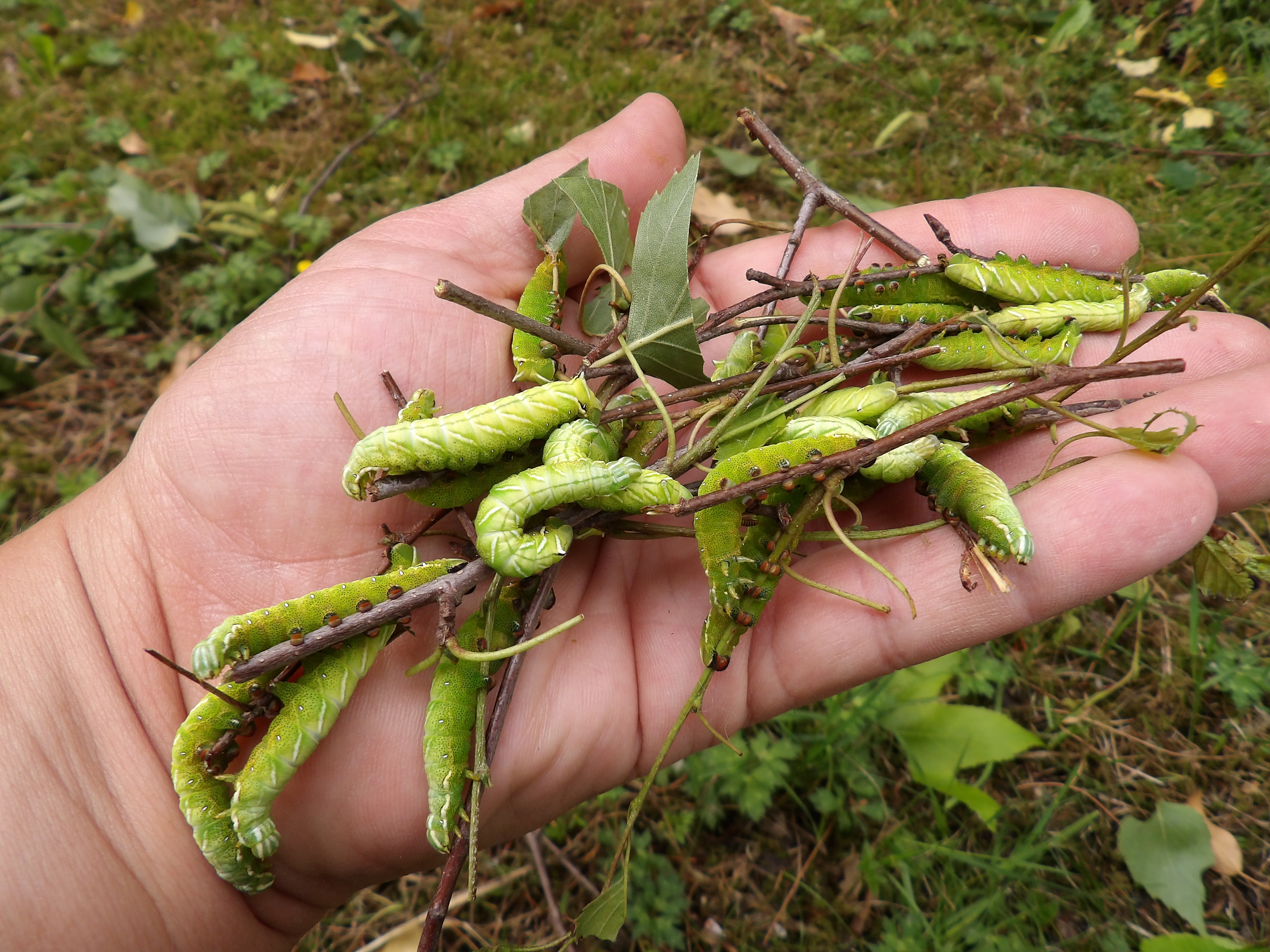
Hard to rear? In my opinion Endromis versicolora is not terribly difficult to breed. The main challenge, when it comes to rearing the larvae, is to prevent infections; they can be vulnerable to diseases.

Once your moths come out, congratulations!
Pairing Endromis versicolora seems rather easy. In fact, in many cases, I’ve had males and females mate with eachother immediately after eclosing from their pupae and drying their wings, the males’ very first ever flight often being directed straight towards the female. If the moths are healthy (and not too genetically related) the males are generally very eager to locate the female in captivity.
If, for some reason, you have trouble mating this species, do keep in mind that it is a day-flying species. You probably won’t get them to mate easily in dark conditions. They don’t really seem to care about sunlight (UV) however, and the moths seem to mate even on the cloudiest of days; so long as there is any semblance of ambient lighting.
Also important is a bit of airflow/ventilation; males locate females based on their scent(!), and indoors they might struggle to find her if the room is saturated with pheromones. Help them find the source of the pheromone with some airflow. It also helps not to overpopulate the enclosures with females, this could overwhelm males. Generally speaking I never have trouble mating this species however. They are also quite cold hardy and will fly and mate in low temperatures (I do not know their limit but I’ve seen them mate in 6C atleast). There are reports of the moths eclosing early in the year when there is still snow on the ground!
While they can survive rather low temperatures, they don’t really seem to require them. In fact, the moths seem to be a lot more active around room temperature (20C). Indeed the species has evolved to survive in spite of cold weather conditions, but on the surface, they probably still benefit from extra warmth. The moths will mate in standard pop-up cages made from netting. They do seem to lose their tarsal claws quite fast on certain fabrics however, but this does not impair their ability to breed in captivity for the first few days.
Thank you for reading my article. This is the end of this page. Below you will find some useful links to help you navigate my website better or help you find more information that you need about moths and butterflies.
Dear reader – thank you very much for visiting! Your readership is much appreciated. Are you perhaps…. (see below)
- Not done browsing yet? Then click here to return to the homepage (HOMEPAGE)
- Looking for a specific species? Then click here to see the full species list (FULL SPECIES LIST)
- Looking for general (breeding)guides and information? Then click here to see the general information (GENERAL INFORMATION)
- Interested in a certain family? Then click here to see all featured Lepidoptera families (FAMILIES)
Citations: Coppens, B. (2020); Written by Bart Coppens; based on a real life breeding experience [for citations in literature and publications]
Was this information helpful to you? Then please consider contributing here (more information) to keep this information free and support the future of this website. This website is completely free to use, and crowdfunded. Contributions can be made via paypal, patreon, and several other ways.
All the funds I raise online will be invested in the website; in the form of new caresheets, but also rewriting and updating the old caresheets (some are scheduled to be rewritten), my educational websites, Youtube, breeding projects, the study of moths andconservation programs.
Donate button (Liberapay; credit card and VISA accepted)

Donate button (PayPal)
Become a member of my Patreon (Patreon)
Find me on YouTube
Find me on Instagram
Join the Discord server: Click here
Join the Whatsapp server: Click here
Facebook: Click here
 Welcome, visitor!