
Calsaturnia walterorum, also known as Walter’s Silkmoth, or Walter’s Saturnia Moth is a rare species of silkmoth that appears to be endemic to the state of California (United States of America) and in Baja California, Mexico. It is a rather small, diurnal, bright orange species found in chaparral – a unique shrubland environment mostly found in California but also parts of Oregon and Mexico – where it is found from sea level to high altitudes in the mountains [0m-2000m+].
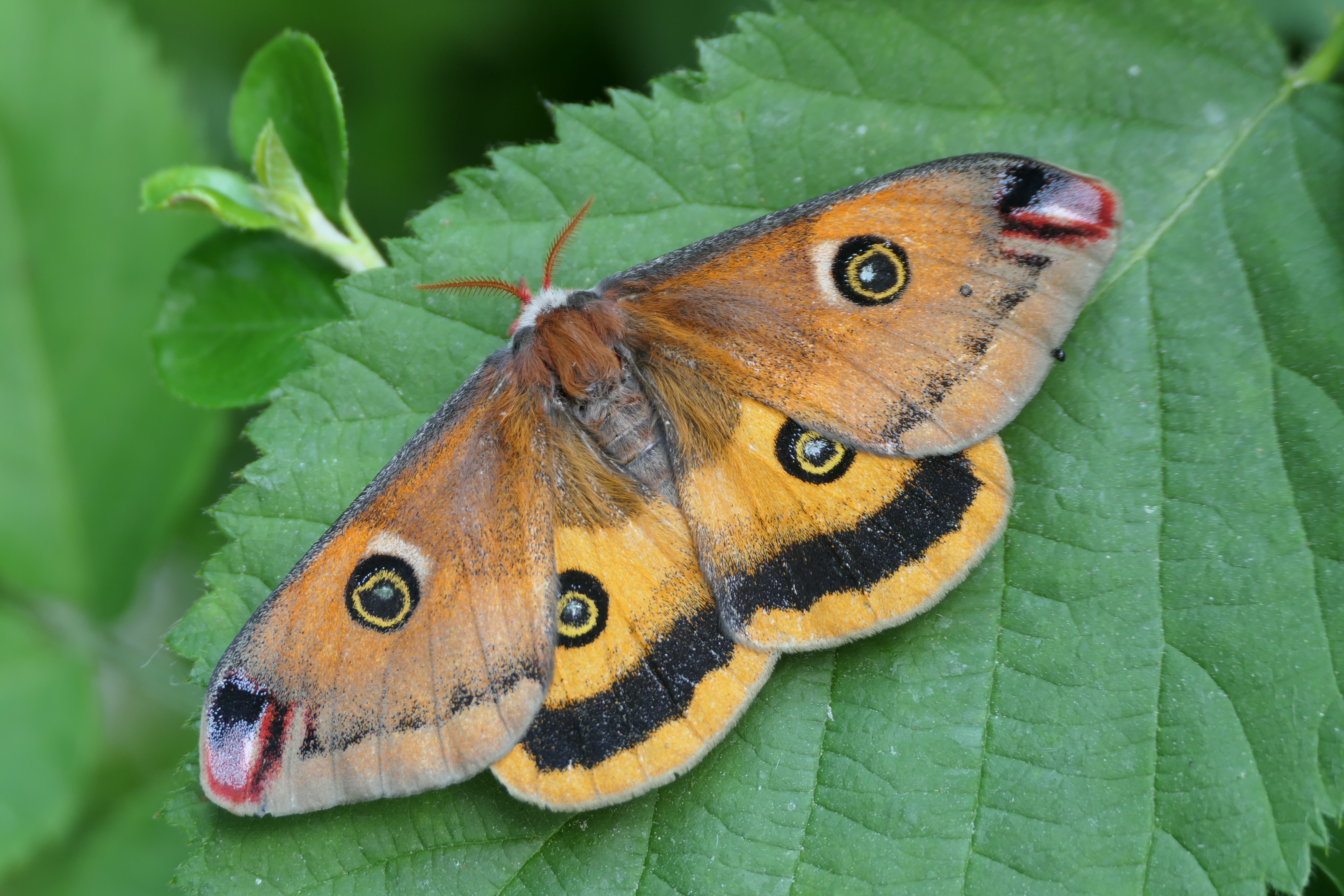

It appears that Calosaturnia walterorum produces just a single brood a year; after the larvae spin cocoons, the insects hibernate in the cocoons only to emerge as moths the following spring.
Moths fly from January into June; flight time may also locally vary a little based on altitude, as local temperatures regulate hibernation. Based on cooler or warmer weather in spring the moths may emerge sooner or later. Calosaturnia walterorum is a day-flying species. Matings can be hard to observe, even in captivity as they can last as little as 10 minutes, after which the male moves on to find another female.
Caterpillars of this species mostly feed on typical chaparral plants such as manzanita (Arctostaphylos spp.), lemonade-berry (Rhus integrifolia), malosoma (Rhus laurina) and madrone (Arbutus menziesii).
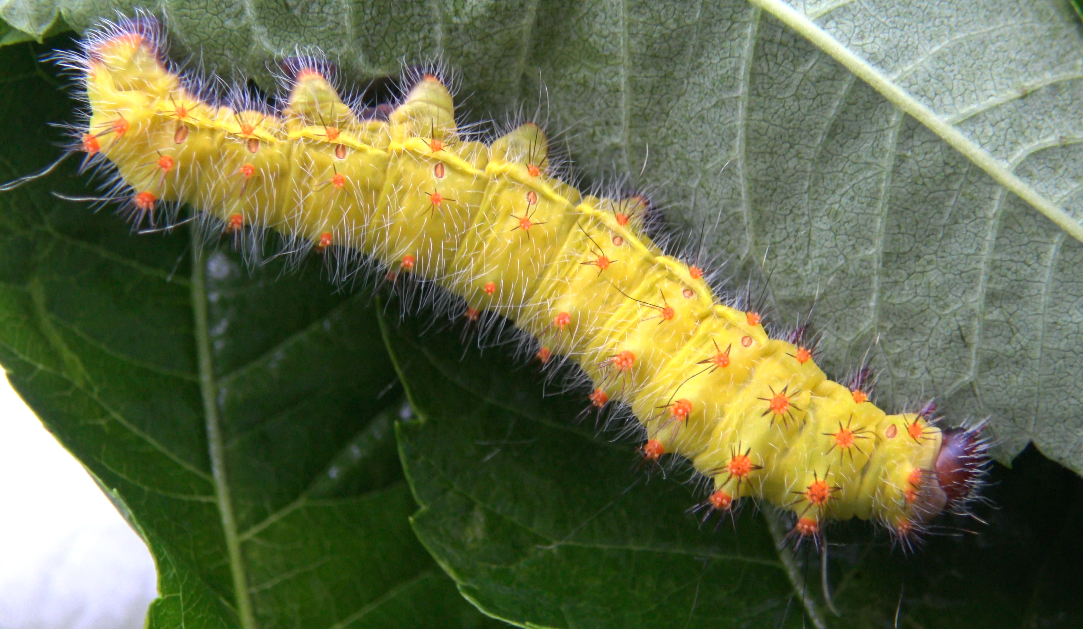
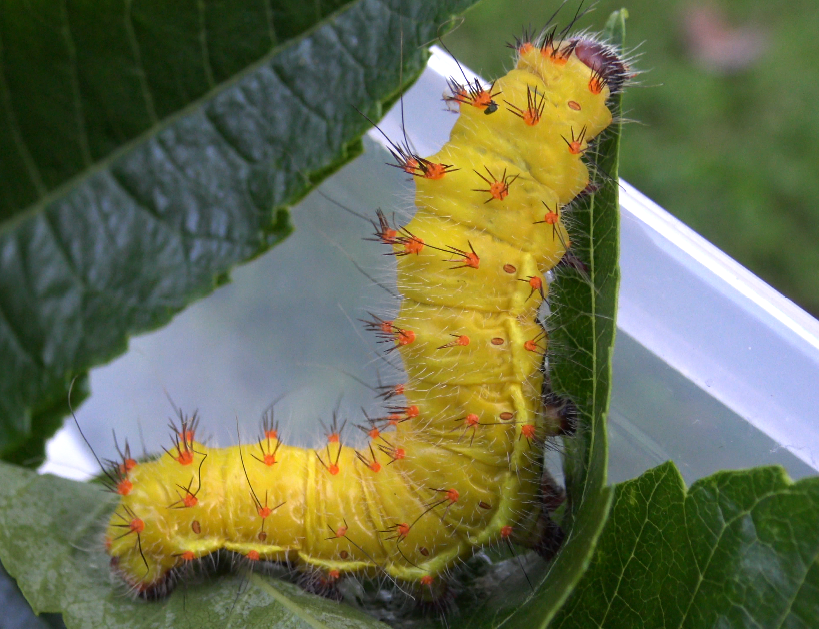
The larvae of Calosaturnia walterorum have remarkably bright colours and several colour forms ranging from green and yellow to orange. When touched, the larvae are mildly urticating(!).
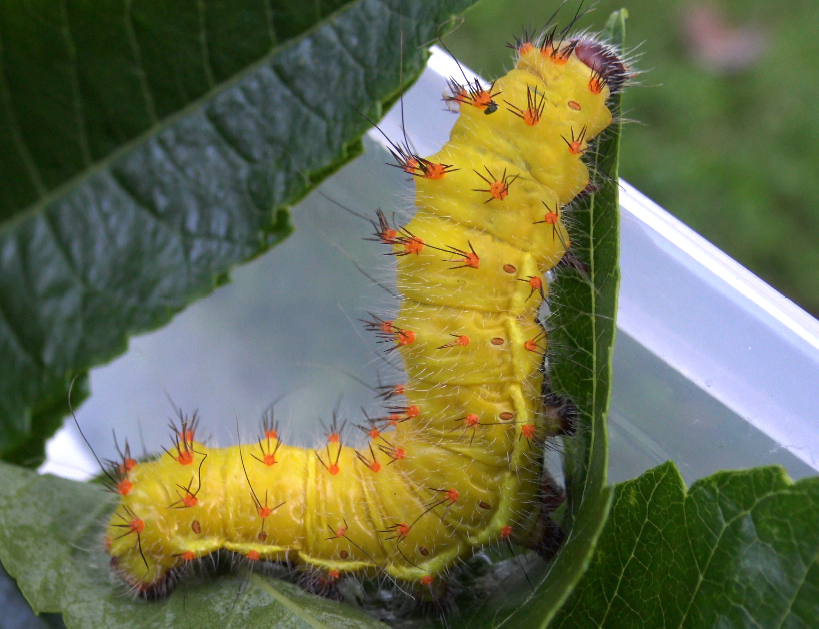
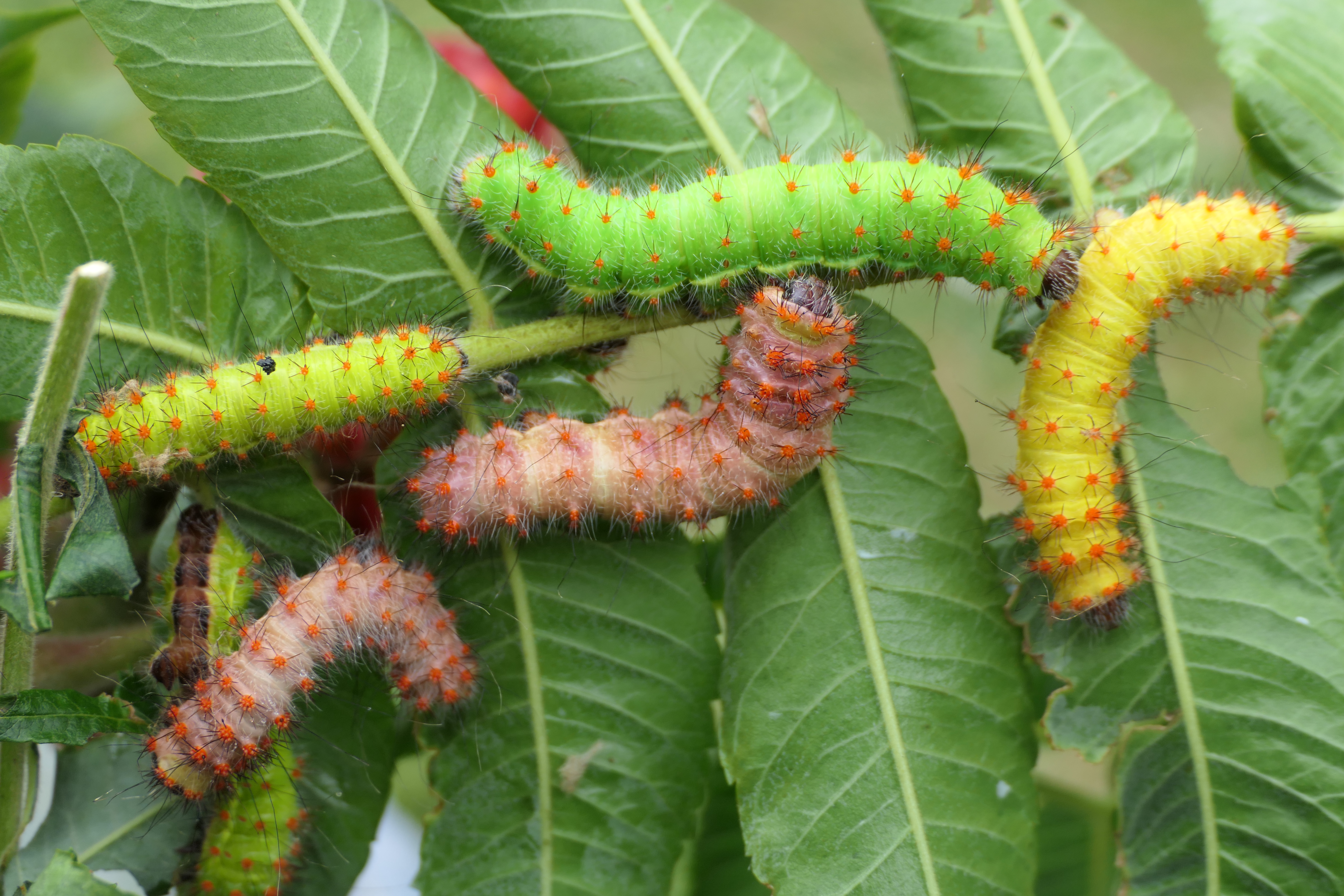
In captivity, the species is sometimes reared by hobbyists as they make for fun insects to observe in captivity. However, the species has a reputation for being difficult to breed, especially outside of California where it may be harder to recreate the local conditions in captivity. The larvae in particular, are picky when it comes to temperatures, humidity, and the larval density in captivity. Therefore it is considered to be a species for the more experienced silkmoth enthousiast. Larvae like airy (well ventilated), dry and warm conditions and can be rather prone to diseases and infections.
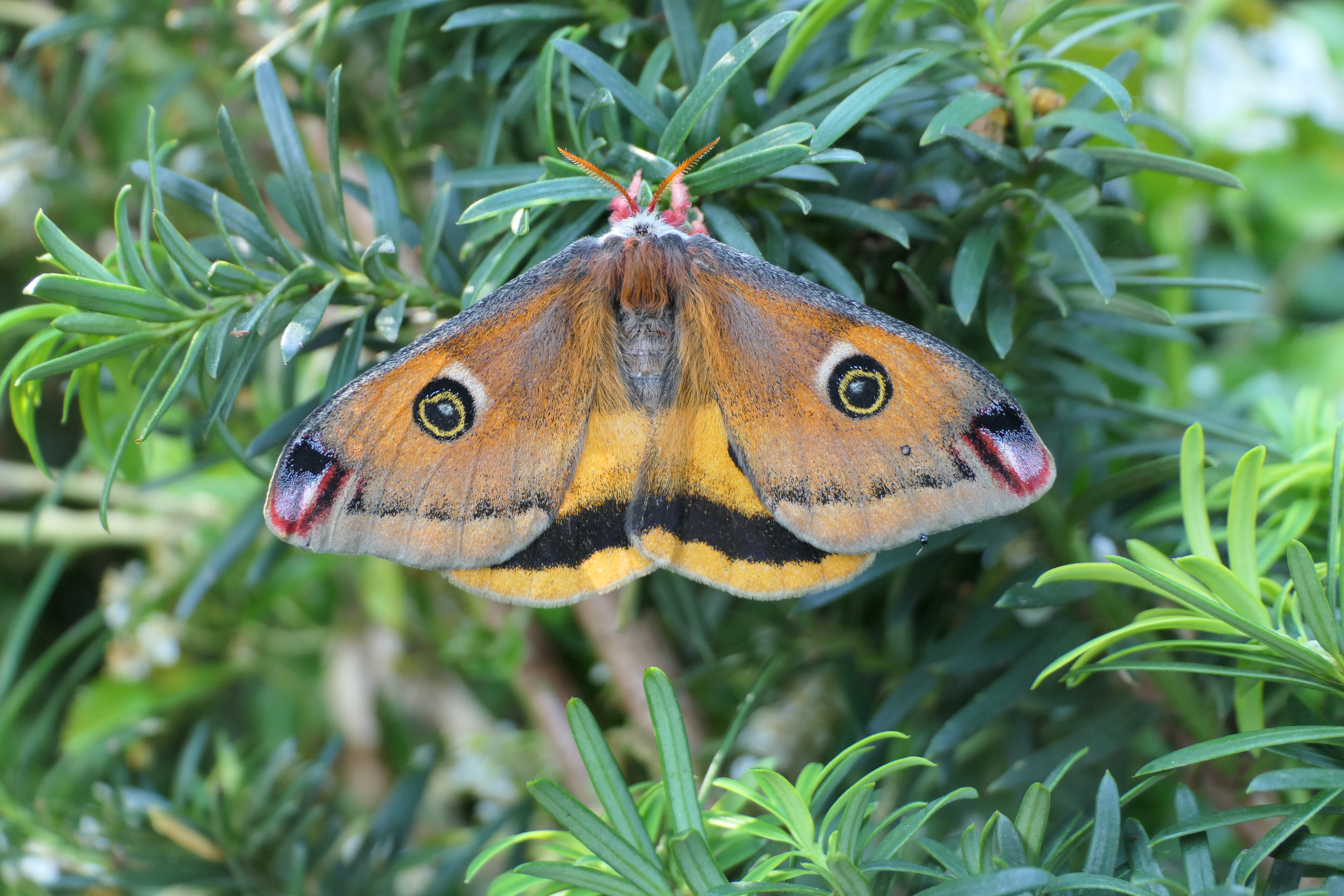
- Difficulty rating: Hard – this species is for more experienced breeders. It can be hard to make the larvae feel comfortable. Especially the final instars can die quickly from infections if they feel stressed.
- Rearing difficulty: 7.5/10 (From egg to pupa)
- Pairing difficulty: 5/10 (Achieving copulations)
- Host plants: The wild host plants are manzanita (Arctostaphylos spp.), lemonade-berry (Rhus integrifolia), malosoma (Rhus laurina) and madrone (Arbutus menziesii). In captivity they also feed on a few non-native host plants such as peppertree (Schinus sp.), strawberry tree (Arbutus unedo), staghorn sumuc (Rhus typhina), reportedly even sweetgum (Liquidambar) in some cases. It is worth exprimenting with Ericaceae and Anacardiaceae plants; perhaps even more options exist.
- Natural range: Southern California (United States of America) & Baja California (Mexico) [from atleast Angeles National Forest, USA into Vincente Guerrero, Mexico]
- Polyphagous: yes; feeds on several Ericaceae and Anacardiaceae
- Generations: Univoltine; cocoons always hibernate.
- Family: Saturniidae (silkmoths)
- Pupation: Cocoon (silk encasing)
- Prefered climate: Chaparral; open, warm and dry conditions + cold hibernation.
- Special notes: One of the more rare and harder to obtain species of native U.S.A silkmoths. A lot of breeders make one common and very painful mistake: throwing away the eggs before they hatch! Some people forget the eggs can take over 30 days to hatch.
- Estimated wingspan: 50m-68mm (males are rather small compared to the female)
- Binomial name: Calosaturnia walterorum (Hogue & J. W. Johnson, 1958)
The eggs of Calosaturnia walterorum work in mysterious ways; sometimes they hatch in 12 days(!) but in some cases, they take over 30 days(!) to hatch. This leads some moth breeders to throw the eggs away, thinking they are infertile. Big mistake! In some cases it can even take over 40 days.
Why and how this happens, I’m not exactly sure, but I can come up with one theory: you see, the moths of Calosaturnia walterorum emerge early in spring, when the local temperatures may be a little too cool for the larvae. It’s highly likely that the species can somehow prolong the development of the eggs or hatching of the eggs; and perhaps the larvae can wait until the conditions are just right before they come out. Some people have reported keeping eggs in their fridge for a long time, and being able to suppress the hatching of the larvae.
This is all not as unusual as it sounds; the development of the eggs of many Saturniidae moths (and moths in general) can be delayed by cold temperatures. Not just that, a lot of species of Saturniidae are able to hibernate in the egg stage for months,
It’s just that in captivity, the eggs of Calosaturnia walterorum can behave unpredictably; perhaps due to a lack of natural temperatures or other environmental cues they were supposed to follow in the wild, that are simply missing indoors!
The good news however, is that the eggs of Calosaturnia waterorum are easy to hatch on room temperature. In small plastic boxes or petri dishes they often hatch without any issues. It’s not complicated; it’s just that it’s hard to predict when the larvae will come out – it may take between 12 to 40 days.


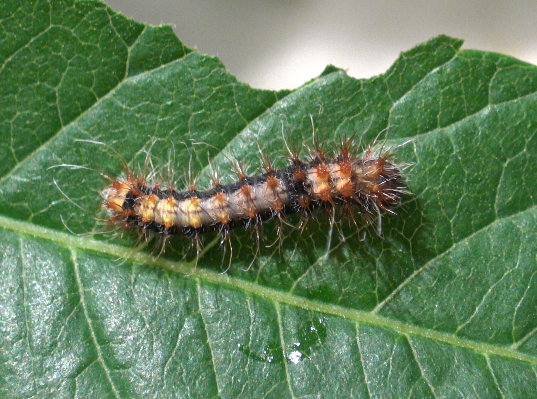


L1 and L2 larvae can be reared in plastic boxes, if they are lined with generous amounts of paper towels to absorb excess moisture. The best host plant for them is manazita (Arctostaphylos sp.); but they also grow quite well on Arbutus or Rhus. Brazilian pepper tree, or Schinus molle, is reportedly also accepted. Some breeders have even managed to rear them on sweetgum (Liquidambar) but I am not sure if I can recommend this; since it’s very far from their native food plants I imagine it produces lower survival rates [but I have yet to confirm this myself].
The first two instars of Calosaturnia walterorum seem easy to rear; it’s the last two instars (L3, L4) that are more tricky to raise.
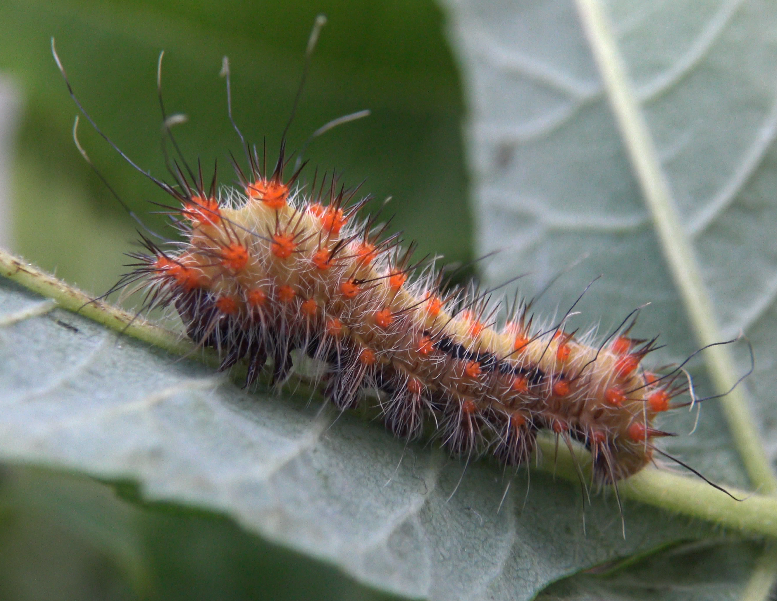

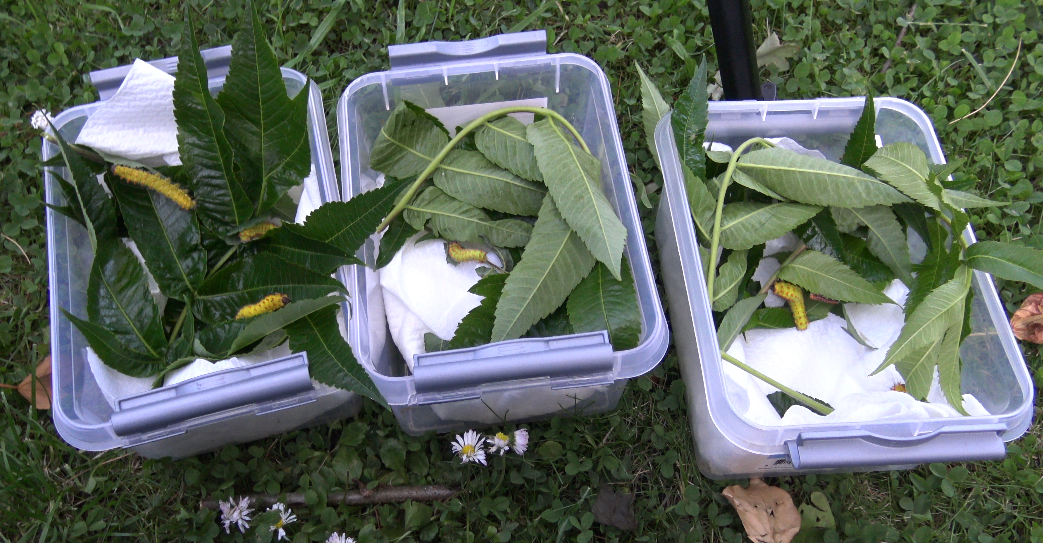
It is not recommended to raise this species in plastic boxes; yet I was succesful with it, somehow. I made sure to completely ventilate the boxes once a day by removing the lid and letting the container dry out and adding a massive layer of paper towel to suck up moisture. I desinfected them every few days, and only placed up to 3 larvae per box.
More recommended is to raise them in cages that are well ventilated, in a warm and dry environment. ‘Do as I say, not as I do!’ Generally speaking, instar 3 and instar 4 hate stuffy conditions.

In the 4th instar they seem to have a growth spurt! The are several colour forms; green, yellow, or beige. It is a good idea to not overcrowd them in the final instars, and to keep a smaller amount of individuals per enclosure.
For breeders that are knowledgeable when it comes to disinfection methods, I also used a diluted bleach solution to clean both the containers and larvae every few days to keep them free of diseases. This is only optional, but may reduce the chances of the larvae becoming sick since it is a rare and sensitive species.
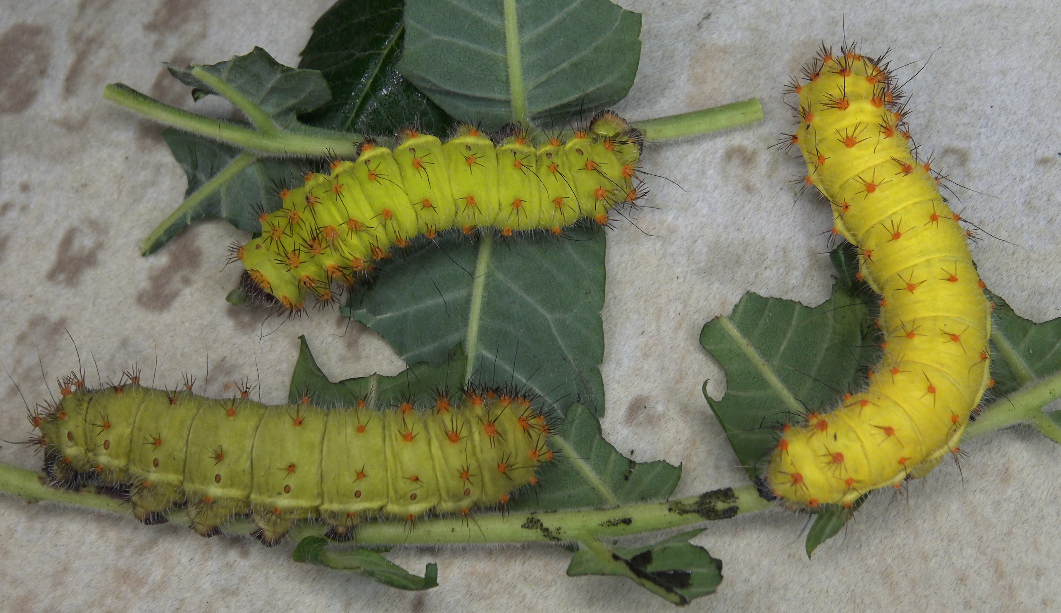

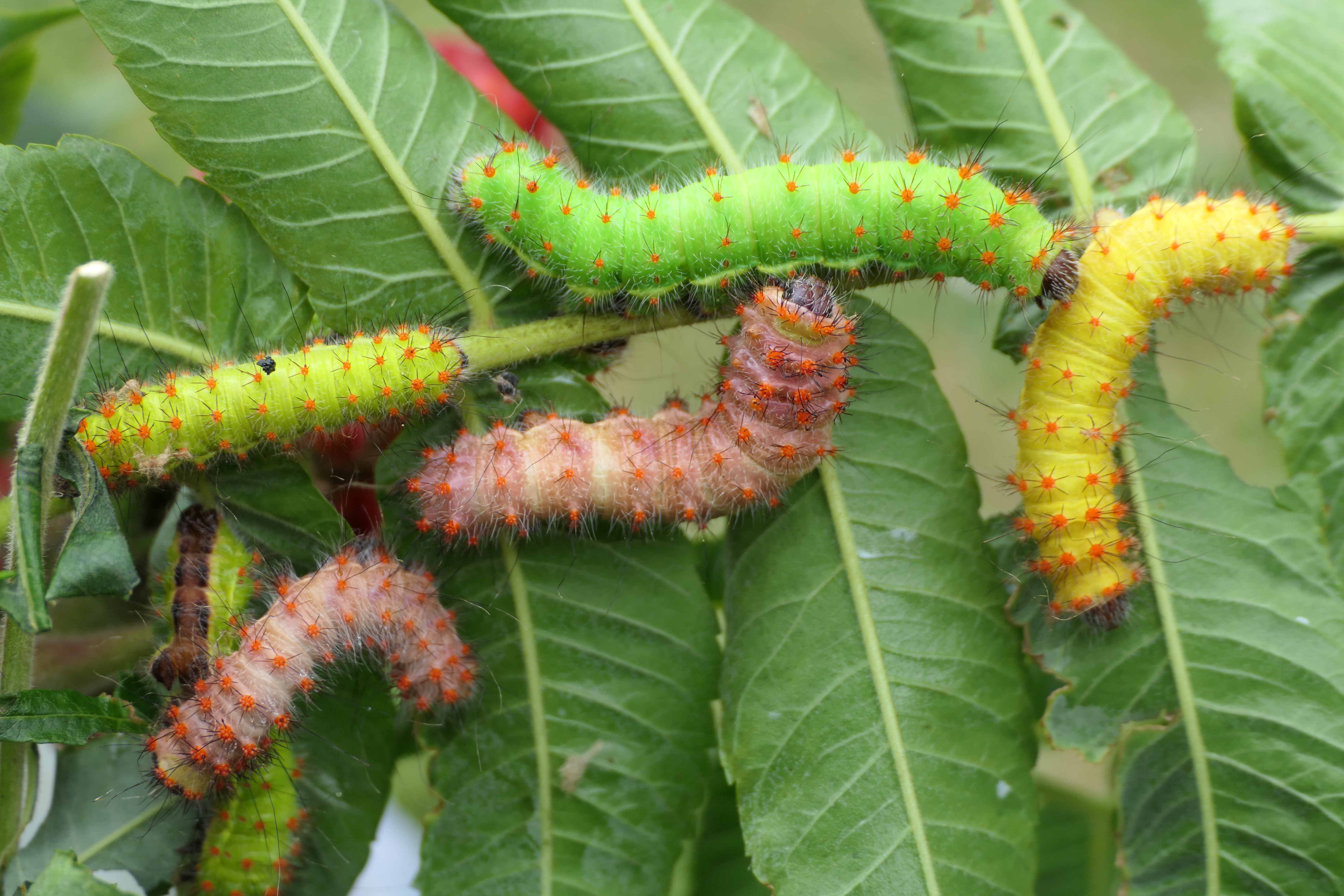
Just before pupating, the larvae turn bright orange. This is an indication that in about 24-48 hours, the larva is about to spin a small, oval, papery, stringy brown silken cocoonn.
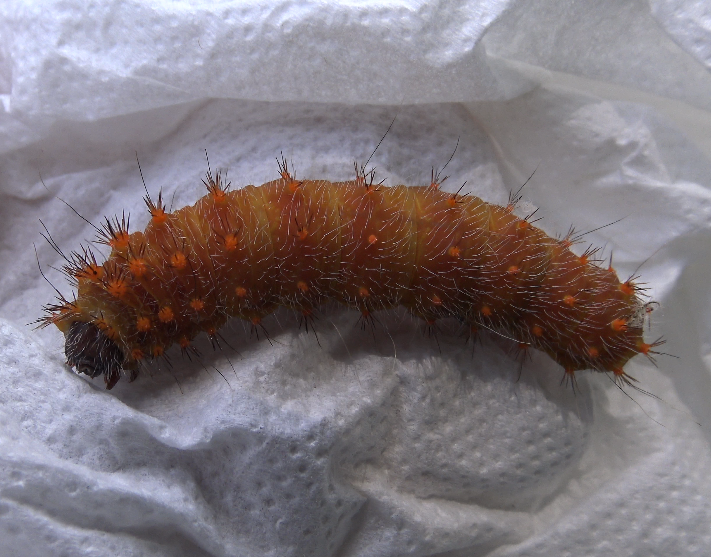
In captivity, larvae often spun cocoons in the leaf litter, or the paper towels that were provided.
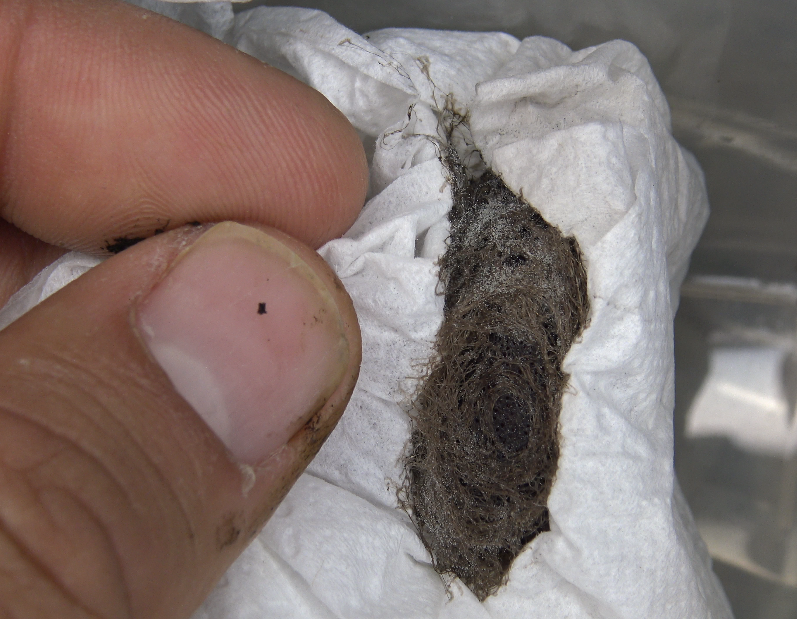

For a succesful emergence, the cocoons must be stored cold, but preferably frost free for several months. Only after being warmed up in spring, will the moths appear! Interestingly, they survived being outdoors in winter in the Netherlands.
I lined a plastic container with paper towels and stored them in my garden shed during winter. The moths succesfully hibernated.

After warming them up in spring, expect small, hyperactive orange creatures to come out after about a month.
Calosaturnia walterorum is a rather intense moth. They are a very active species in general; perhaps one of the most active Saturniidae moths I have seen. Both males and females appear to be diurnal. The males fly early in the morning, but also in the afternoon if it is warm and sunny.
The females seem pretty active too. They seem more eager to fly than the females of many other Saturniidae I have seen. While virgin (unmated) females tend to sit still in the morning and during mid day, waiting for males to approach them, they do seem to fly in the afternoon. Mated females are even more active; once she is fertilised with a male, females can become rather restless, flying and laying most of their eggs in 12-24 hours.
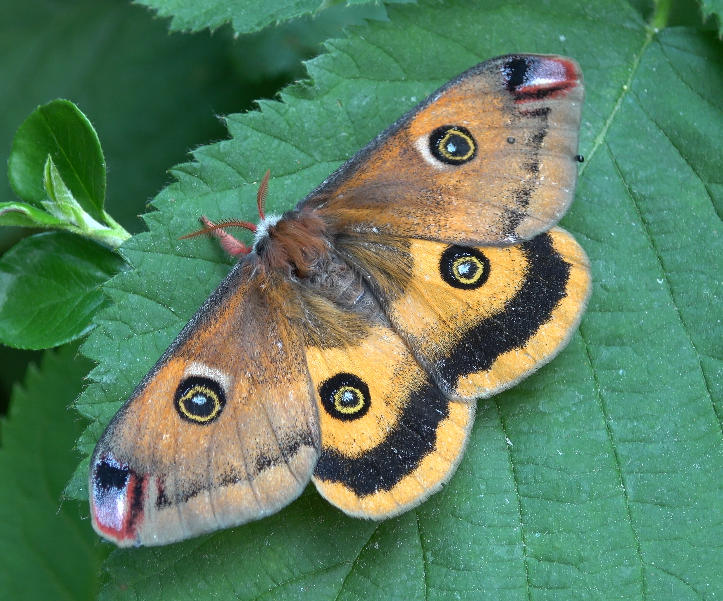
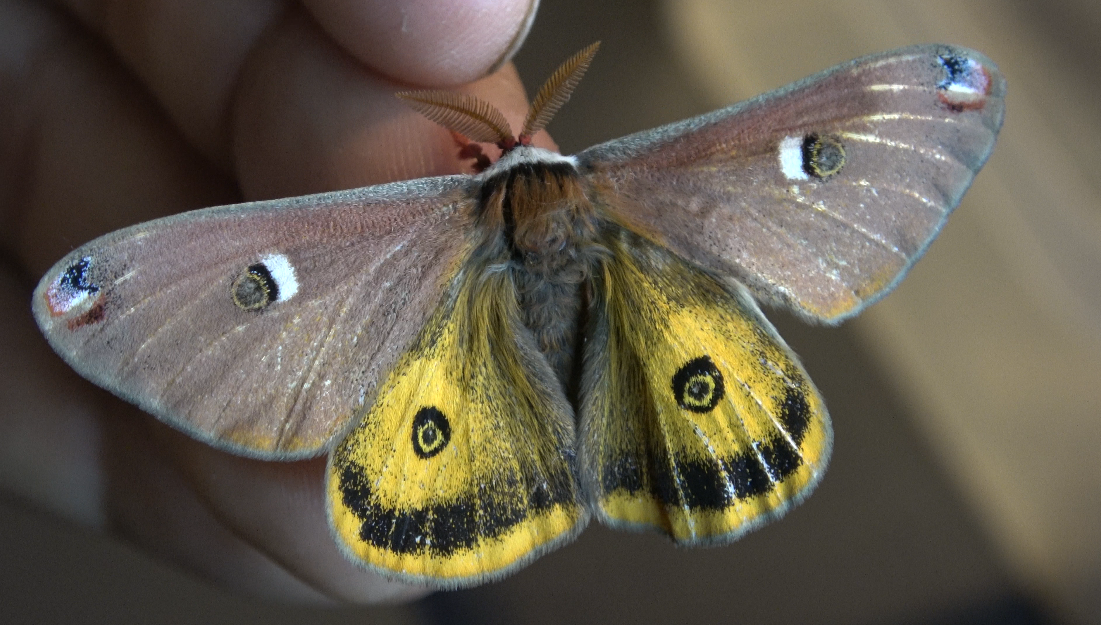
The females of Calosaturnia walterorum have bright orange forewings; while the males have chocolate brown to reddish forewings. The most notable difference however is the size; the males of Calosaturnia walterorum are rather small, especially compared to the female. It is a short lived species; most males would survive 4 to 6 days. Females lived for 6 to 12 days.

Sadly, I have no good and ‘natural-looking’ pictures of the males. Calosaturnia walterorum is a very shy and difficult to handle species. The slightest of touch can freak them out. Especially the males are very eager to fly away after the slightest amount of stress. This made it very hard to manipulate them for pictures to get a natural background in the photo; thus most of them are sitting on my hand indoors. [If I breed the species again I will focus on better photos too!].

This species seems to pair easily in captivity. Almost each time I had a male and female in good condition, they would mate without any complication.
Important is to place their enclosure in a warm place with sunlight, as sunlight and warmth seems to make them much more active. Matings would occur early in the morning, but also later in the afternoon. Sometimes, males and females would immediately mate just a few hours after emerging from their cocoons.
The most challenging part of mating them, is having a male and female at the same time in the first place; especially the males batter themselves heavily and wear themselves out pretty quickly in captivity. Just within 3 days, many of the males I had would already be too damaged to mate.


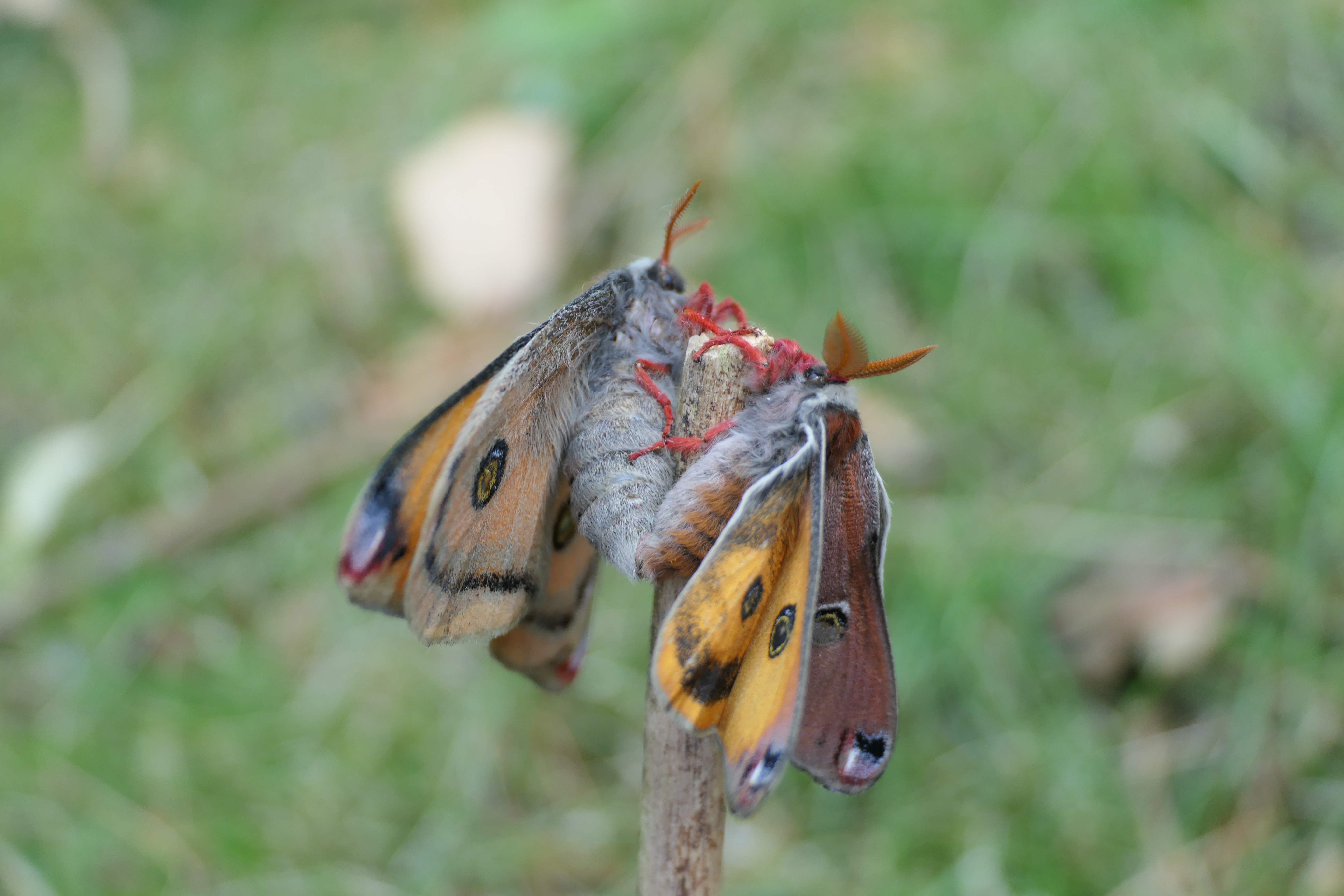
Life cycle completed! After mating the females will lay eggs, and quickly pass away. Thanks for visiting!
I am always looking for eggs & cocoons of Californian species of silkmoths; in particular Calosaturnia walterorum, mendocino, and albofasciata. Even though I already reared walterorum on this page, I would like to do it again to obtain better quality pictures of the males – and maybe of different colour forms of the larvae.
Thank you for reading my article. This is the end of this page. Below you will find some useful links to help you navigate my website better or help you find more information that you need about moths and butterflies.
Dear reader – thank you very much for visiting! Your readership is much appreciated. Are you perhaps…. (see below)
- Not done browsing yet? Then click here to return to the homepage (HOMEPAGE)
- Looking for a specific species? Then click here to see the full species list (FULL SPECIES LIST)
- Looking for general (breeding)guides and information? Then click here to see the general information (GENERAL INFORMATION)
- Interested in a certain family? Then click here to see all featured Lepidoptera families (FAMILIES)
Citations: Coppens, B. (2023); Written by Bart Coppens; based on a real life breeding experience [for citations in literature and publications]
Was this information helpful to you? Then please consider contributing here (more information) to keep this information free and support the future of this website. This website is completely free to use, and crowdfunded. Contributions can be made via paypal, patreon, and several other ways.
All the funds I raise online will be invested in the website; in the form of new caresheets, but also rewriting and updating the old caresheets (some are scheduled to be rewritten), my educational websites, Youtube, breeding projects, the study of moths andconservation programs.
Donate button (Liberapay; credit card and VISA accepted)

Donate button (PayPal)
Become a member of my Patreon (Patreon)
Find me on YouTube
Find me on Instagram
Join the Discord server: Click here
Join the Whatsapp server: Click here
Facebook: Click here
 Welcome, visitor!