
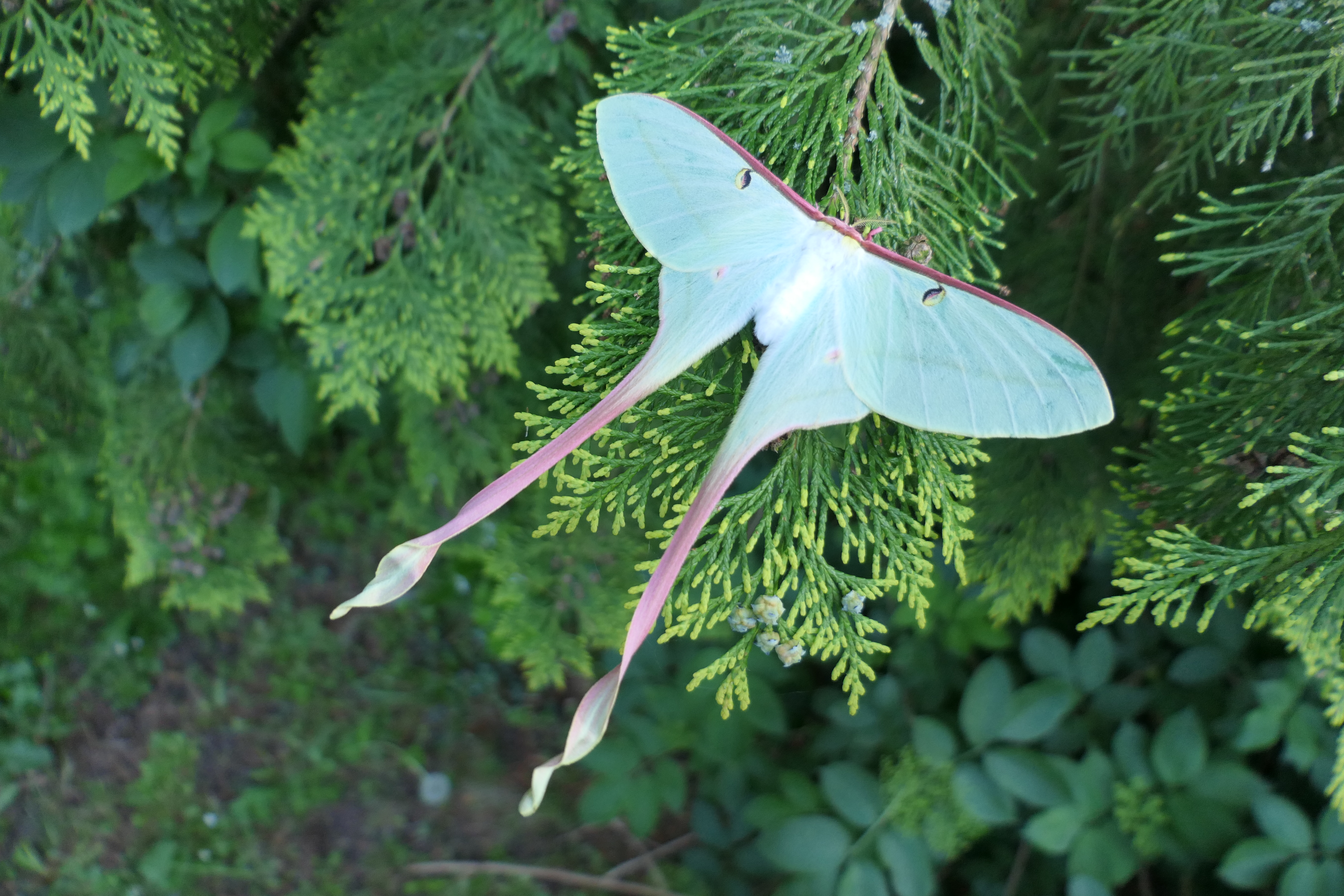
There are many moon moths (genus Actias) in this world. About 32 or so species, in fact (the number constantly keeps changing). But perhaps one of the most famous species in the world is the Chinese Moon Moth; Actias dubernardi. I could write poems and novels about the sublime beauty of this species; but I feel like the pictures on this page put it into words for me better than I could. Their appearance is surreal; almost celestial! As if a small piece of the heavenly firmaments themselves broke off has fallen to earth and somehow drifted into our lucky hands, to be admired.
This species is mainly found in the mountainous regions of China; where it generally dwells in higher altitudes (1100m-3300m). A lesser known fact is that they are, however, not exclusive to China. Actias dubernardi was also documented in the parts of northern Laos and Vietnam that border China.
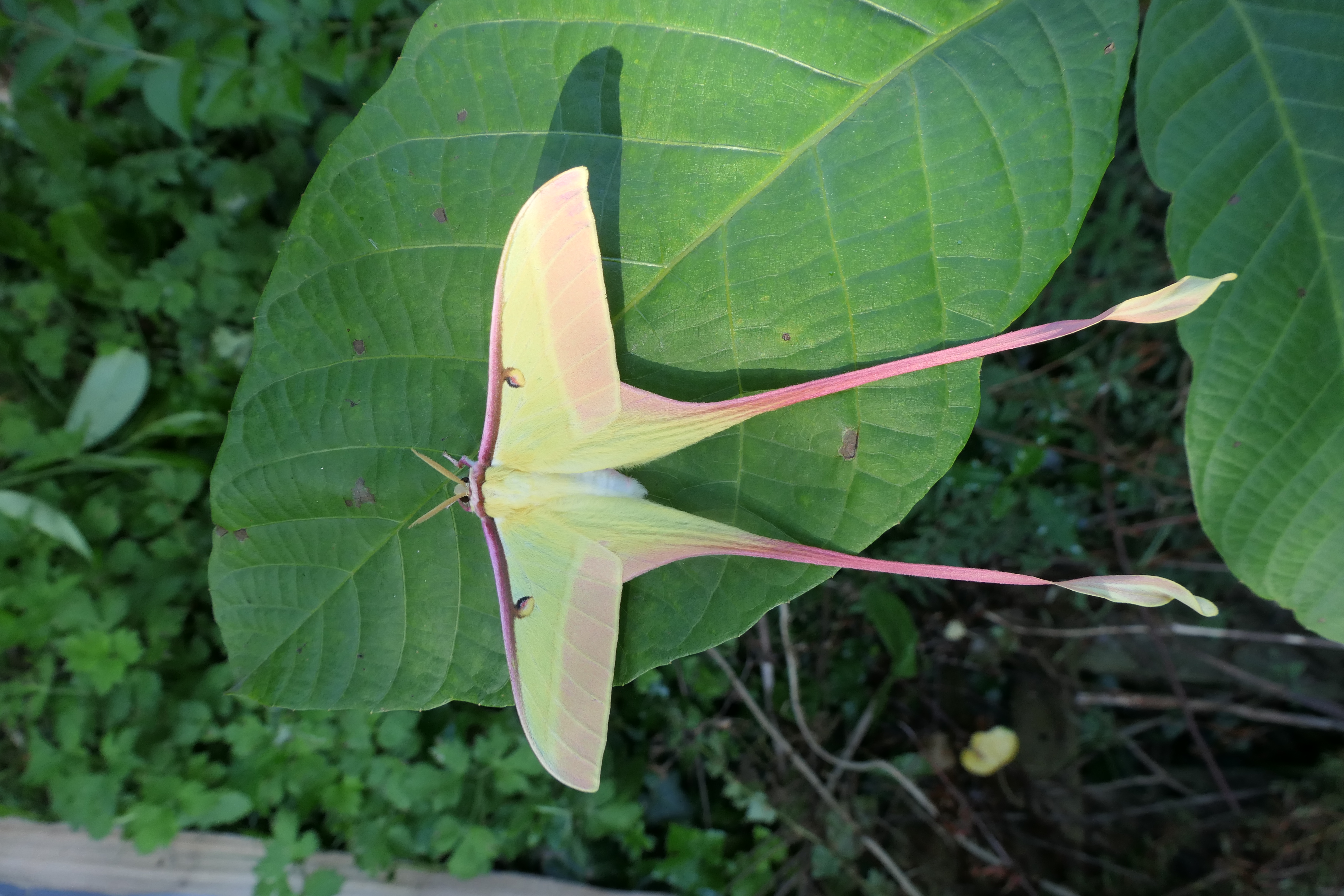
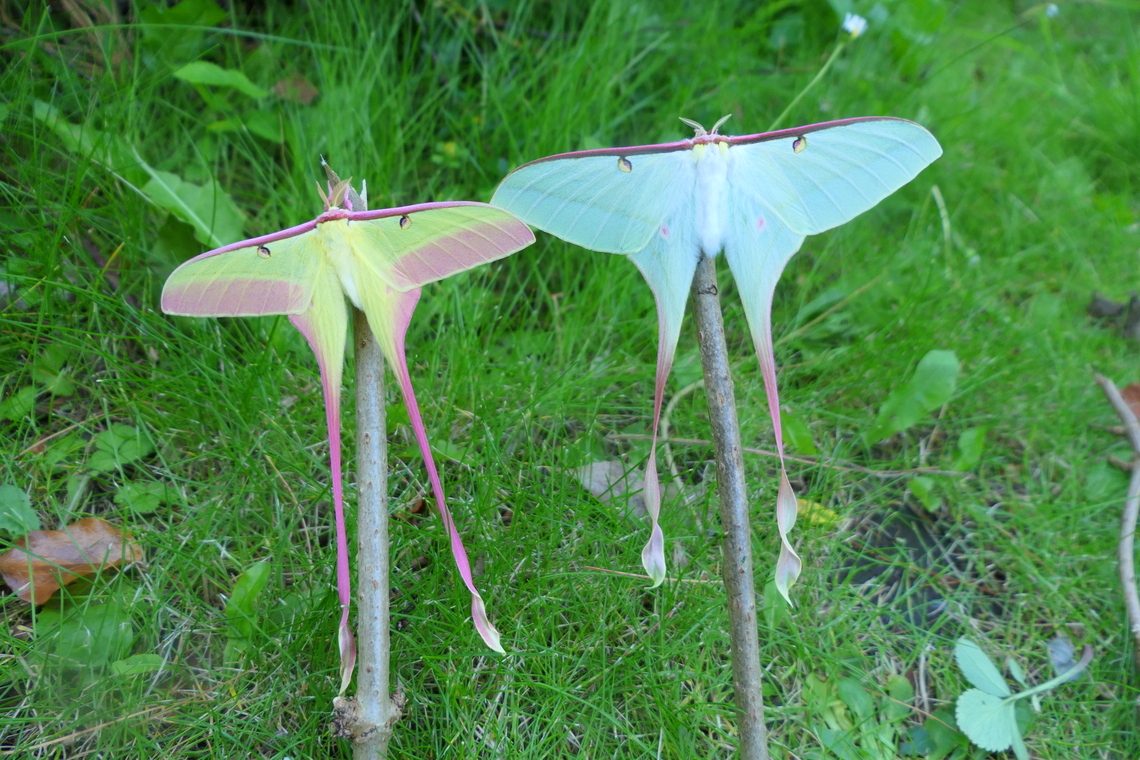
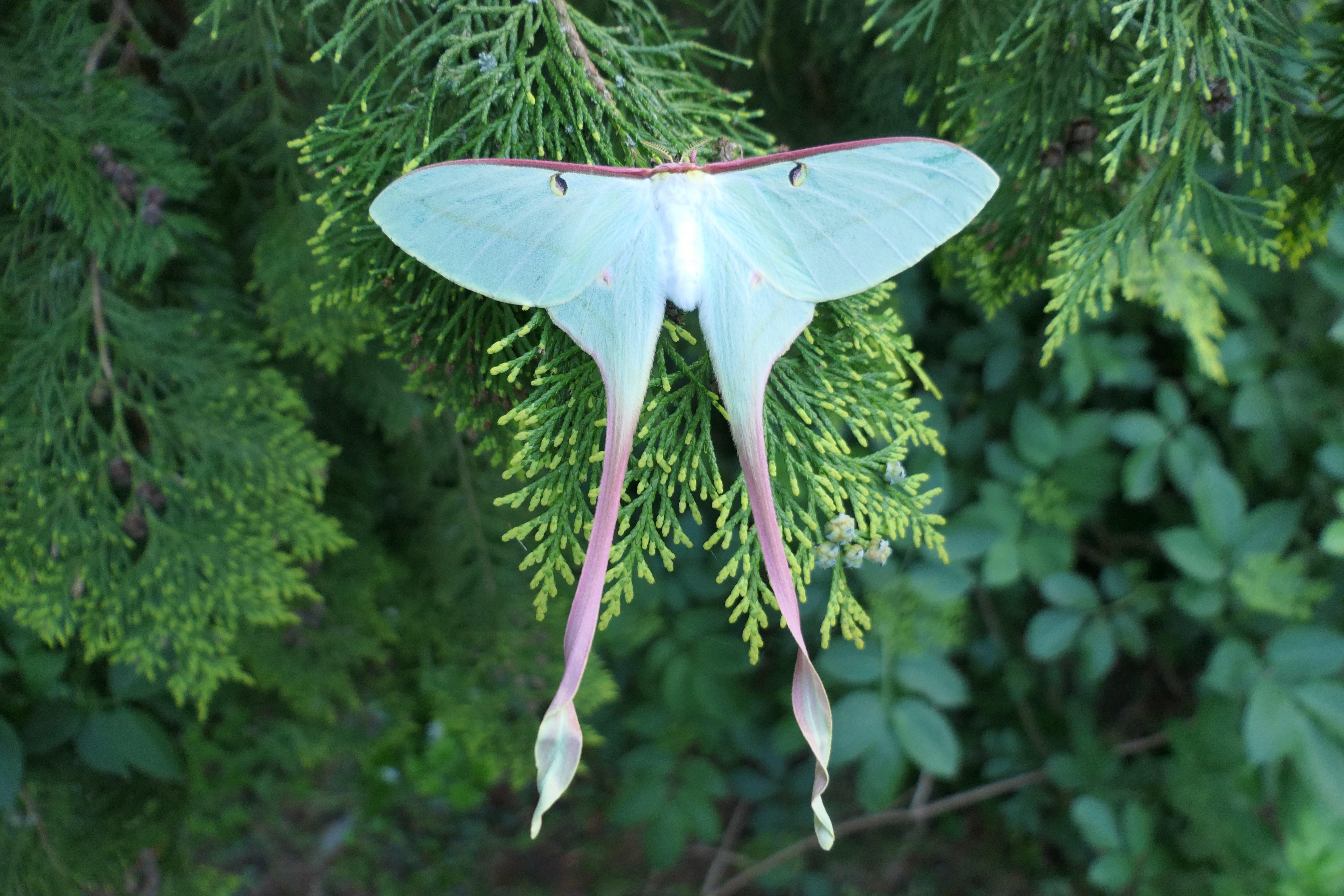
Both sexes of this species seem to have wonderful pastel colours. The male is yellow and pink. The female is more a pale baby-blue with pink. Females have a larger body size, wingspan, and wing surface area compared to the males. Both sexes have remarkably long hindwing tails. The tails have multiple functions; the way they rotate in flight seems to disturb bat echolocation, acting as an acoustic reflector. And perhaps more in the spirit of a lizard, the tails are also simply just fragile—which is helpful considering that a pursuing predator is likely to first grab the moth by its tails. This results in said predator tearing the tails off, and when separated from the body, it allows the moth itself to get away.
Actias dubernardi is a temperate cloud-forest species. Temperate cloud forests are basically rare, wet ecosystems defined by persistent, low-level cloud cover, typically found in mountainous, mild-to-cool regions. It is characterized by high humidity due to fog-dripping and generally cooler temperatures.
In this case, they prefer coniferous cloud forest. The host plant of Actias dubernardi is the pine tree (genus Pinus). In literature, Chinese red pine (Pinus massoniana) is mentioned as a natural food plant. So it is no surprise it is associated with pine forest! No doubt it is possible that the species uses other pine trees too. Demonstrably, the larvae are not picky in captivity, for entomologists have reared them on Scots pine (Pinus sylvestris), white pine (Pinus strobus), larch (Larix), Douglas fir (Pseudotsuga menziesii), and white spruce (Picea glauca) with reasonably good results – this shows that in principle, the species is capable of using a variety of pine tree species and other conifers, even ones not native to where it naturally occurs.
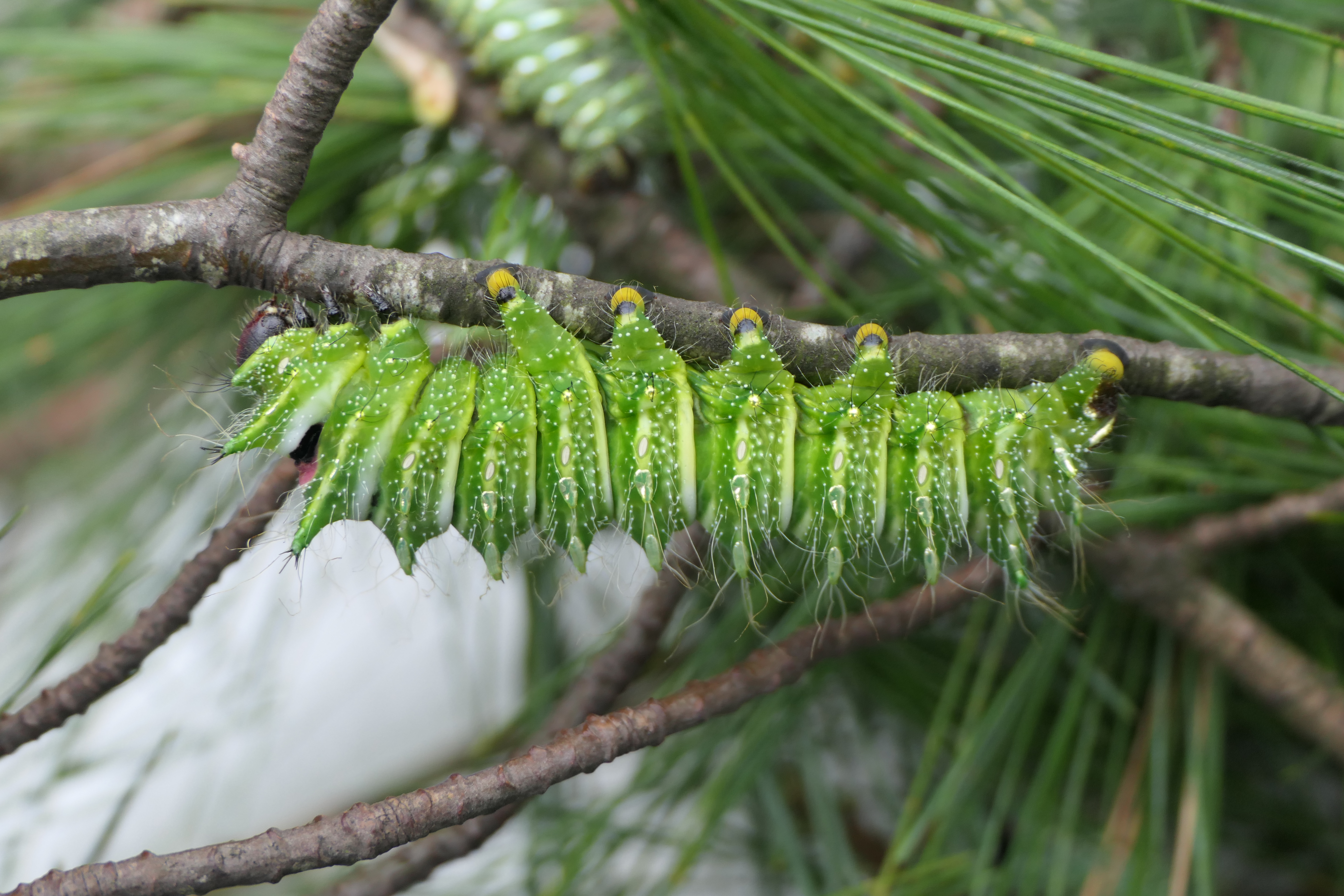
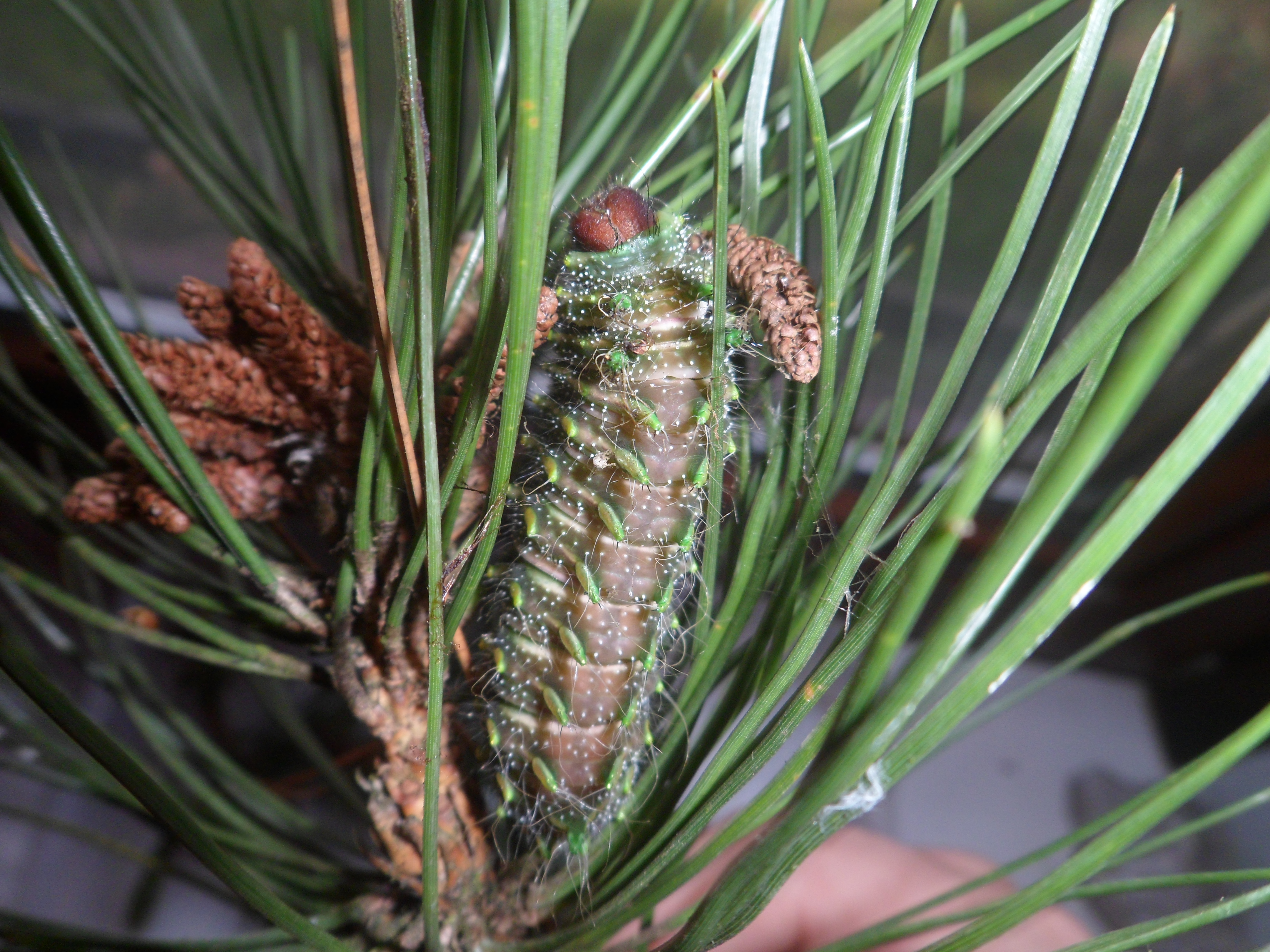
Not just the moths, but the larvae are beautiful too! They are green with white specks and have some remarkable iridescent golden/silver metallic patches on their body.
The flight time of the moth seems to vary based on geographical location. However, it appears to have up to two broods; the first brood tends to be between February and April, while the second brood seems to be between July and September (generalization).
Interestingly, this moth species is also available in the pet trade in Europe and the U.S.A, where a significant portion of the readers of this article come from for this very reason, trying to find breeding tips. My website is famous for featuring caresheets of many difficult-to-raise moth species. In fact, in terms of readership, it is the biggest website on the internet about breeding moths. Indeed, most similar websites simply take their information directly from this website! So you have come to exactly the right place.
Unfortunately, I do have to shatter your hopes and dreams a little bit. Actias dubernardi is not a moth species I would recommend to a beginner. Especially the larvae of this species are sensitive and have specific demands. Are they impossibly hard to breed? No, I think most moth-breeders with average to above average experience can learn how to breed them. The problem with this moth species is that it’s just so beautiful! It’s so beautiful in fact, that it inspires many people to breed moths in the first place. This is where the problem lies. It’s kind of like learning how to drive in a Ferrari. Why not learn the basics in a car that is easier to drive, and then work your way up? – I’m not saying this to be condescending to the ‘noobies’, but I think it’s important to have a positive first experience. Breeding moths can be frustrating hobby sometimes, and watching your rare and expensive species perish might discourage a newcomer from the hobby and push them away forever. And that while we desperately need more people to join this small hobby! Specifically this species seems to attract many beginners. Don’t do it! If it has to be a moon moth, I suggest you start with the Luna Moth (Actias luna). If you are okay with other emperor moth species, I can also suggest Samia ricini, Antherina suraka or Antheraea pernyi.
Still not discouraged and ready for a challenge? OK. Then proceed!
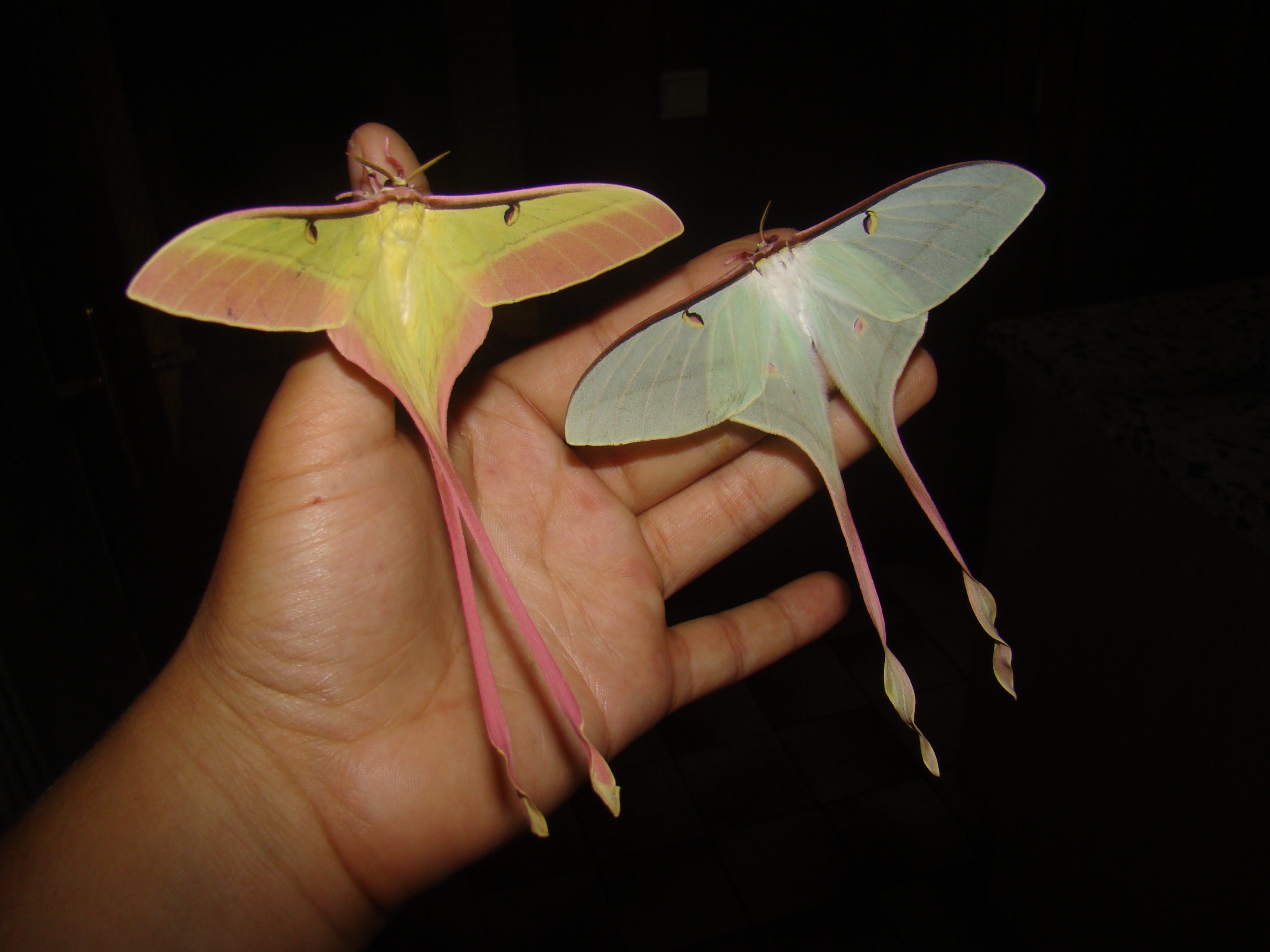
- Difficulty rating: Hard (Difficult to breed, the larvae can sometimes die for no reason even if they conditions are right for them)
- Rearing difficulty: 7/10 (From egg to pupa)
- Pairing difficulty: 5/10 (Achieving copulations)
- Host plants: Chinese red pine (Pinus massoniana), Scots pine (Pinus sylvestris), White pine (Pinus strobus), Larch (Larix), Douglas fir (Pseudotsuga menziesii), White spruce (Picea glauca). And possibly a lot more pine (Pinus) species.
- Natural range: China (Yunnan, Guanxi, Guizhou, Hunan, Guangdong, Jiangxi, Hubei, Shaanxi, Nanjing, Zhejiang, Beijing, small parts of Sichuan, Hunan, Fujian) Laos (Phongsaly), Vietnam (Ha Giang, Cao Bang) temperate mountain coniferous cloud forest generally between 1100m-3300m
- Polyphagous: yes (but only coniferous trees)
- Generations: Multivoltine (continuously brooded in captivity, possibly bivoltine or univoltine in the wild). Data suggests they have up to two broods in most localities.
- Family: Saturniidae (silkmoths)
- Pupation: Cocoon (silk encasing)
- Prefered climate: Cold, temperate, high humidity (temperate higher altitude cloud forest)
- Special notes: This species often discourages beginners from the hobby because it seduces them with its incredible beauty, but are then frustrated when the finicky and demanding larvae die.
- Estimated wingspan: 80 – 110mm (small for Actias sp.)
- Binomial name: Actias dubernardi (Oberthür, 1897)
This species is often the nemensis of moth breeders, for the species can be demanding and sensitive. However, if their specific needs are catered to, they become suprisingly easy to keep. Their natural host plant is an Asian pine tree species (Pinus massoniana) although this species does well on any kind of pine tree (Pinus sp. – recommended is Pinus sylvestris!). Other breeders have also succesfully bred them on other coniferous trees like spruce (Picea) and Douglas fir (Pseudotsuga menziesii) and even Larix species. Personally I often choose to raise them on Pinus sylvestris.
Let’s start with eggs! This is the easy part. Fertile eggs generally speaking don’t need much attention. You can incubate them in a petri dish; temperatures in the range of 18C-27C are fine. Generally speaking, it takes the eggs more or less 14 days (2 weeks) to hatch on room temperature (21C). You can incubate them in airtight petri dishes or food containers. It is recommended to gently mist them with water. But be careful; when water droplets form, they can drown the small eggs or larvae, so make sure you use a fine misting spray bottle. Another option is to soak a small paper or cotton ball in water, and add the humid ball to the container, where it can evaporate moisture. While some humidity is recommended, it’s not absolutely necessary. Healthy eggs should be able to hatch on their own accord.
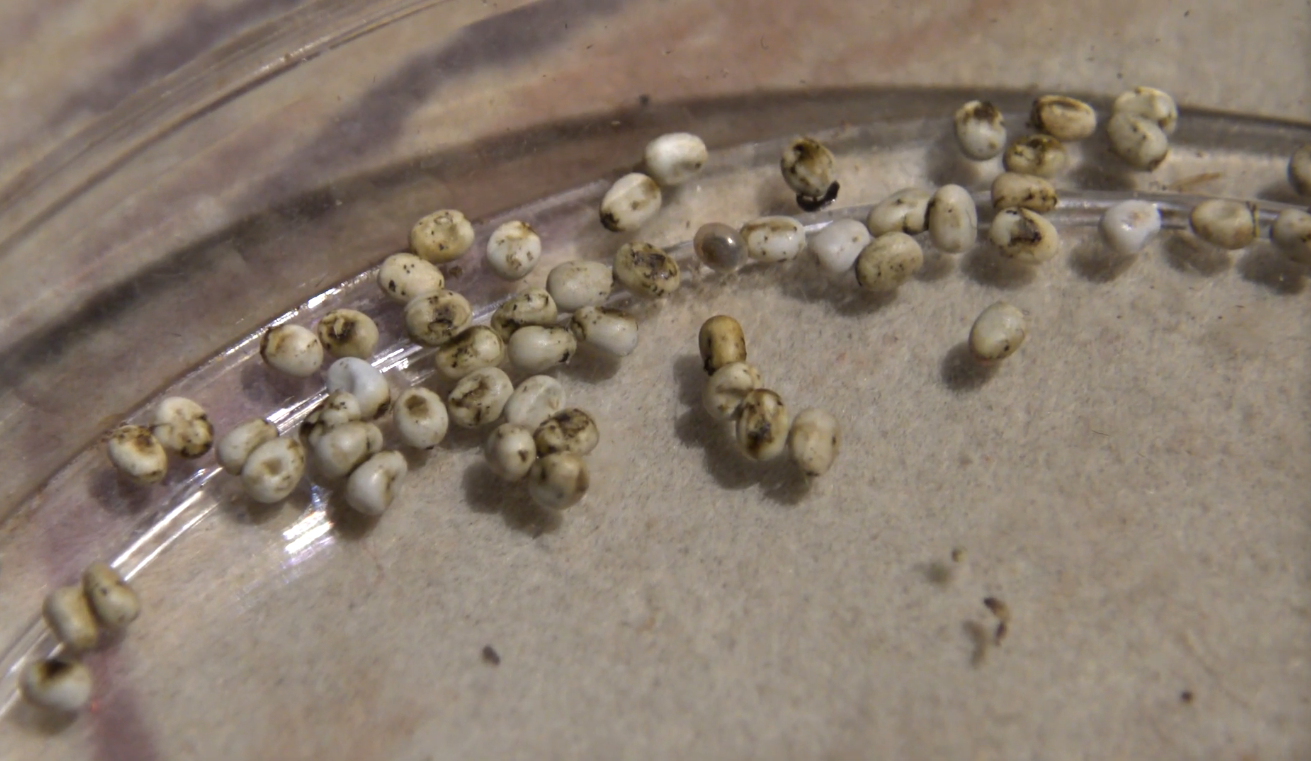
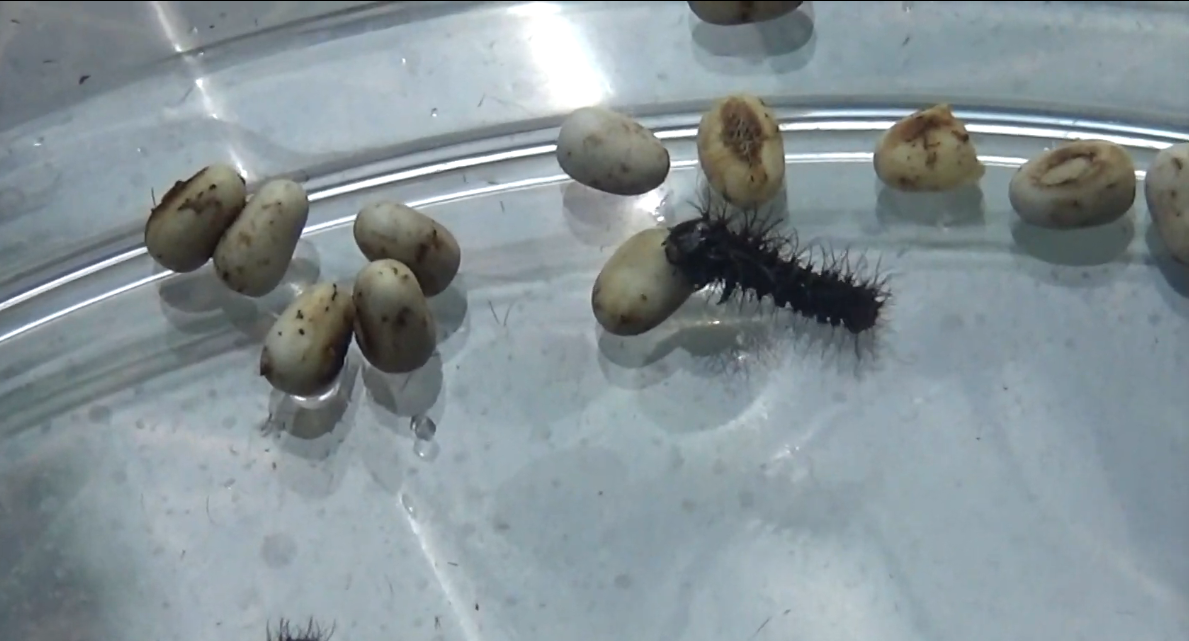
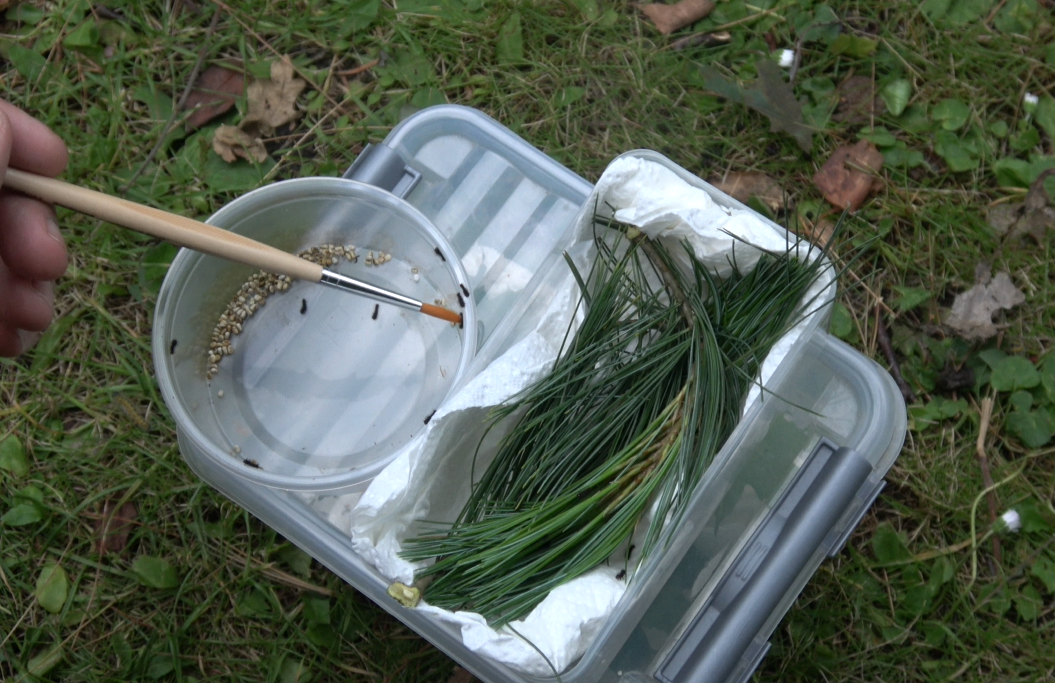
Once the larvae have hatched from their eggs, it’s time to place them in rearing containers. The set-up I use is as follows: take a medium sized (something like 20cmx10cmx7cm is enough) plastic container. Next, add some branches of pine tree into the container. Don’t completely stuff it, but make sure you add a few ‘tufts’. Do not provide them loose needles!
Optional: Place a layer of paper towels on the bottom of the container, and the pine tree on top of that. Paper towel helps to absorb excessive moisture and makes it much easier to clean. This step is not necessary, but does make it easier.
Next, relocate the larvae into their rearing containers. Ideally, the temperature should be in the range of 15C-21C. Relative humidity should be around 70%-100%. It is recommended to spray the caterpillars with a plant sprayer, but don’t overdo it. Wet conditions and condensation promote the growth of bacteria, fungi and promote infections in the sensitive larvae. The trick is to give them humid air, but don’t keep them wet. Humid, not wet! The young larvae do appreciate a drink. If you spray the host plants with water, make sure to air out the container so that no residue is left behind. This allows the larvae to drink the water droplets, but it doesn’t permanently leave them in a closed wet container that will rapidly become a bacterial sauna. This also mimics the conditions in nature; while mist and rainfall will provide water to the larvae temporarily in the wild, it does evaporate over time and does not leave them permanently soaked. Optionally you can create some ventilation holes, but don’t be too generous. This species actually likes the stuffy conditions in closed plastic boxes with little to no airflow.
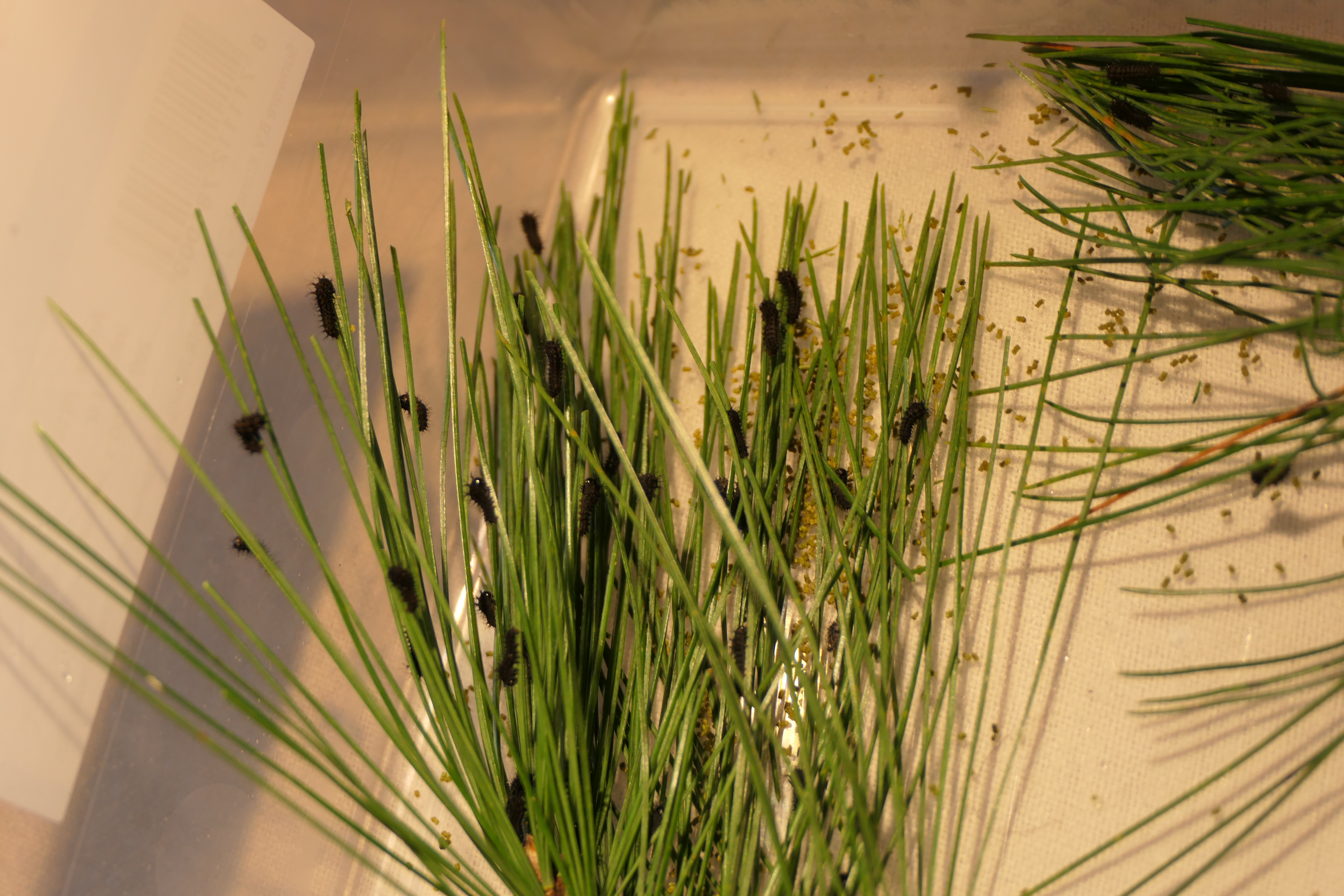
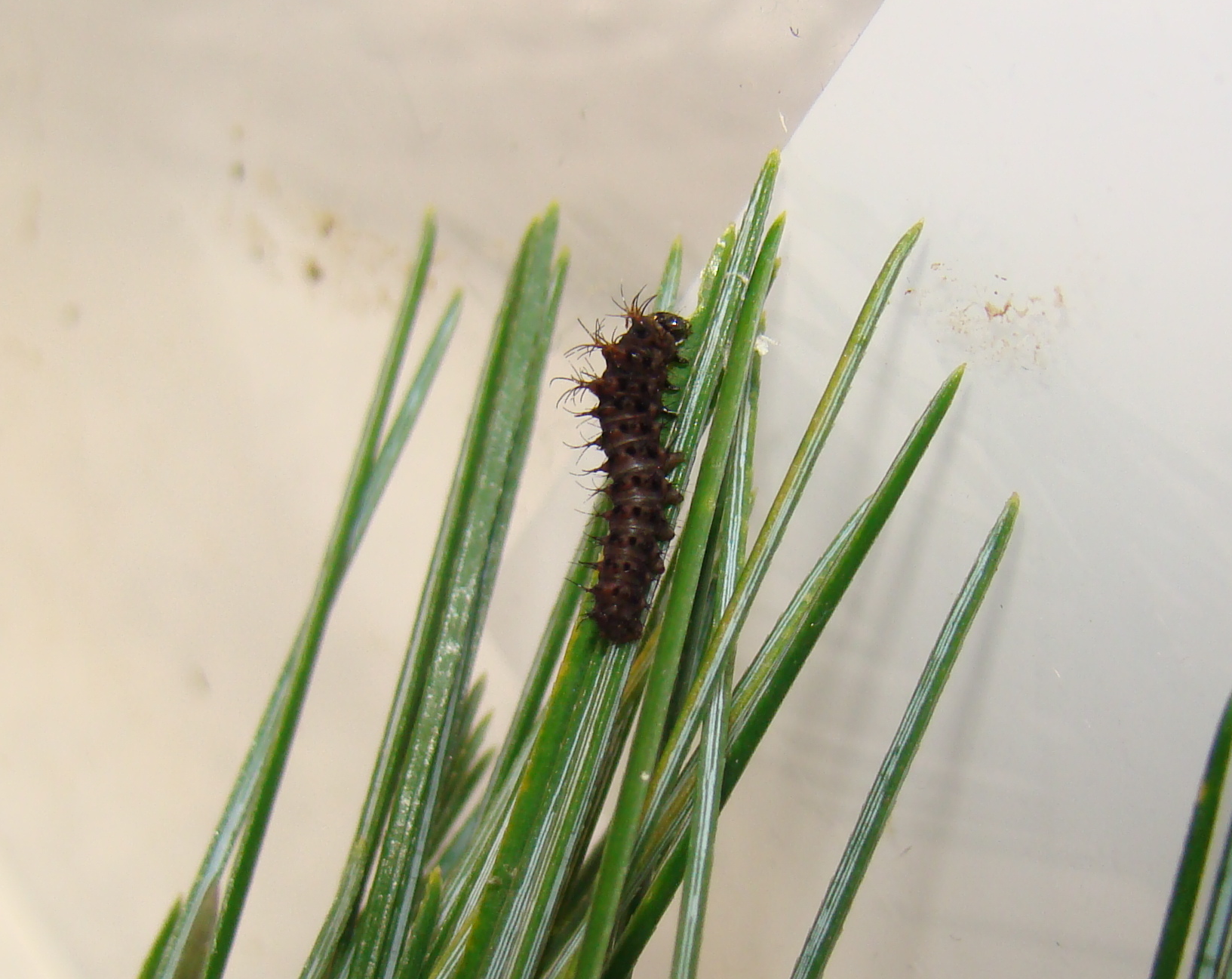
If you can, relocate the larvae using a fine paintbrush (or a pine needle!). Just don’t touch them with your bare hands. The babies (L1) are vulnerable and can be accidently squished by your fingers. The bacteria on your fingers are also especially detrimental to them in this stage.
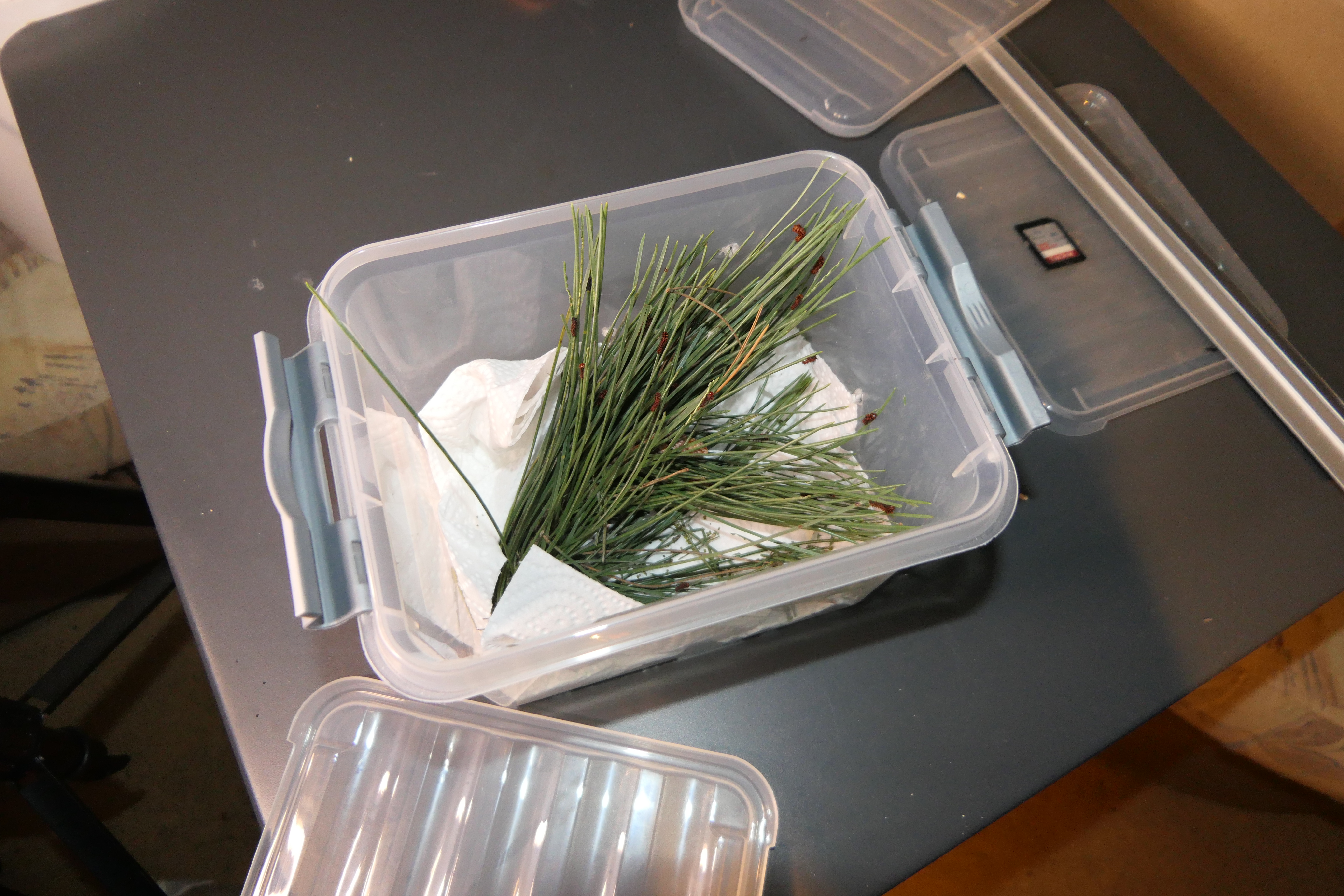
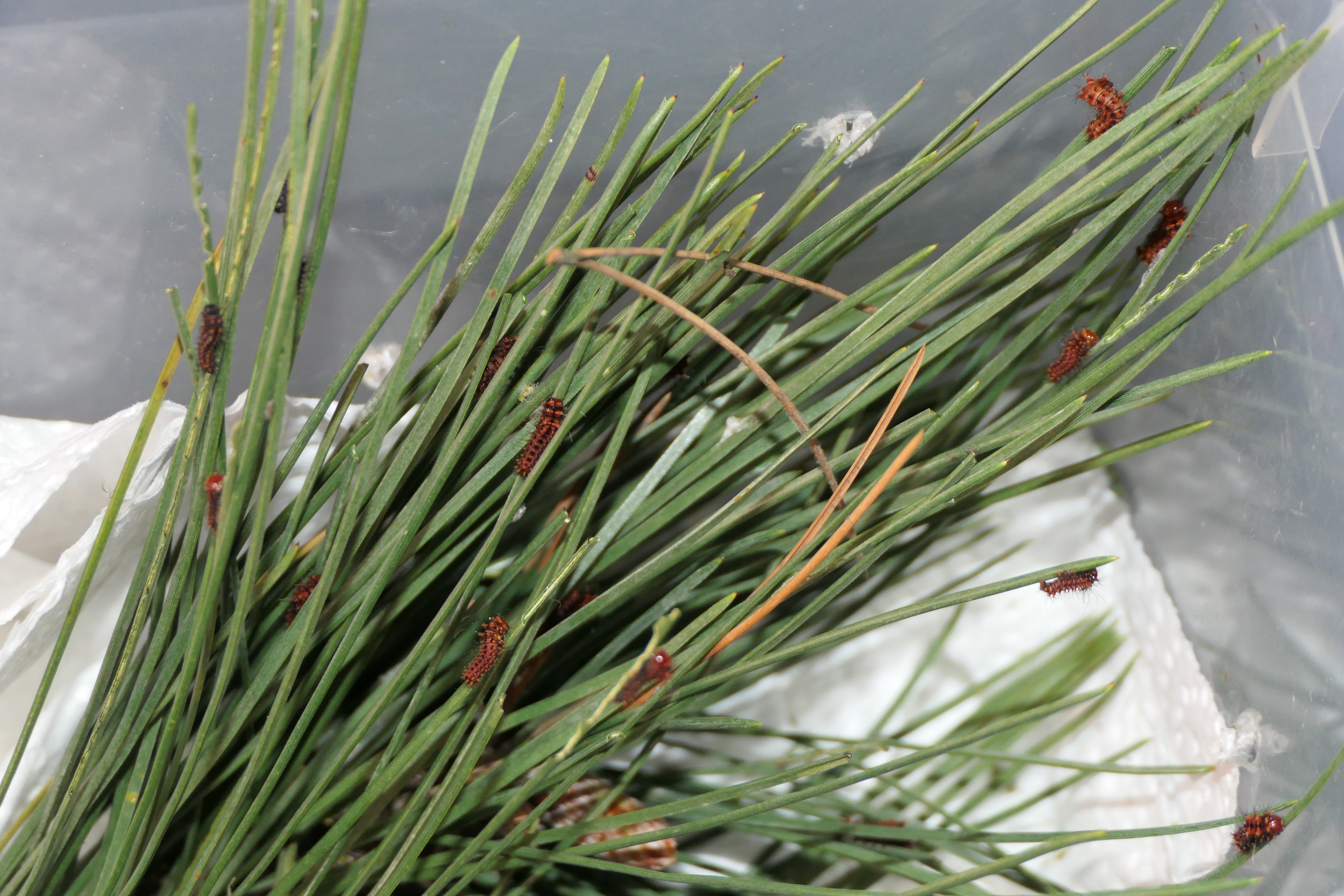
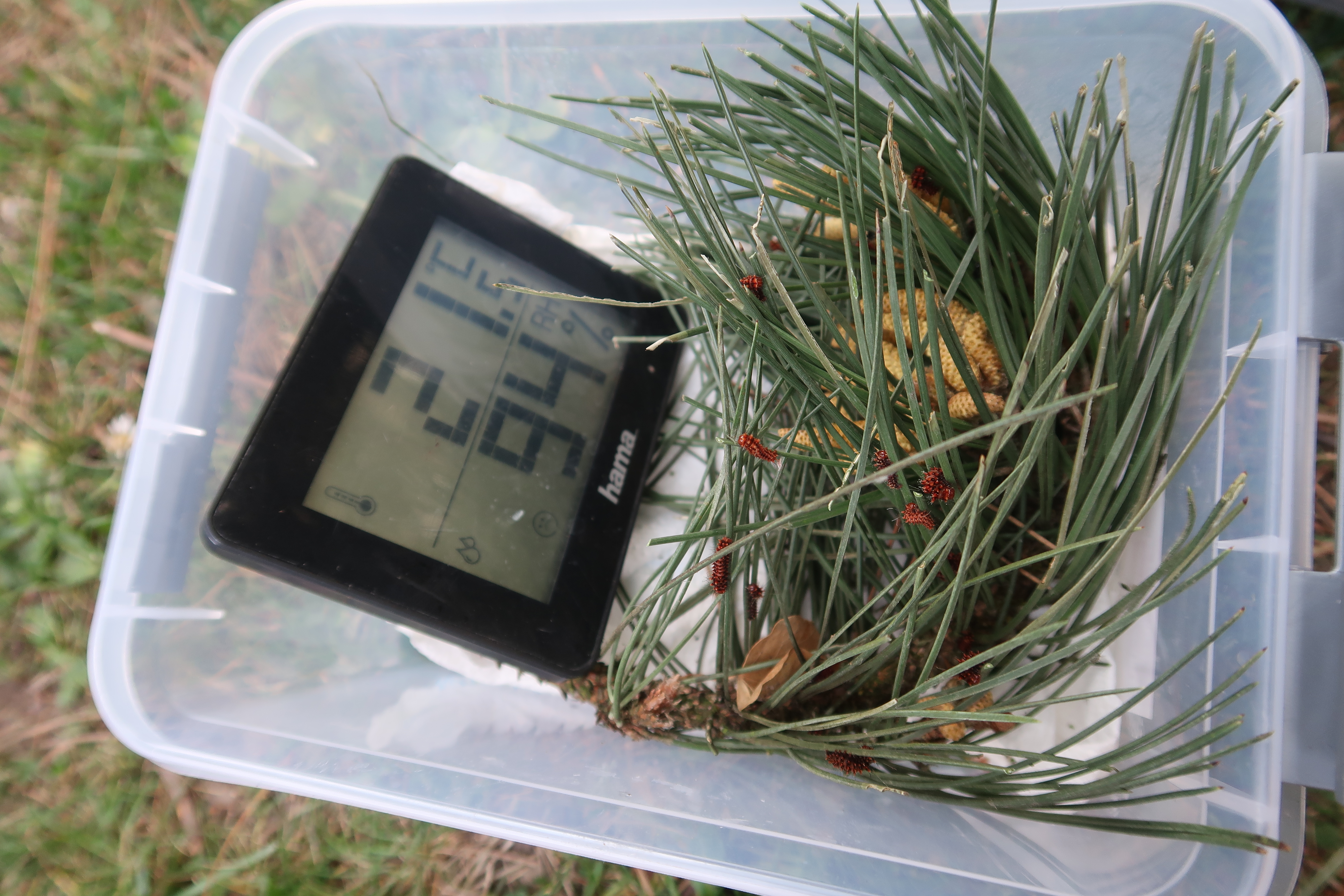
The L1 of Actias dubernardi is purely black. After several days they will shed their skin to the second instar (L2) which is orange. The third instar (L3) is green. Thus, the first three instars are quite easy to tell apart. The larvae of Actias dubernardi are solitary, but it’s possible to raise a modest amount of them together in one container. They don’t seem to be too bothered by eachothers presence, within reasonable limits. Yes of course there are limits – the more larvae per container, the higher the risk of contageous diseases. Personally I like to keep groups of 7 to 20 larvae per container. Placing less larvae per container is a good way to increase the potential survival rate, but you’ll need to make some wise compromises between space, food resources, the amount of containers to use, and the number of individuals you want to rear.
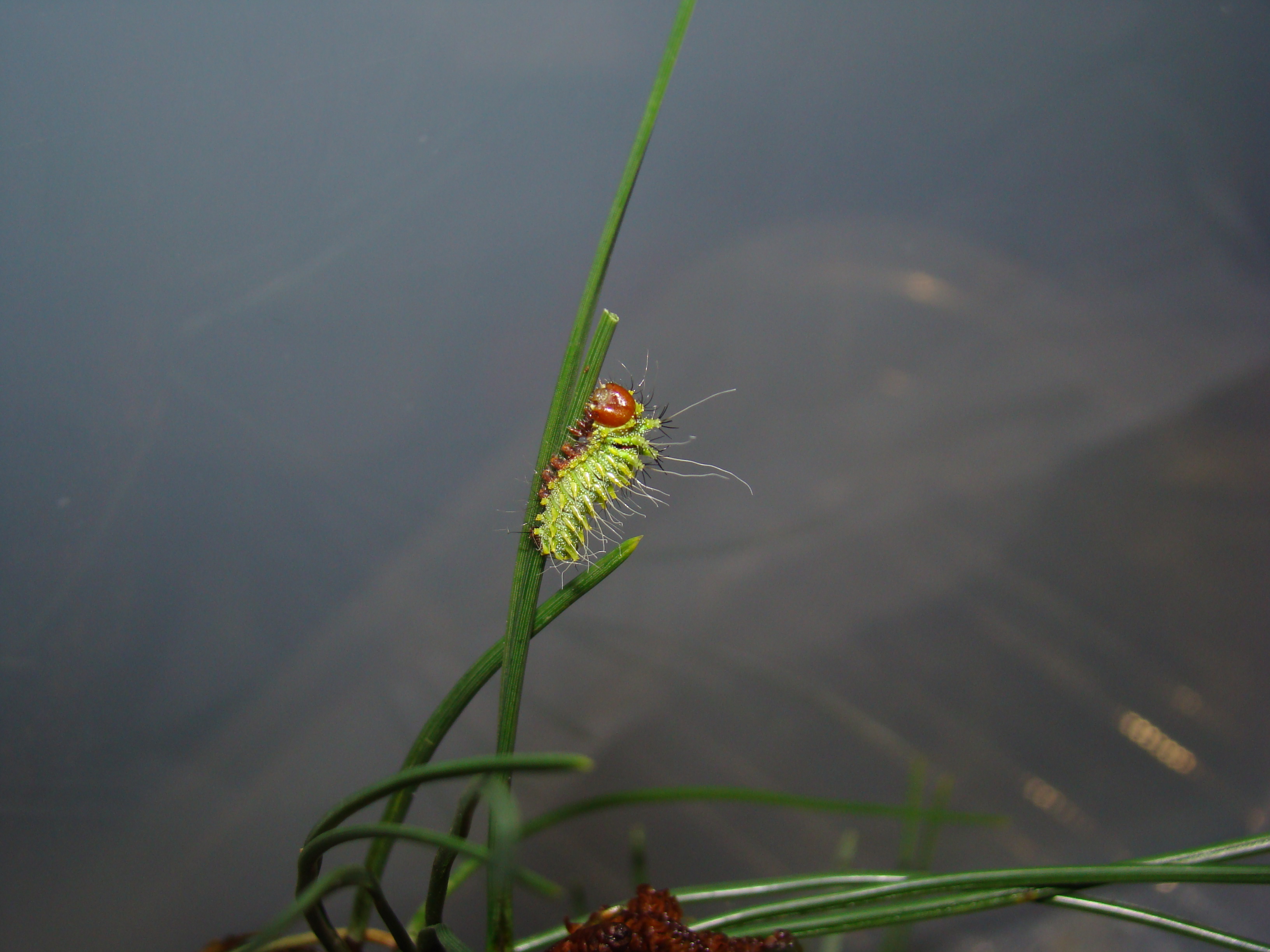

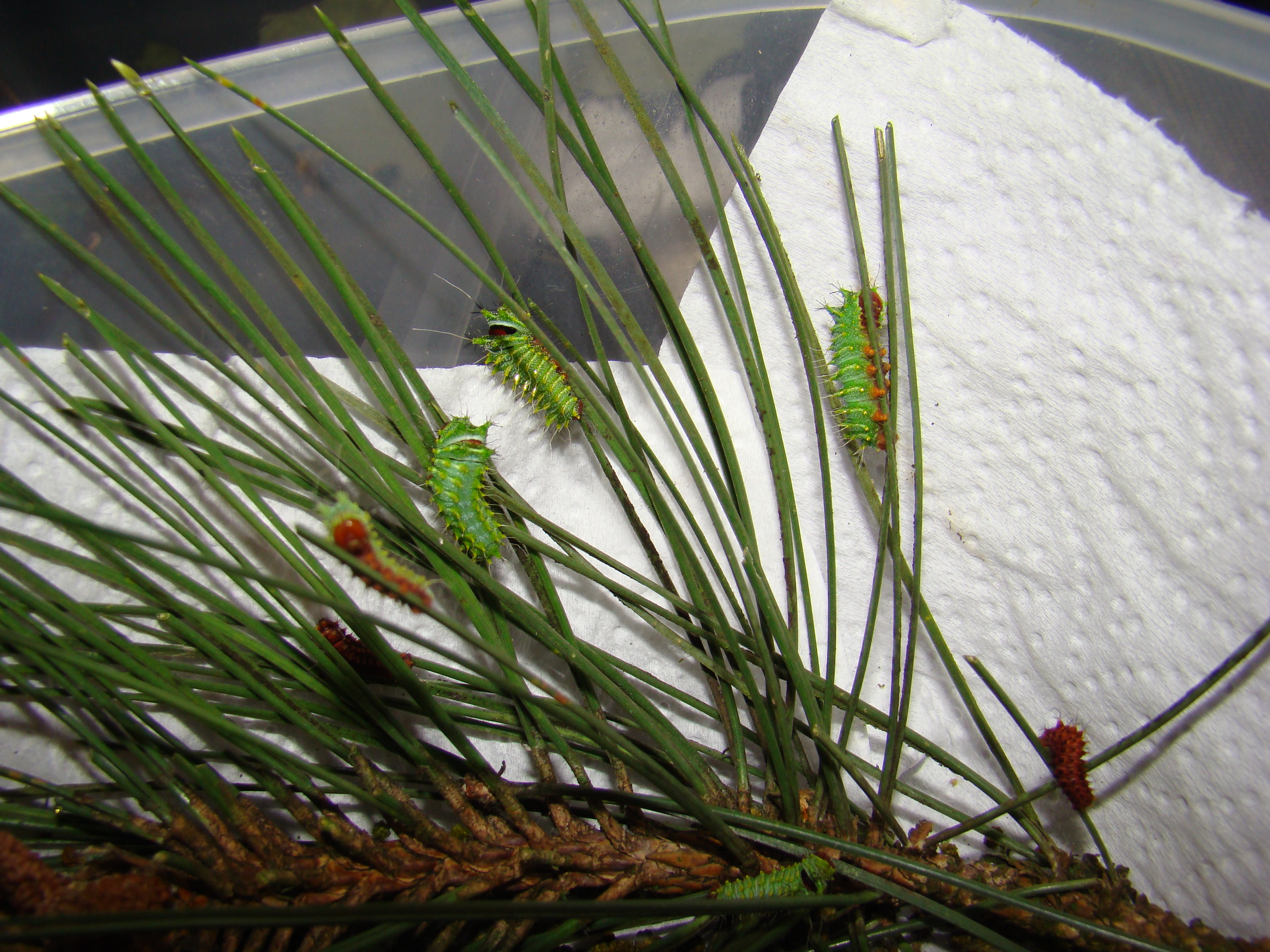
The third (L3) and fourth (L4) anf fifth (L5) instar definitely gradually need larger enclosures. Moth breeders often keep the size of the containers proportional to the size of the larvae. Bigger is not always better. For L3 larvae, one group (7-20 larvae) can probably fit in a 30cm x 20cm x 10cm container. For L4 and L5 I often pick a specific brand of 58cm x 44cn x 31 cm boxes that I buy online. But honestly, I don’t want to prescribe people exact dimentions. That’s a bit too much. You could rear each larva individually in a smaller box. You could rear them in small groups of smaller boxes. You don’t have to follow this literally. Be creative with it.
I feel personally feel like finding the right balance between keeping the larvae humid but not wet, is 99% of the challenge when it comes to Actias dubernardi. It feels a bit counter-intuitive. When you read caresheets on how to raise certain moth species, authors often warn moth breeders against keeping the larvae ‘too humid’. In fact, the larvae of a lot of moth species absolutely resent being stuffed in plastic boxes and jars with little airflow. ‘Ventilation’ and ‘airflow’ are commonly used keywords in moth caresheets, because they are important for most species.
Another issue is that high humidity tends to promote pathogens, especially in captive conditions. Caterpillars eat a lot and as a result of that also poop a lot. In humid and stuffy conditions, frass can grow mouldy, or quickly accomodate bacterial growth. Bacteria can also be accidently introduced in captivity with the food plant. It might be some bird poop on the leaves you didn’t see. Before you know it, it spreads throughout the whole container and makes all your larvae sick. Not to mention that some viruses and pathogens can actually be dormant in moths for several generations, only to come to the surface when the larvae are stressed and their immune system has weakened. A lot of pathogens also rely on humidity when it comes to spreading through the air or attaching themselves to the cuticle of insects. Excessive humidity often means trouble. Ironically, Actias dubernardi is not immune to these problems.
So basically, here you have the caterpillars of a moth species that want to be humid; but excessive humidity also makes them sick! This is the main issue. You need to get the humidity just right. Enough for the larvae to feel comfortable, but not enough for diseases to thrive. The right balance between temperatures, ventilation and humidity. Once you manage to solve this issue, which might require some trial-and-error, and some unspeakable type of intuition that one tends to develop after rearing many moth species, I think the rest becomes easy.
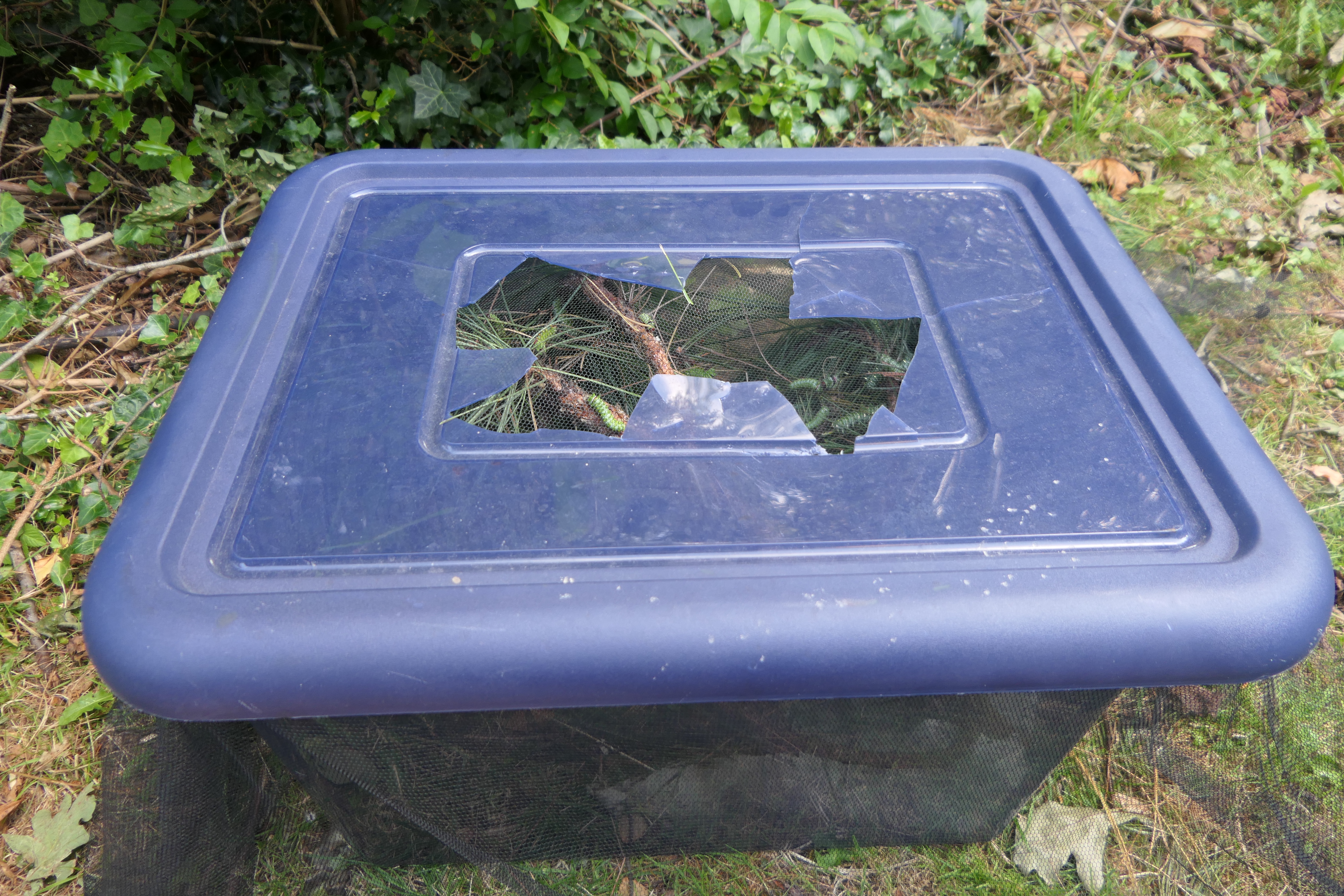
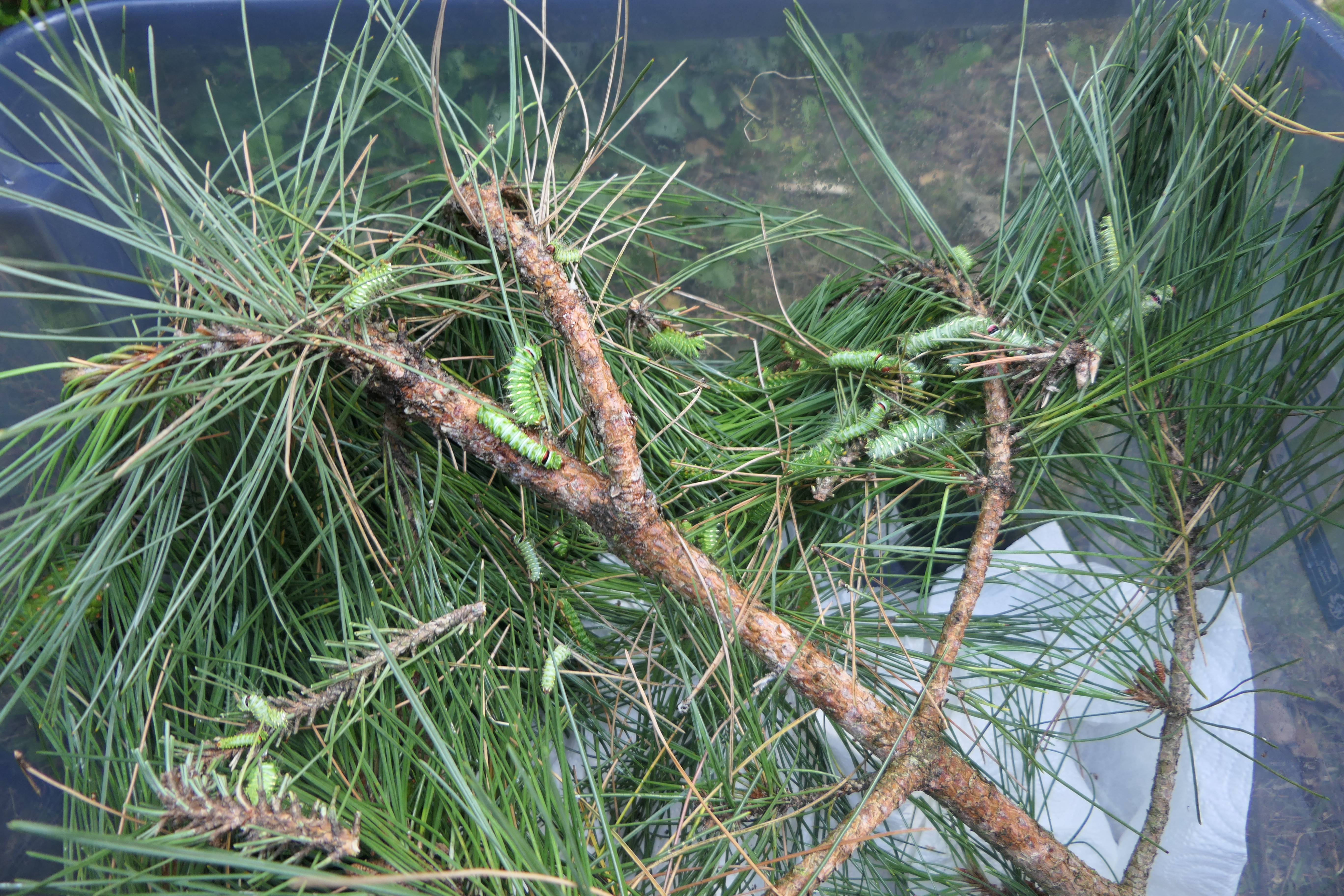
For fifth instar caterpillars I do tend to create some ventilation. This in the form of punching a hole in the lid of the box, and covering it with mosquito netting. It might not look professional but it works.
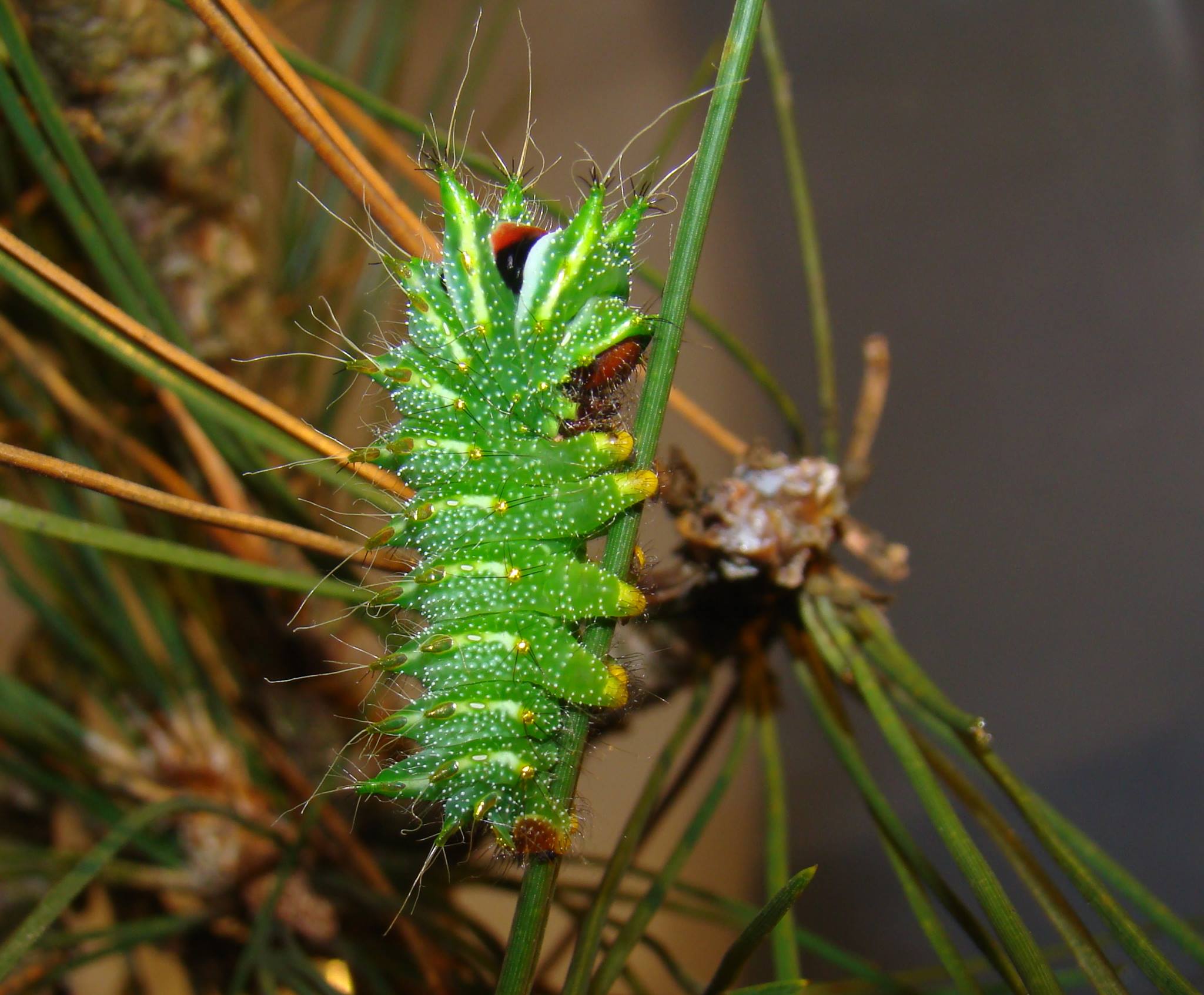
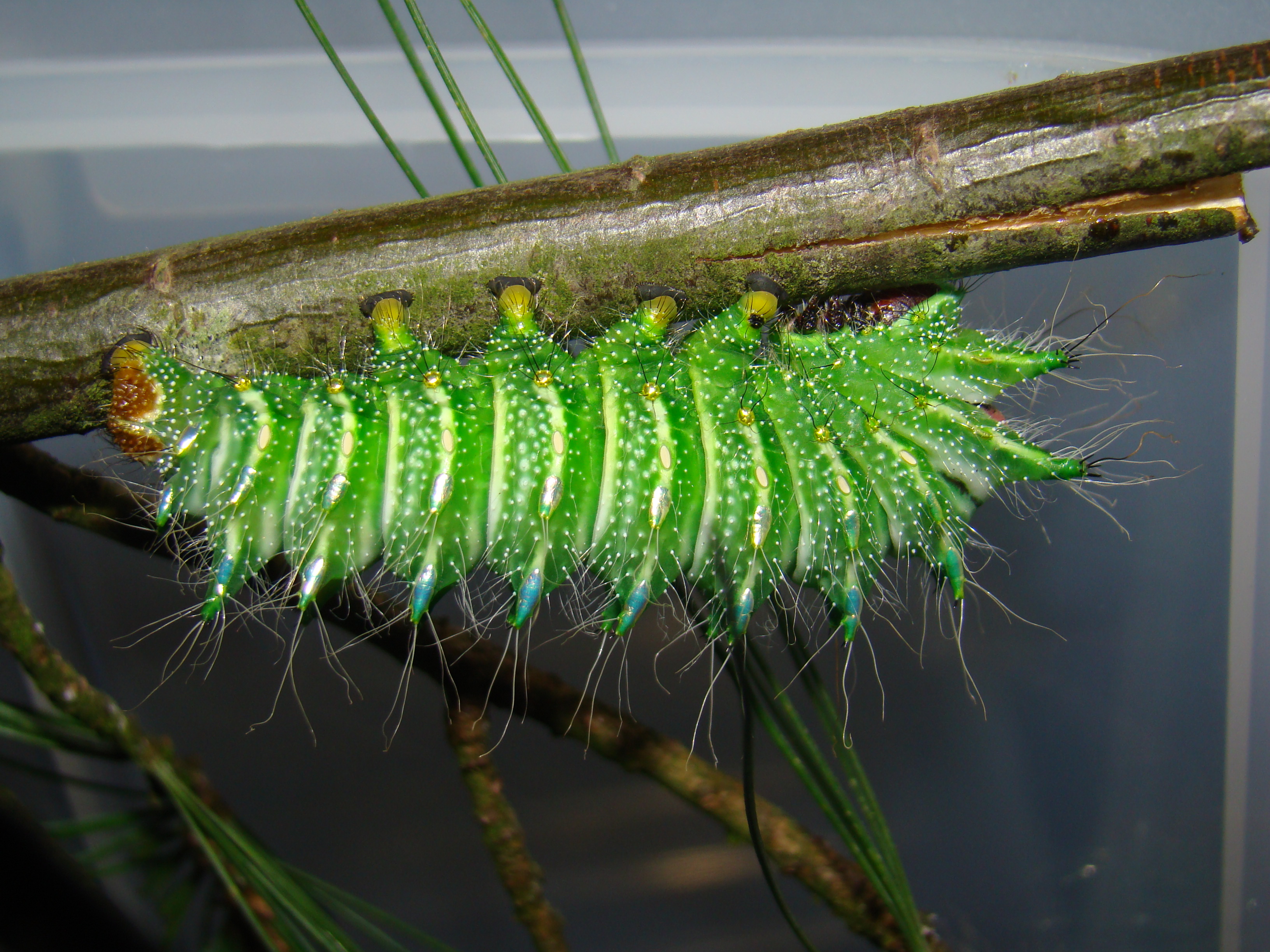
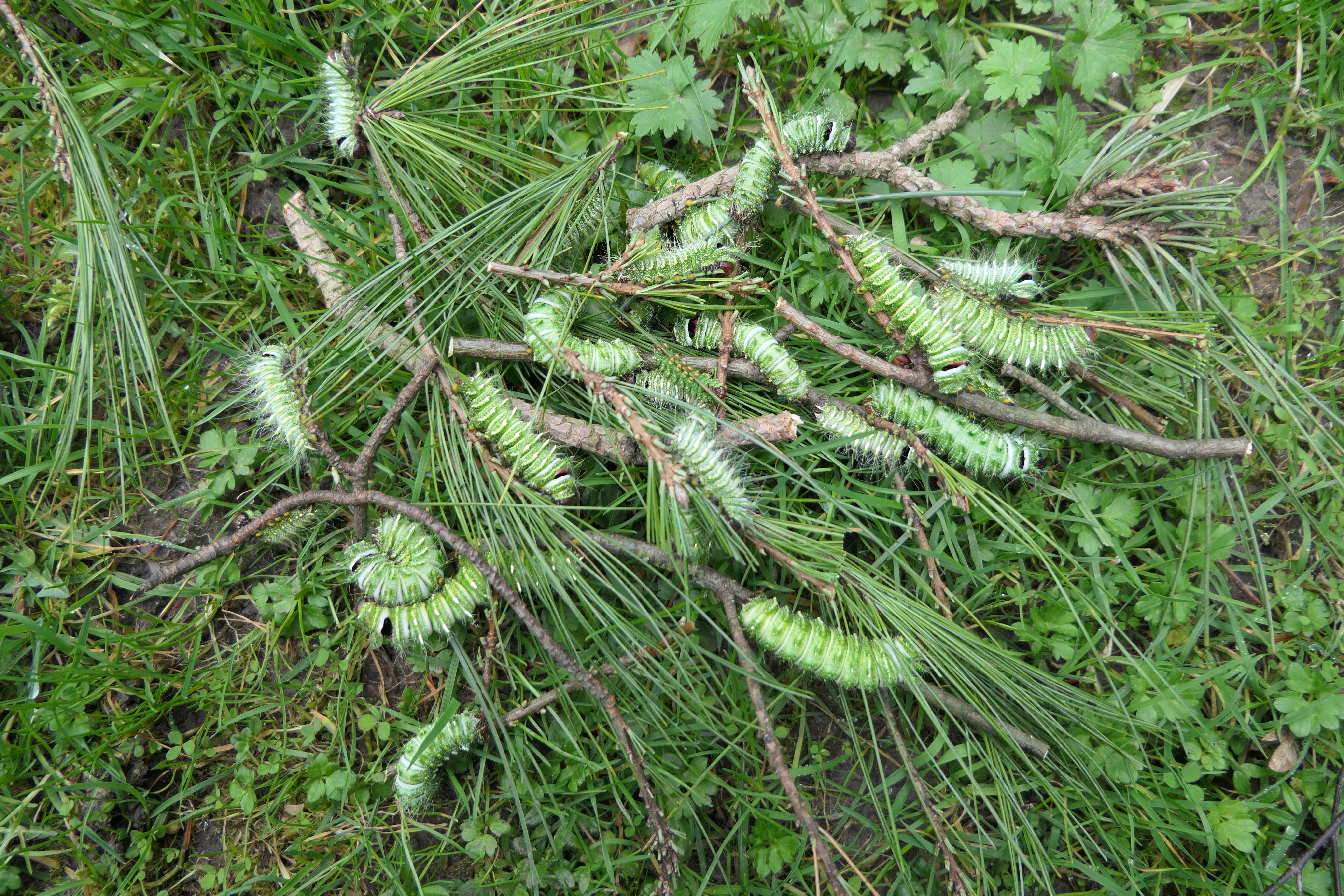
The larvae of Actias dubernardi grow from tiny eggs into fully grown larvae in about 1.5 to 2 months time (temperature dependent). Once fully grown, shortly before spinning a cocoon, larvae often suddenly turn reddish brown. This is known as ´prepupal camouflage´ and it often helps the larvae camouflage themselves better as they leave their respective host plants (green is no longer effective camouflage) and roam the forest floor and leaf litter in order to find the best spot to spin a cocoon.
In captivity, they often spin cocoons in the substrate (paper towels, or sadly even among their own frass if they aren’t kept clean, or under branches of pine tree) or between pine tree needles.
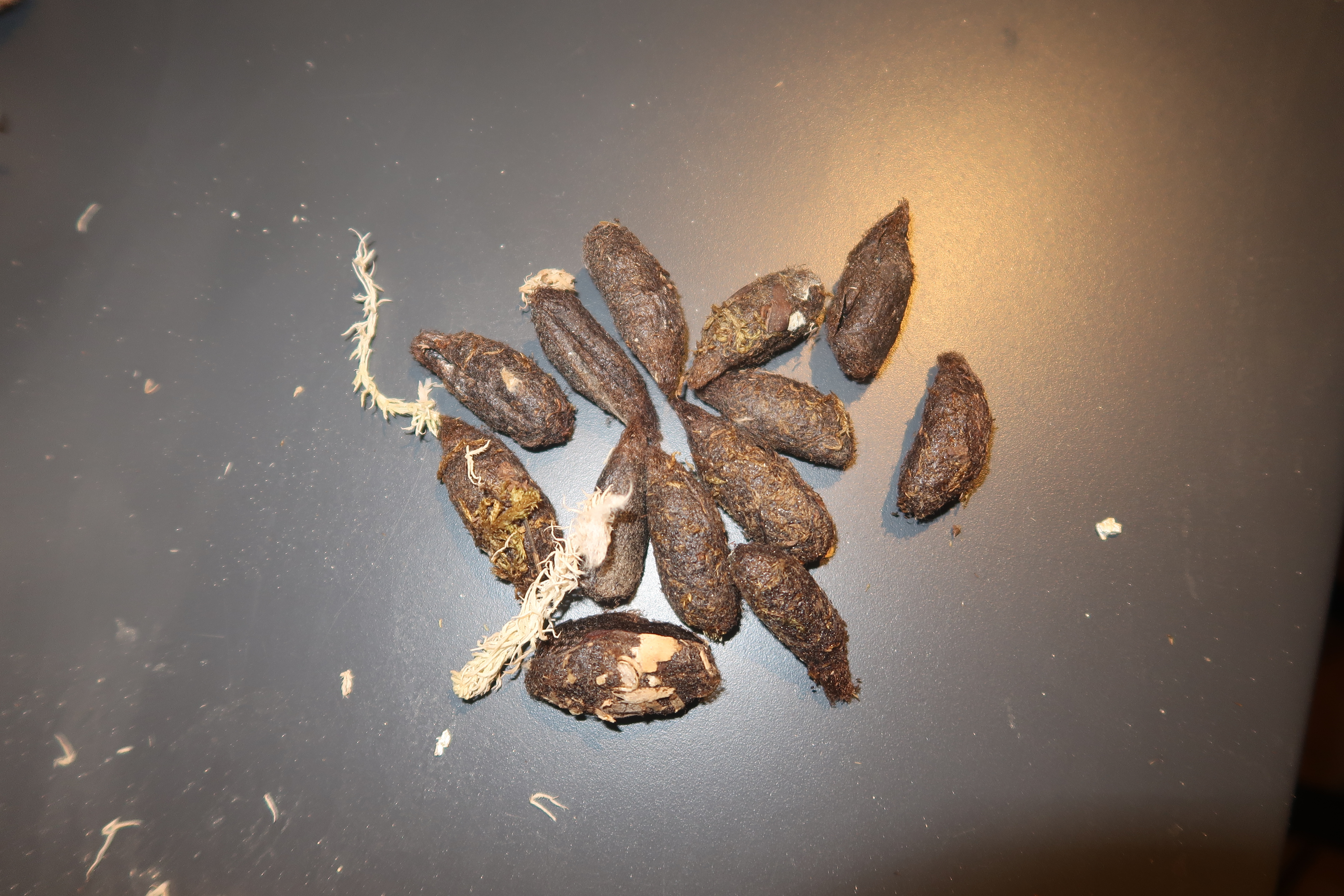
The cocoons of Actias dubernardi are brown, a bit oval, and have thin papery silk.
When to expect the moths? Well that depends on several factors. In nature, the species has more or less two broods a year. The development of the second brood appears to be suppressed by colder temperatures; winter temperatures naturally inhibit the moths from developing in their cocoons/pupae. But in captivity people often skip this hibernation phase and choose to keep the cocoons warm instead. This causes the moths to eventually skip hibernation entirely, and emerge, if not at somewhat random times.
Some people swear by hibernating every second brood by storing them cool (outdoors in winter, or by refridgering cocoons) in order to follow the natural seasons for this species. Others are more impatient and do not bother hibernating the cocoons at all. Generally speaking, if cocoons are kept warm, expect to see moths in about 1.5 to 3 months time. When inducing hibernation, it’s possible to keep the cocoons cold for a good 5-6 months before warming them up again; the development of the moths will be triggered by rising temperatures.
Hibernating the cocoons definitely seems optional, but it can benefit the synchronicity of the moths. When continuously bred in captivity without any hibernation, the times that the moths do decide to eclose from their cocoons does tend to get a little bit more wonky and unpredictable.
The cocoons of Actias dubernardi are not very hard to care for, but they do prefer higher humidity. You can store them on top of humid vermiculite, coco peat or sphagum moss. Avoid tropical temperatures, room temperature is enough (in fact they prefer it on the cooler side), but especially avoid exposing them to dry air. Spray them with a plant mister every few days if possible to keep them humid, and avoid touching the cocoons too often. If that sounds like a lot, don’t worry! There is a big margin of error here, the cocoons of this species seem to be somewhat though and forgiving. These are just best practices!

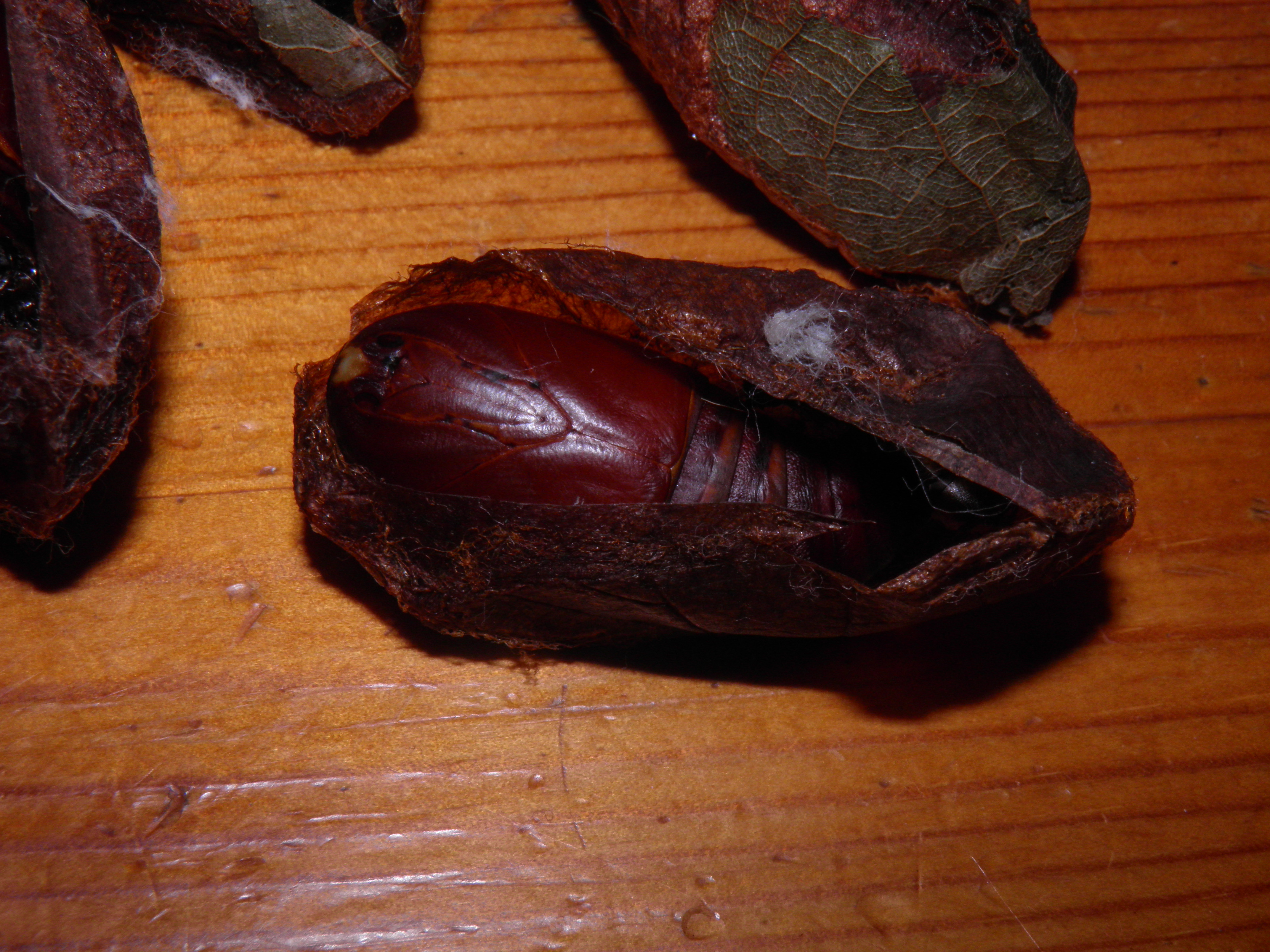
At last! The moths will eventually appear. If you have made it this far them congratulations. Enjoy your moment. Very few people will have the privilege of seeing such stunning animals up close in their lifetime.
Photographing and handling the moths is not as easy as it seems. The moths of this species are very neurotic, and the slightest of touch (especially on their legs or antennae) can send them into a nervous breakdown. One common defensive reaction that you can expect to see when touching the moths, is the moths dropping themselves to the floor and wildly ‘flopping’ around like a fish, flailing around on the floor. This is sometimes combined with the moths frantically and rapidly slapping their wings against the floor which seems to push them forwards, almost as if trying to’row’ or ‘paddle’ away from danger. Unfortunately, when performing these evasive behaviours, they more often than not end up damaging themselves in the process; the wings and hindwing tails are rather fragile. Special care must be taken when handling the moths, for they can quickly destroy their own beauty. On top of the previously mentioned behaviours, the moths are also keen to simply fly away, and once agitated, it can take many minutes before the moths finally calm down and stop trying to fly.
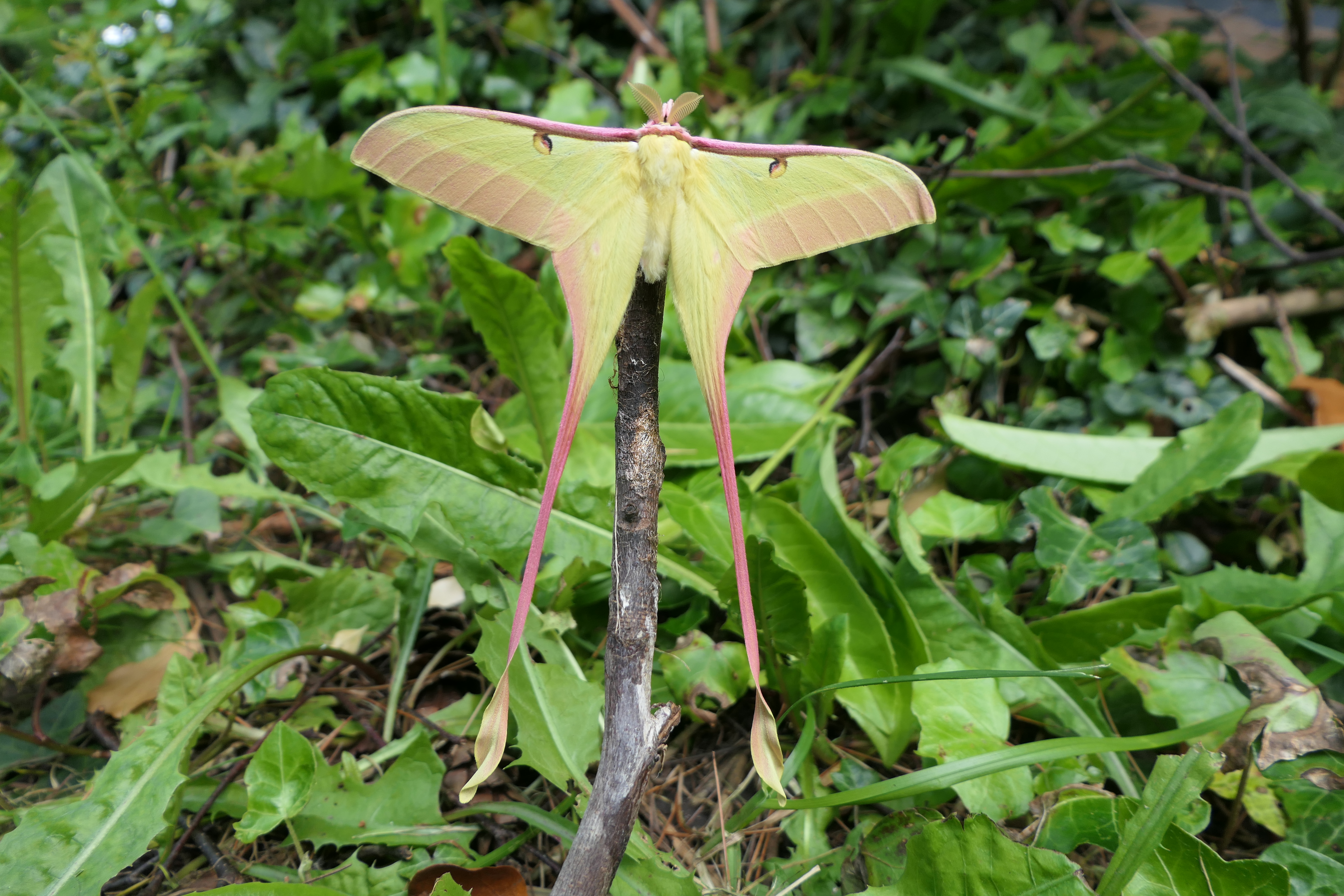
In typical Saturniidae – fashion, the moths don’t live very long. They do not feed (and are in fact physically unable to), and live off the fat reserves they’ve built up as caterpillars, stored in their abdomens. You can expect your moths to generally live between 6 to 14 days. Females tend to have longer lifespans than males.
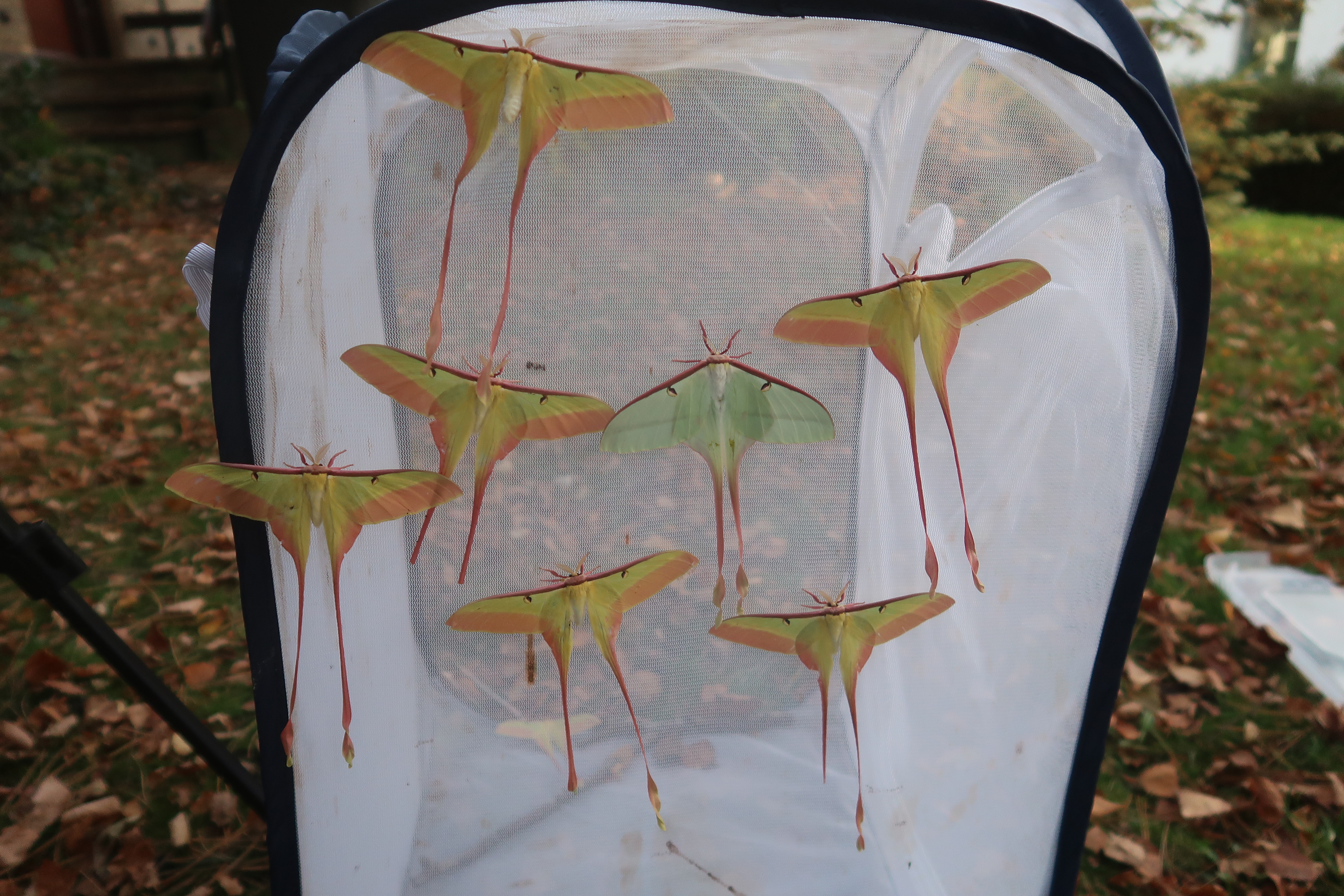
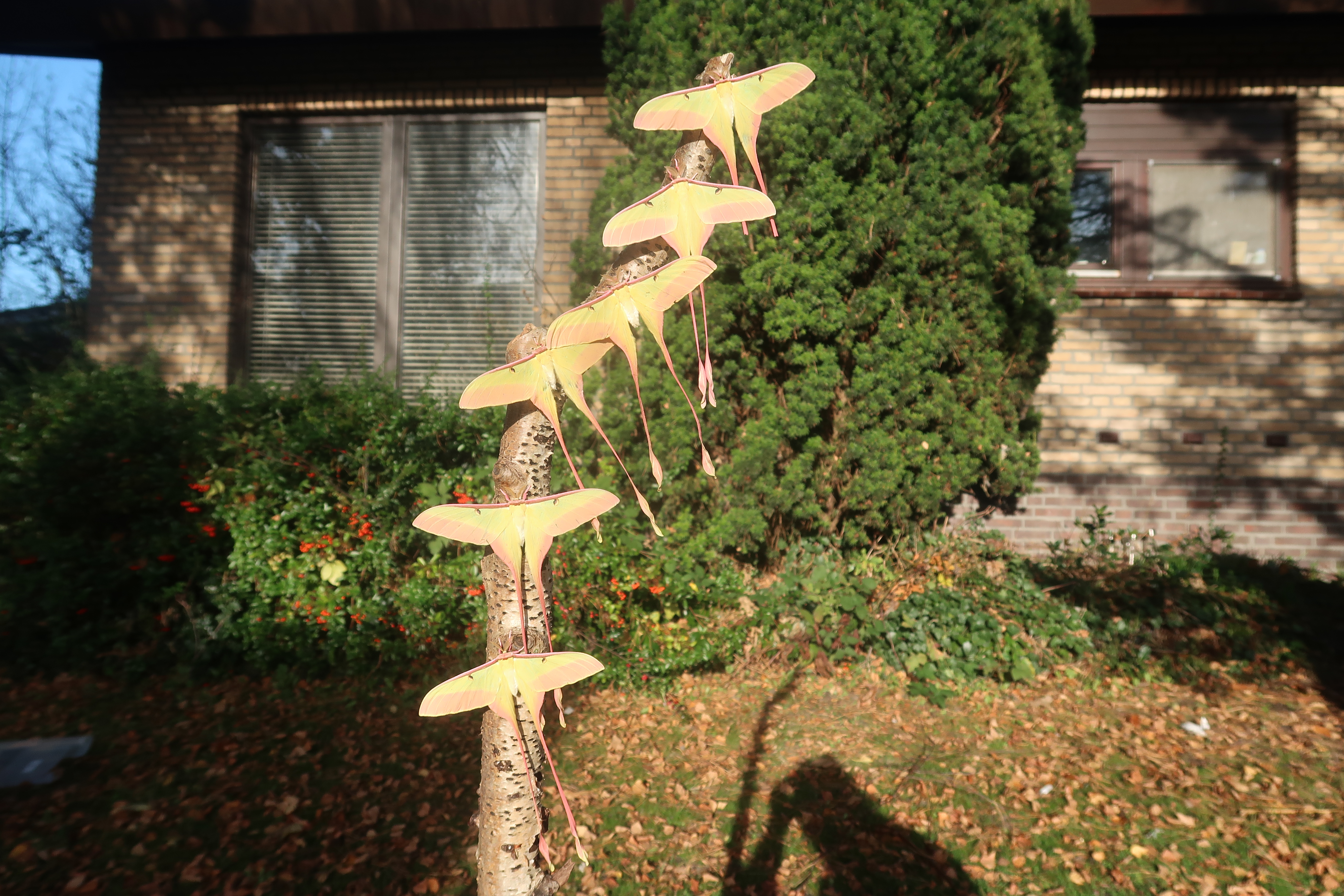
Pairing Actias dubernardi: Is generally not that hard. Although the odd individual moths have the strange issue of being totally disinterested in mating for reasons unknown, the majority of males and females will be eager to hook up. It is a good idea to rear larger numbers to compensate for the odd unwilling individual. For this one can use an insect pop-up cage, a tent or even laundry baskets – generally anything made from airy fabric works. As usual, I use the standard moth breeding enclosures I always use.
The moths generally need: A. darkness (they are nocturnal); keep them away from artificial light, this may confuse or stress them. B. airflow, since males locate females based on scent (pheromones); you can imagine that this is hard to do indoors in a small room with no ventilation (if the whole room is filled with the scent of the female how can they locate her?). C. no stress; keep in mind that the female actively calls the male by releasing pheromones. Stress females may be less in the mood to do so. Just leave them alone, in front of an open window, in an empty room, or even outdoors in spring/summer in your garden shed.
Overall I rarely have trouble getting them to mate.
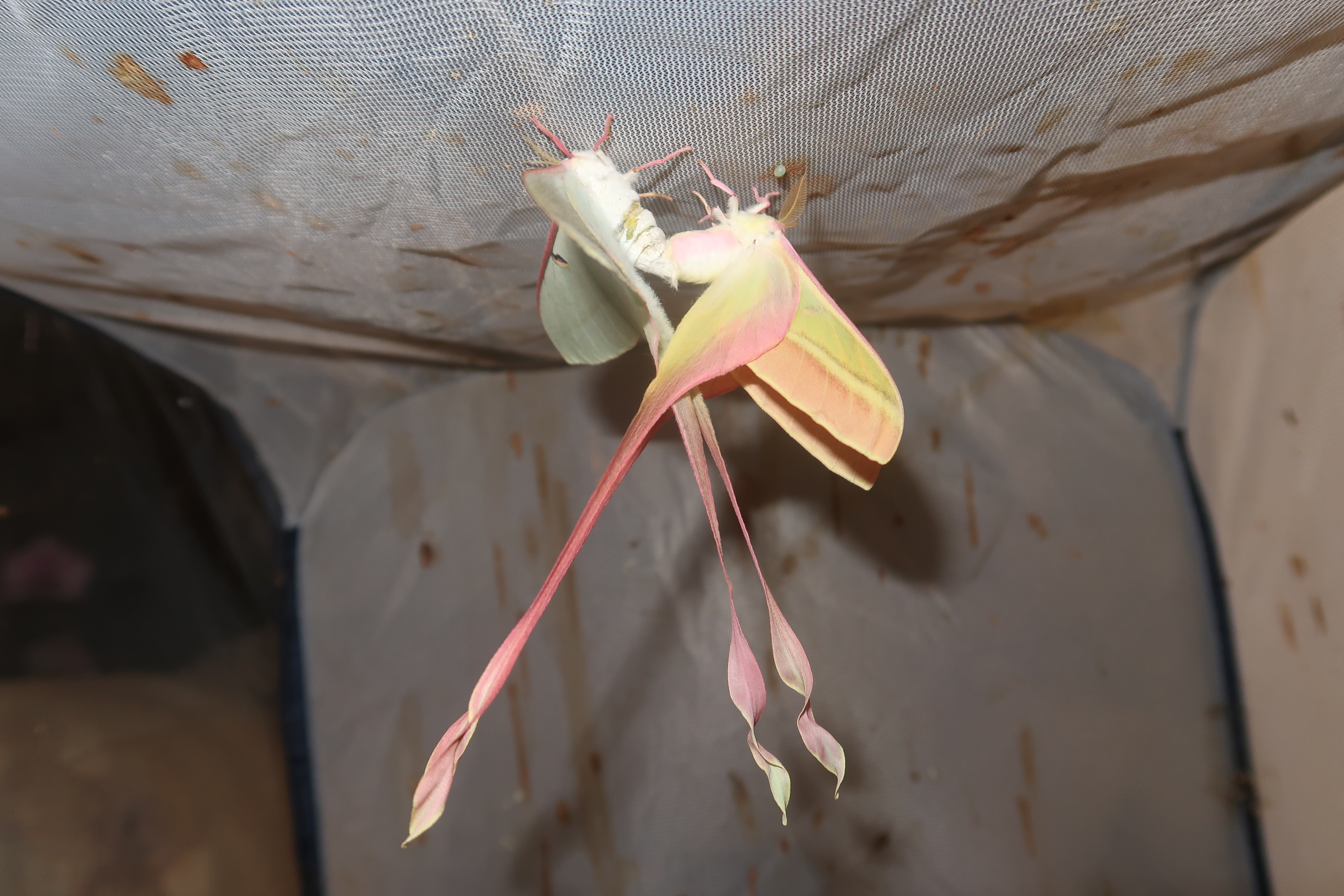
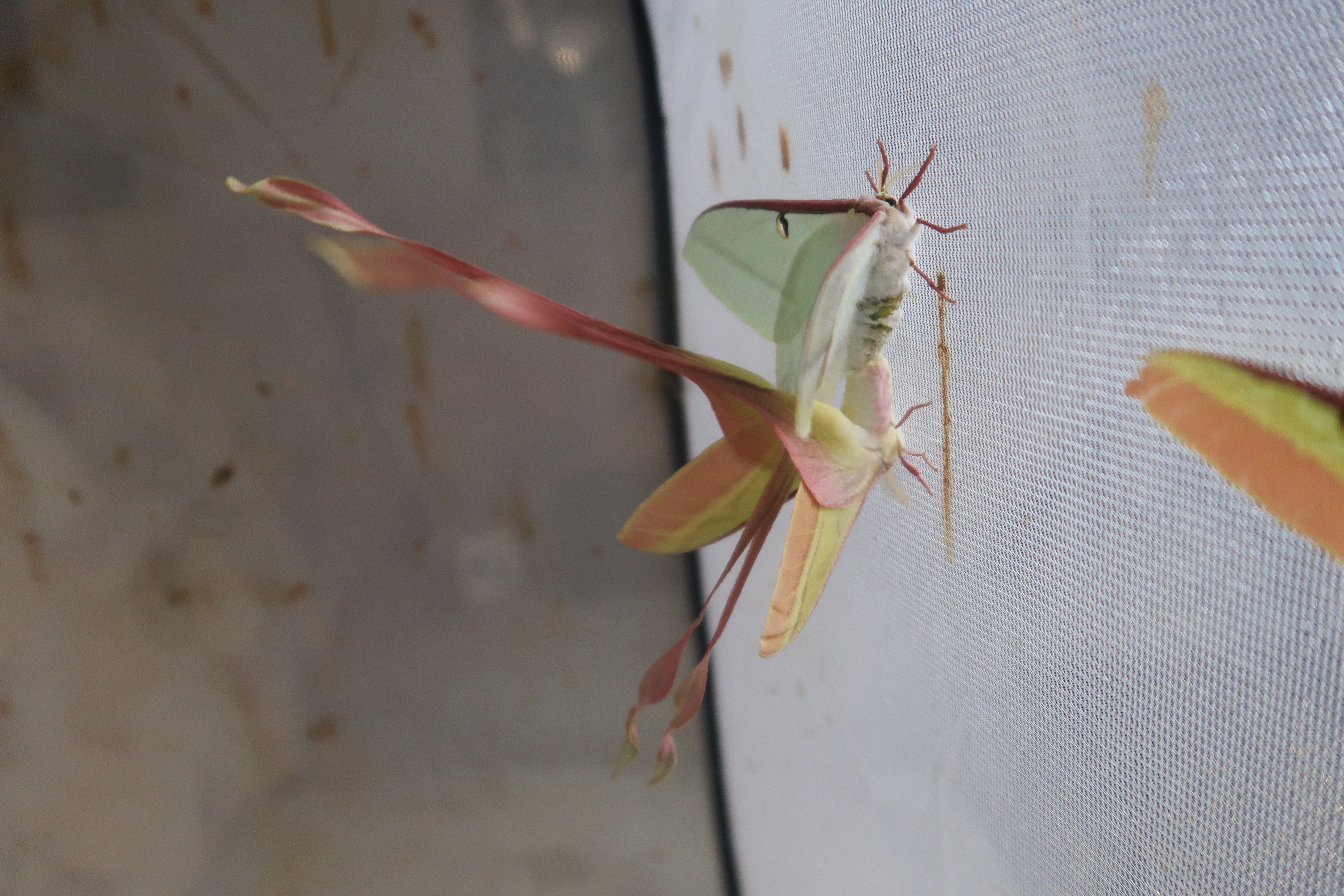
After mating, the females will generally lay between 50 and 120 eggs (depending on her size and health). She is not very picky and will randomly lay eggs in her enclosure. Collect the eggs in plastic boxes and petri dishes and the life cycle shall repeat.
Visual breeding guide:
Additional Chinese Moon Moth breeding tips:
- Their inability to tolerate warmth is often overstated. Yes indeed, this is a species that lives in a ‘cooler’ environment, but it’s not true that their habitat is perpetually and constantly cold. I’ve reared this species in summer several times (23C-26C) and the larvae were just fine. In nature they probably experience warm, sunny days too although these are followed by rapid cooling at night due to the altitude. My point is: heat doesn’t instantly kill them. They tolerate it to some degree, even. You don’t need to keep them cold at all times, although constant exposure to temperatures above 27C+ might be at the limit of their comfort zone. Do protect them from extremes, but room temp. and even a little bit warmer than that works well for them.
- Do try to remove frass every 1-2 days. This species likes to be clean. Food can be replaced less often since pine tree seems to last a long time, even when cut (it dries slowly); just make sure larvae are not wallowing in poop!
- Pine tree produces resin (sticky tree sap). The resin can be deadly for young larvae, and sometimes even mature larvae! They can get permanently stuck in it. Some people prefer to cover the end of the pine tree branches with paper towels to prevent the sap from leaking.
- Do your young (L1) larvae have trouble eating? Cut the tips off the pine tree needles. This is the equivalent of cutting the crusts off of bread for a toddler. Sometimes pine needles can be very though for the larvae to bite into, especially small larvae. By cutting the tips off, it allows them to start feeding more easily.
- Due to the effects of inbreeding in captivity, unfortunately some strains have become rather weak. Symptoms include low fertility rates on the eggs, or larvae hatching from their eggs, refusing to eat, and dying in 24 hours. This species can be challenging to breed, but sometimes you can actually blame the stock.
- Humid, not wet! Humid does not mean wet. Do not keep larvae wet. Keep them humid. Learn the difference!

Support this website and moth conservation! – My website is the largest and most popular website on the internet that documents the life histories of moth species. This is no easy feat, however. All the pictures and information you see on this page and generally on this website are written by me (Bart Coppens) personally. It’s been an ongoing process – over 10 years of constantly photographing and rearing moths. On top of that, much of the website is constantly being rewritten and updated, as older information becomes obsolete and outdated. It does not help that I have owned this website since I was essentially a more ignorant (but ambitious) teenager. At the time of writing (2026) I am 32 years old, but the work never ends, especially when it comes to remaking and rewriting some of the lower-effort pages I created many years ago. Consider that this website still contains thousands of pages that I have written all by myself.
If this website is meaningful to you (and its continued existence); then consider supporting it financially. In order to support my work, I have a crowdfunding platform called Patreon (click here) where readers can buy a subscription. I also have an Etsy webshop (click here) where I provide moths that are dried and have died of old age, for collectors; and finally a PayPal (click here). Of course, supporting is always optional and it is bold to ask, but as we say in Dutch: ‘Nee heb je, maar ja kun je krijgen’. It is only because of my readers that I am able to write articles about moths day after day. Sometimes I even have to breed species all over again if I don’t have adequate pictures. If we get enough readers/support maybe one day we can crowdfund science or expeditions to research moths! This website has been the first to document the life history of certain species already, in fact.
Thank you for reading my article. This is the end of this page. Below you will find some useful links to help you navigate my website better or help you find more information that you need about moths and butterflies.
Dear reader – thank you very much for visiting! Your readership is much appreciated. Are you perhaps…. (see below)
- Not done browsing yet? Then click here to return to the homepage (HOMEPAGE)
- Looking for a specific species? Then click here to see the full species list (FULL SPECIES LIST)
- Looking for general (breeding)guides and information? Then click here to see the general information (GENERAL INFORMATION)
- Interested in a certain family? Then click here to see all featured Lepidoptera families (FAMILIES)
Citations: Coppens, B. (2026); Written by Bart Coppens; based on a real life breeding experience [for citations in literature and publications]
Was this information helpful to you? Then please consider contributing here (more information) to keep this information free and support the future of this website. This website is completely free to use, and crowdfunded. Contributions can be made via paypal, patreon, and several other ways.
All the funds I raise online will be invested in the website; in the form of new caresheets, but also rewriting and updating the old caresheets (some are scheduled to be rewritten), my educational websites, Youtube, breeding projects, the study of moths andconservation programs.
Donate button (Liberapay; credit card and VISA accepted)

Donate button (PayPal)

Become a member of my Patreon (Patreon)

Find me on YouTube

Find me on Instagram

Join the Discord server: Click here
Join the Whatsapp server: Click here
Facebook: Click here
This information was provided by Bart Coppens; an online entomologist that documents the life histories of moths including Actias dubernardi.
 Welcome, visitor!
Do you ever have ova of A. dubernardi for sale?
LikeLike
Hi you have eggs or pupae Actias dubernardi on sale?
LikeLike
I´m from Spain. Any eggs on sale? Maybe different species
LikeLike
Hello, how do you have a free egg for sale?
LikeLike
What a wonderful looking moth! It’s so exotic. Imagine walking through a mountainous pine forest and just seeing one of those yellow/pink males gliding by…
One question: where do you get the food? Do you buy it somewhere or ‘harvest’ it from the wild? (I can imagine that I wouldn’t want to feed pine needles from trees that grow near a busy road for instance)
LikeLike
They simply accept all kinds of pine tree and I happen to have a large tree in my garden 🙂
LikeLiked by 1 person
have you coccons for sale?
LikeLike
I have several caterpillars of this species. For some reason these have been doing better than Antherina suraka for me. Maybe it’s just the environment here. Can you tell me why the breeding difficulty is 7? Also, do you have any information on overwintering these? Do we just give fourth instars less sunlight or…
LikeLike